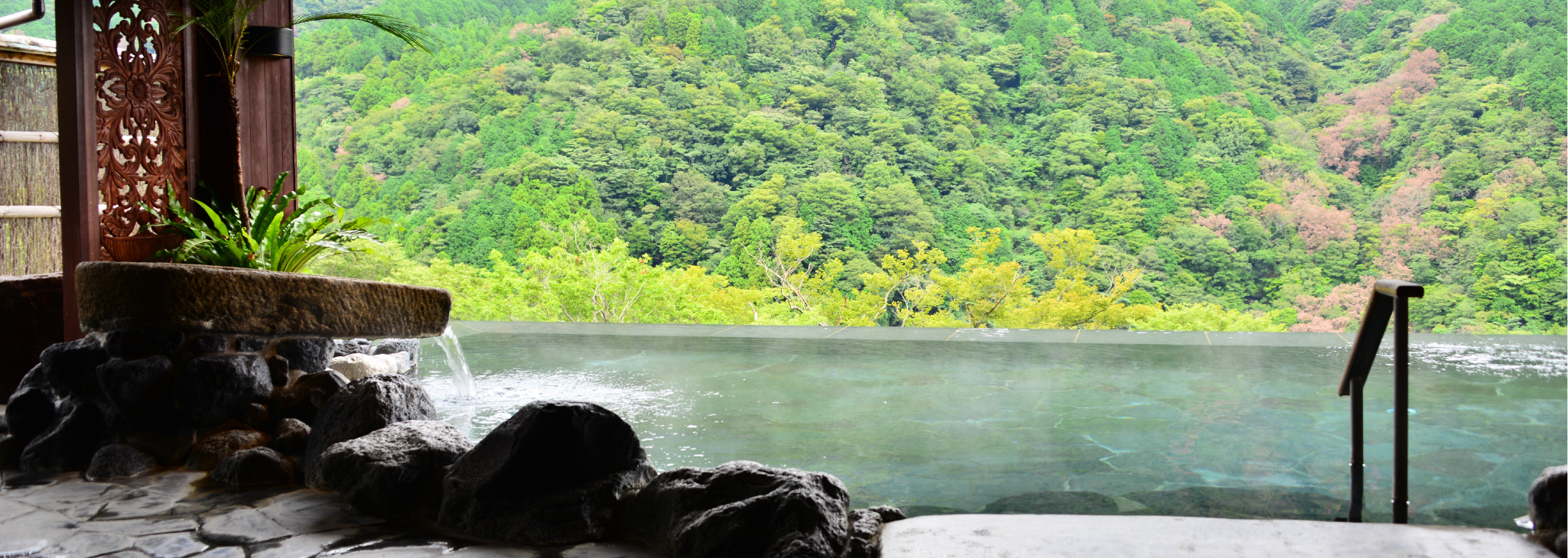
Kanto > Kanagawa (Hakone・Yugawara) > Hakone・Miyanoshita Onsen
Guest room open-air bath overlooking the Hakone mountain range
HAKONE GINYU
箱根吟遊
Kanagawa (Hakone・Yugawara) 100-1, Miyanoshita, Hakone-machi, Ashigarashimo-gun, Kanagawa-ken, 250-0404, JAPAN
Phone:+81-(0)460-82-3355
Spring Quality
Sodium - Chloride springs
ナトリウム-塩化物泉
(Hypotonic, Weakly alkaline, High temperature spring)
Salt’s natural veil
locks in beauty-enhancing
minerals at this scenic hot spring.
Hot springs are believed to form when rainwater or snowmelt seeps underground, or when ancient seawater becomes trapped deep within the earth. Heated by magma or the earthʼs internal heat, this water dissolves minerals from underground rocks and slowly rises to the surface over years—or even tens of thousands of years.
Onsen Components
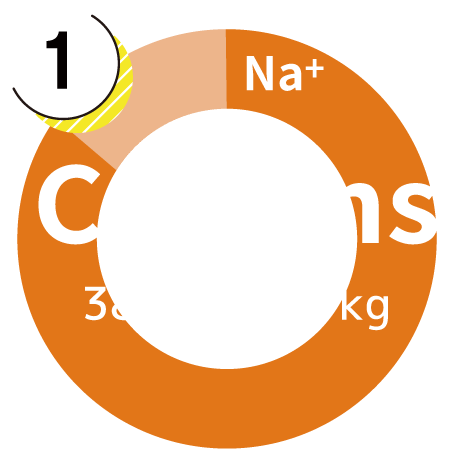
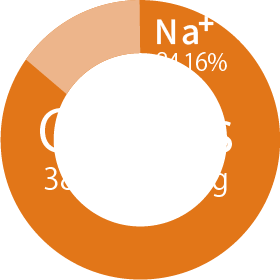
321 mg/kg
84.16mval%
■ Helps improve dry skin through its moisturizing effect
■ Relieves muscle tension and alleviates pain
■ Promotes blood circulation, helping to reduce sensitivity to cold
■ Boosts metabolism and supports detoxification
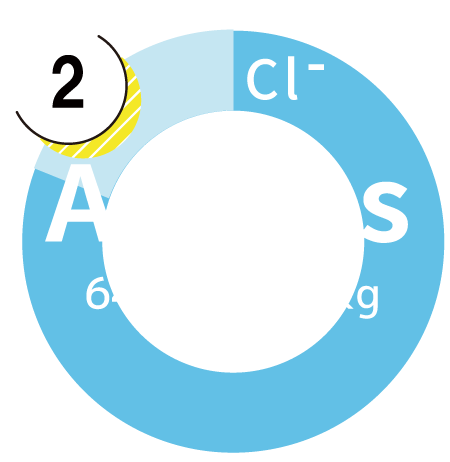
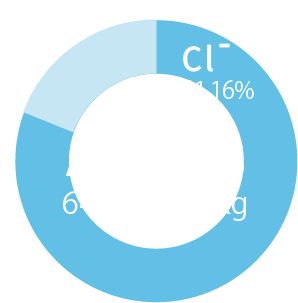
472mg/kg
81.16mval%
■ Salt’s bactericidal effect helps treat minor cuts and wounds
■ Salt helps block sweat glands, enhancing heat retention
■ Improved heat retention contributes to balancing the autonomic nervous system
■ A salt coating helps promote moisture retention
* % values are simplified representations of mval%.
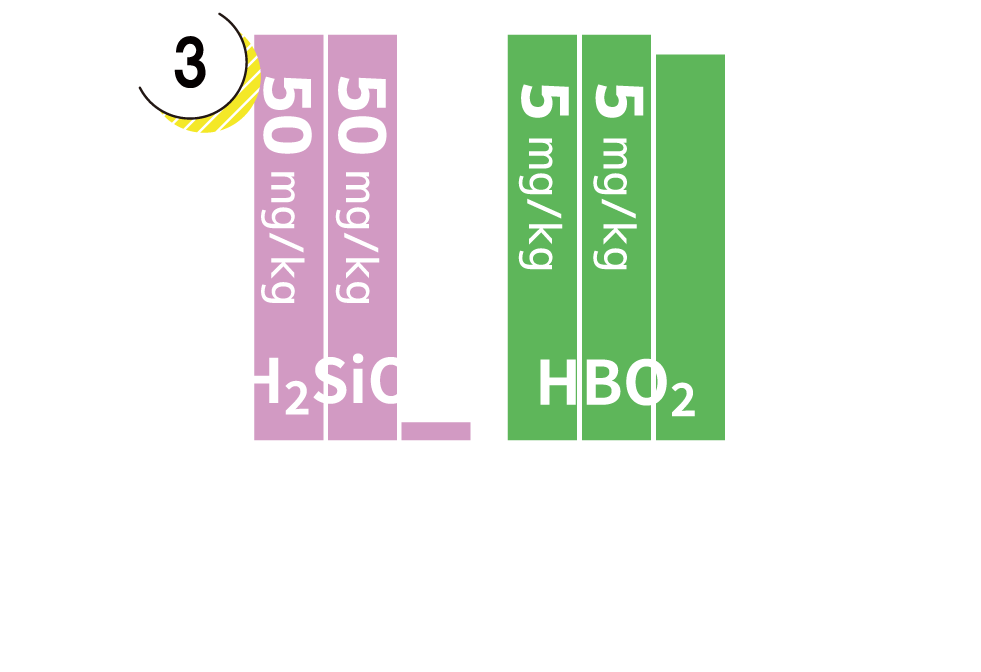
*The bars for Metasilicic acid 50 mg/kg and Metaboric acid 5 mg/kg represent the qualification criteria for hot springs. The number of bars indicates values such as “more than XX times the hot spring standard” or “about XX times the hot spring standard”.
 Metasilicic Acid
 103 mg/kg
■ Natural moisturizing component
■ More than 2 times the hot spring standard (50 mg/kg)
Metaboric Acid 14.8 mg/kg
■ Helps keep the skin clean
■ About 3 times the hot spring standard (5 mg/kg)
 +
+ +
+
Total Dissolved Substances
(excluding gaseous)
1,141 mg/kg
 About 7-10 times more components compared to commercial bath additives!

Hydrogen Ion
Concentration
pH 8.4
Weakly alkaline
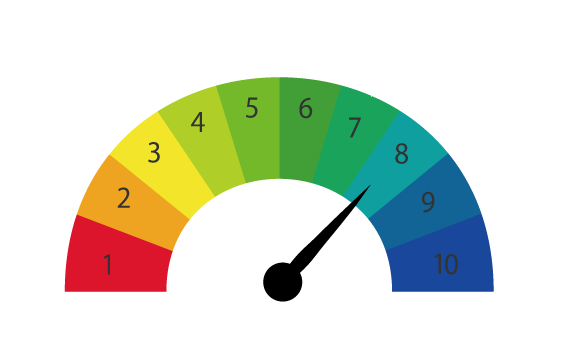
leaving your skin smooth and silky!
Spring Temperature
52.6 ℃
■“Ginyu Spa” Private Open-air Bath
・・・Regulating the water volume to maintain a comfortable bathing temperature
■Large Public Baths, Open-air Baths, Open-air Baths in Guest Rooms
・・・Adjusted to an optimal temperature using a circulation system
Color of water /
Smell of water

Clear and Colorless

Odorless
Hot Spring Flow Rate
120 L/min
(Private source / Mechanically pumped)

Hot spring water usage per person (spring discharge / maximum capacity)
→ 120 L / 75 guests =1.6 L / per minute
*To meet the requirements for kakenagashi (flowing directly from the source),
at least 1 L of hot spring water per minute per bather
is required for proper bath management
Status of Source Utilization
| Water added | Heated | Disinfected | Circulated | Bath additives |
|---|---|---|---|---|
| A:No BC:Yes |
A:No BC:Yes |
A:No BC:Yes |
A:No BC:Yes |
No |
A:“Ginyu Spa” private open-air bath → 100% natural free-flowing hot spring
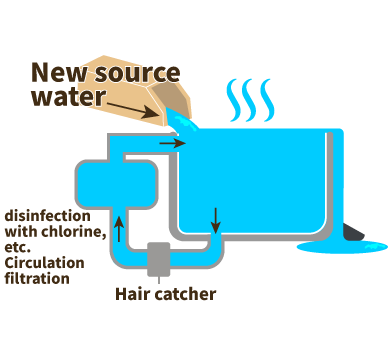
B:Large public bath & open-air bath→Free-flowing hot spring water + Circulation and filtration system
C:Open-air baths in guest rooms → Circulation and filtration system (when the bathwater level drops, fresh hot spring water is added)
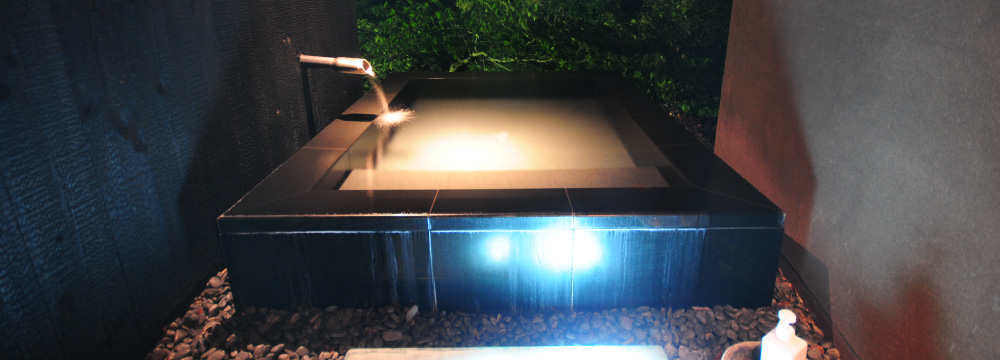
“Ginyu Spa” Private Open-Air Bath
This is the only bath in the inn fed by 100% free-flowing natural hot spring water from the source. During the day, it is used by spa guests, but at night, the entire spa facility can be reserved exclusively by one group per day. Soft lighting throughout the private open-air bath, including the surrounding trees, creates a dreamlike atmosphere.
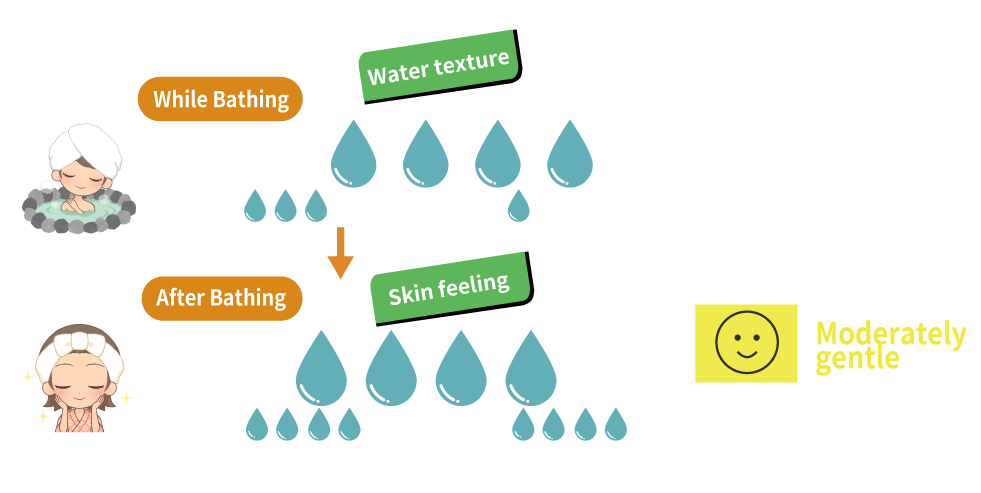
Skin Feeling Gauge
Ideal for:
People seeking beautiful skin
People with dry skin
People concerned about minor cuts
People feeling stressed

People sensitive to cold

Indications by Spring Quality
(for bathing)
 Cuts
Cuts Autonomic instability
 Sensitivity to cold
 Depression
 Dry skin
General Indications (for bathing)
Chronic pains or stiffness of muscles or joints (chronic phase of rheumatoid arthritis, osteoarthritis, lower back pains, nerve pains, frozen shoulder, bruises, sprains, etc.), Muscle stiffness in motor paralysis, Sensitivity to cold, Peripheral circulatory disturbance, Gastrointestinal hypofunction (slow digestion, intestinal gas formation, etc.) Mild hypertension, Impaired glucose tolerance (diabetes), Mild hypercholesterolemia, Mild asthma or Emphysema, Hemorrhoidal pains, Autonomic instability, Various symptoms from stress (sleep disorders, depression, etc.), Restorative phase from illness, Recovery from fatigue, Health promotions
General Contraindications (for bathing)
Active stage of diseases (especially when fever is accompanied), Active tuberculosis, Advanced
malignant tumor or the case of significant debility involving severe anemia, Severe cardiac or lung
diseases involving suffocation feelings with a little movement, Severe kidney diseases involving
edema, Gastrointestinal bleeding, When bleeding is visible, Acute exacerbation stage of chronic
diseases
*There are no general indications or contraindications for drinking.
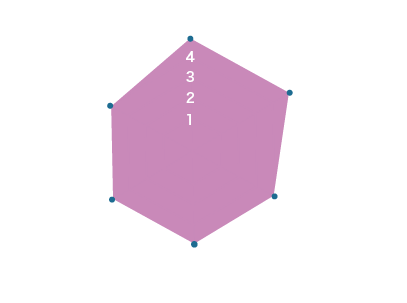
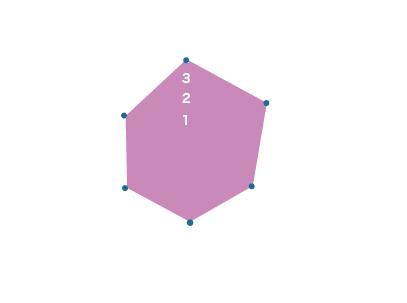
Onsen Power Chart
private open-air bath
bath→100% natural free-flowing hot spring

→Combination of free-flowing hot spring water + circulation and filtration system
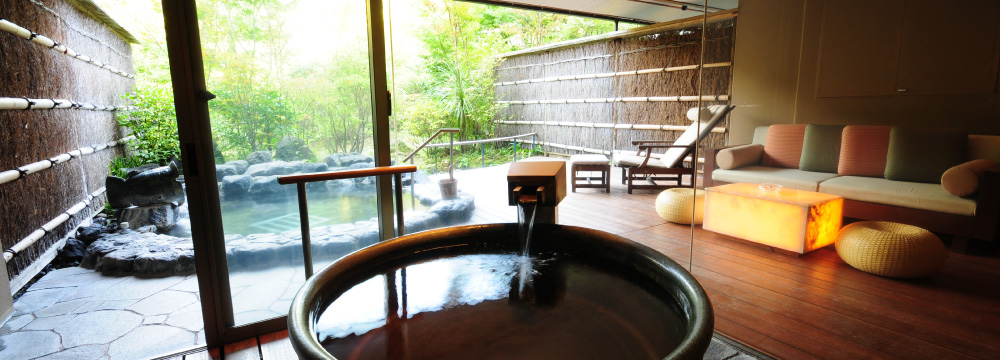
Open-Air Bath and Indoor Bath in the “Meigetsu” Guest Room
All 20 guest rooms are equipped with a private open-air bath. Built along a cliffside, the inn offers views of the Hakone mountain range from the open-air bath of every room. In addition to the open-air bath, each room also features an indoor bath enclosed by transparent acrylic panels.
Keywords of this Onsen
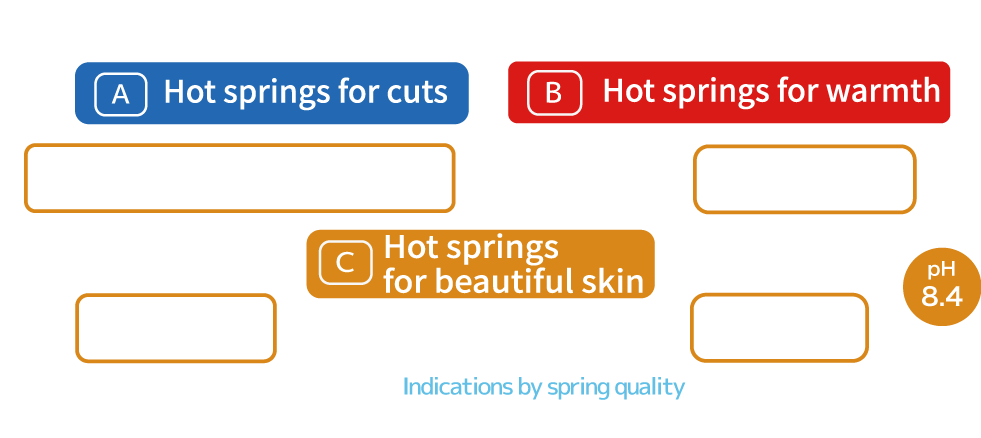
 The salt’s bactericidal properties help treat minor cuts
 A salt coating provides a long-lasting, deeply warming effect, helping prevent chills and relieve sensitivity to cold. It improves peripheral circulation and helps regulate the autonomic nervous system, making it beneficial for depressive states and supporting mental health
 ① The salt’s moisturizing effect on the skin (chloride spring and metasilicic acid content of 100 mg/kg or more) and ③ the salt’s coating action of its active components (chloride spring — known as a “Hot springs for the finishing touch”) help relieve dry skin conditions. ② Its weakly alkaline nature is gentle on sensitive skin, leaving it smooth after bathing. ④ It also has a cleansing effect that helps prevent acne (metaboric acid content of 10 mg/kg or more).
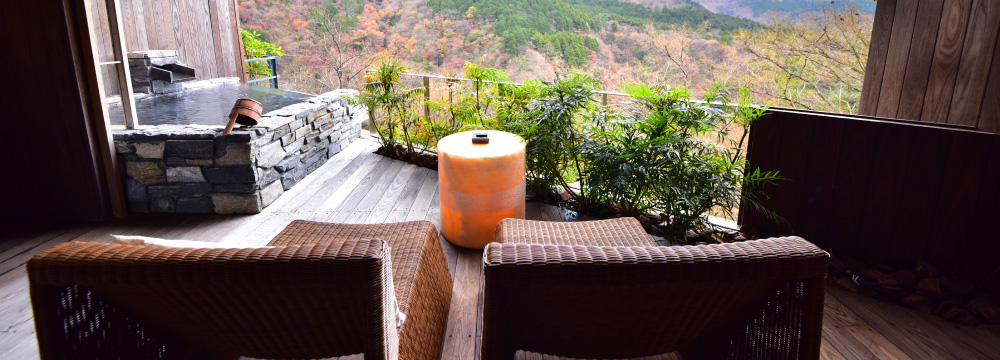
Open-Air Bath in the “Seishuku” Guest Room
The inn offers one exclusive maisonette-style guest room. Taking advantage of its corner location, the room boasts sweeping views, and soaking in the hot spring while overlooking the Hakone mountain range provides an exceptional sense of openness. The sofa on the terrace further enhances the resort-like atmosphere.
Onsen Classification
️Hot springs are classified not only by their spring quality, but also by three additional factors: osmotic pressure, hydrogen ion concentration (pH level), and spring temperature.
Osmotic Pressure
(Hypotonic, Weakly alkaline, High temperature spring)
In hot spring classification, “osmotic pressure” refers to comparing the concentration of dissolved components in the spring water (mainly salts) with that of human body fluids (such as blood and intracellular fluid). Based on this comparison, springs are categorized as hypotonic, isotonic, or hypertonic. The difference in concentration serves as an indicator of how easily water moves between the hot spring water and body fluids.
Total Dissolved Substances
1,141 mg/kg
Classified as a Hypotonic spring
|
|||||
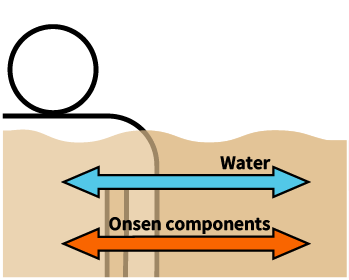 |
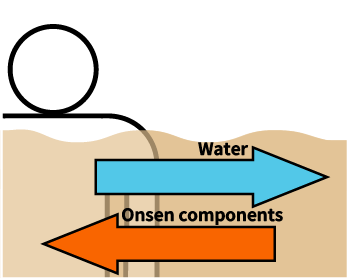
Isotonic 👤 Body fluid concentration ≒ ♨ Onsen concentration Water・・・Hardly moves into or out of the body Onsen components・・・Minimally absorbed and act gently on the body Isotonic means having the same osmotic pressure as human body fluids. It is equivalent to a saline solution made by dissolving approximately 8.8 g of salt in 1 liter of water. Because its concentration is close to that of body fluids, there is little movement of water or onsen components due to osmotic pressure. As a result, it is considered to place the least strain on the body and to be the gentlest in terms of stimulation. |
||||
 |
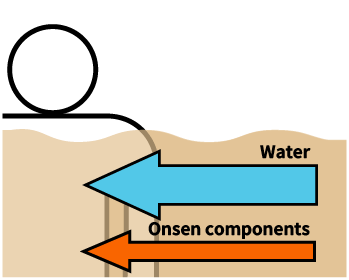
Hypertonic 👤 Body fluid concentration < ♨ Onsen concentration Water・・・Easily moves out of the body Onsen components・・・Easily absorbed into the body Because its osmotic pressure is higher than that of human body fluids (isotonic fluids), water tends to move out of the body more easily, while onsen components are more readily absorbed into the body. As a result, stronger therapeutic effects may be expected. However, hypertonic hot springs are also more likely to cause “hot spring fatigue (yu-atari)” and can be more physically demanding. They are generally regarded as “rich or highly concentrated hot springs”. Among Japanese hot springs, hypertonic springs are relatively uncommon, and a comparatively large proportion are classified as mineral springs (below 25°C) rather than hot springs (25°C or higher). |
||||
Hydrogen Ion Concentration
(Hypotonic, Weakly alkaline, High temperature spring)
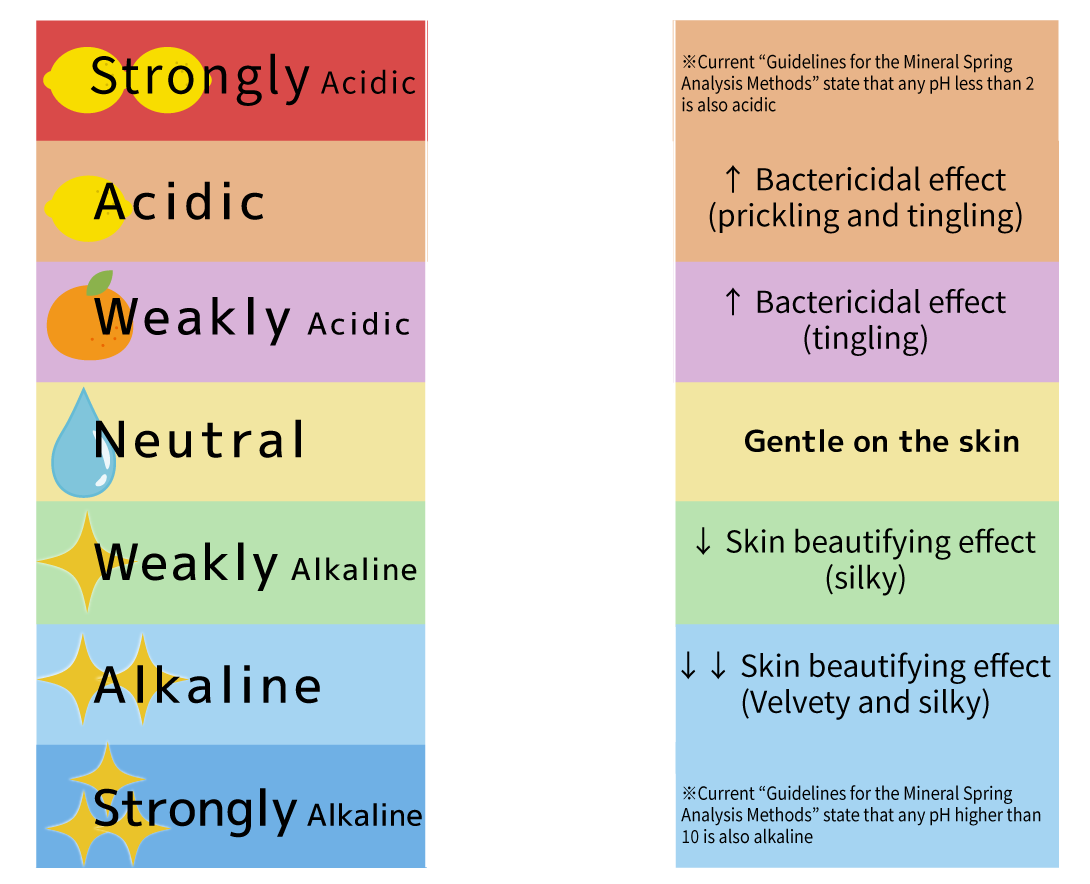
In the hot spring analysis report, the section titled “Examination and test results at gushing location” includes the listed pH value. Chemically, a pH of 7.0 is considered neutral; values below this are acidic, and values above it are alkaline. According to the “Guidelines for the Mineral Spring Analysis Methods”, the chemical nature of a mineral spring is classified based on its pH value at the time of emergence, as shown in the table below.
pH 8.4
Classified as Weakly alkaline
Spring Temperature
(Hypotonic, Weakly alkaline, High temperature spring)
52.6℃
Classified as High temperature spring
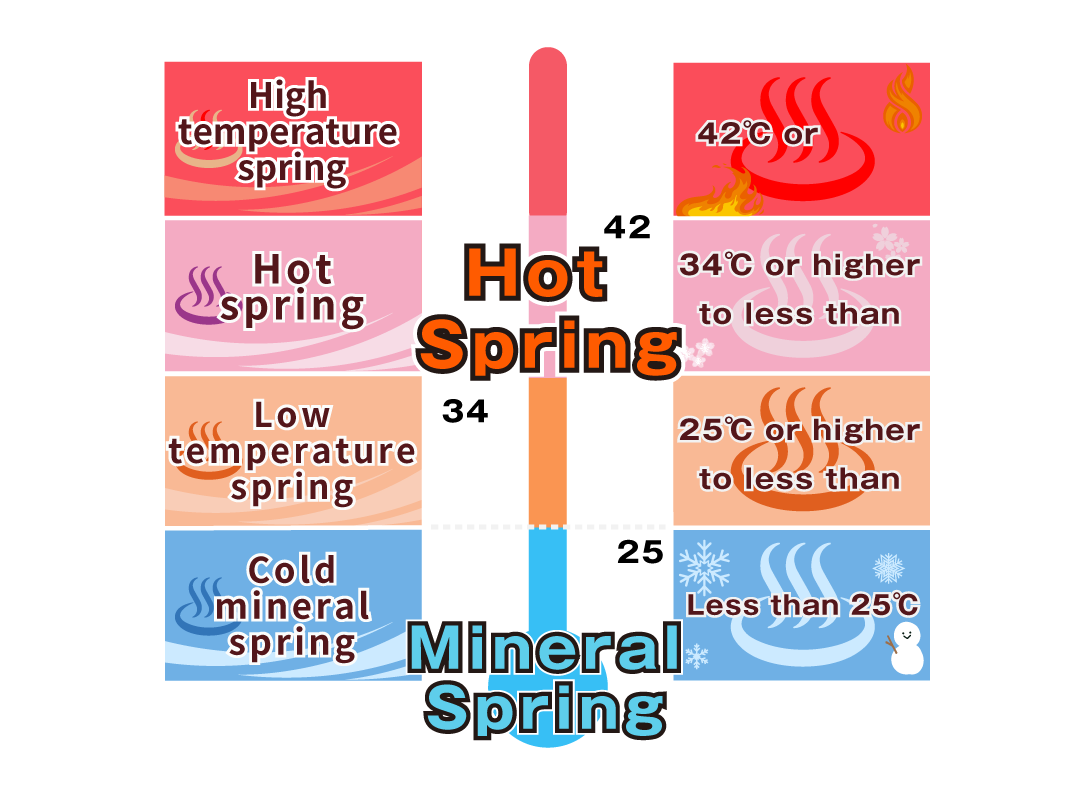
Under the “Hot Springs Act”, water that contains one or more designated substances at or above the legally specified levels and has a source temperature of 25°C or higher is classified as a “hot spring”. If the temperature is below 25°C, it is labeled a “cold mineral spring”. Furthermore, as noted above, hot springs are classified by source temperature as high-temperature spring, hot spring, or low-temperature spring.
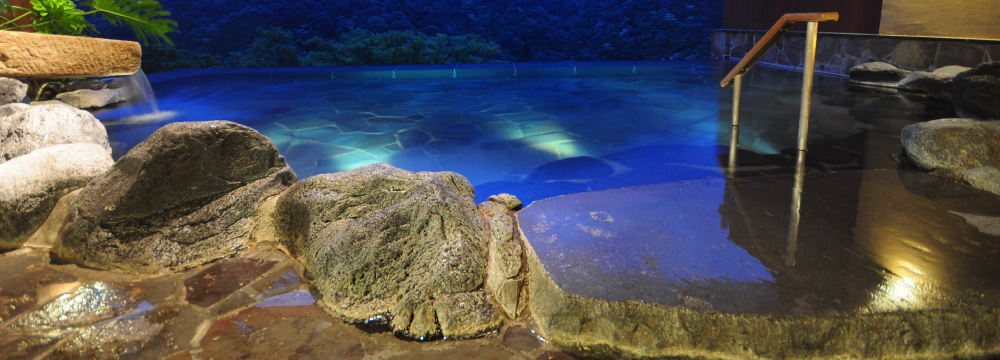
Bathing Area “TSUKISHIRO”
There are two large public baths that alternate between men and women depending on the time of day. “Tsukishiro” is an infinity-style bath designed so that the rim of the tub and its handrails vanish from sight as you relax in the water, creating the sensation of floating in midair.
Facility Data
| Founded in | 1951 (Showa 26) |
|---|---|
| Check in | 2:00 PM |
| Check out | 11:00 AM |
| Location | Mountains, Valleys, and Gardens |
| Rooms | Total 20 rooms 17 Japanese-style rooms (with bath and toilet), 3 Japanese–Western style rooms (with bath and toilet), All 20 rooms feature a private open-air bath |
| Capacity | 75 people |
| Parking | 15 car |
| Facilities | Lounge, Café, Bar, Spa, Shop |
| Internet | Wi-Fi access in all areas |
| Barrier-free | Some supported |
| Bidet toilet | Equipped |
Keywords for this inn
| Panoramic views of the Hakone mountain range from the large public baths and guest rooms |
| A seamless fusion of traditional Japanese ryokan and a luxury resort |
| Guest rooms with open-air baths that blend into nature, set beside an open and airy terrace |
| An ultimate spa sanctuary nestled in the forests of Hakone, engaging all five senses |
| Moments of wonder and surprise await throughout the inn |
Hot Spring (Onsen) Report
| “Hakone Ginyu”, nestled in Hakone Miyanoshita Onsen area, draws its waters from two private hot spring sources. One source is a spring well located about 200 meters from the inn, and the other is near its sister facility, “Musashino Bekkan”, approximately 1 kilometer away. The spring quality of Hakone Ginyu is Sodium - Chloride Springs with Weakly alkaline (pH 8.4). First of all, note that it is Weakly alkaline. Because human skin is generally slightly acidic,... Read more → |
Transportation Access
| By train | 3-minute walk from Miyanoshita Station (Hakone Tozan Railway) |
|---|---|
| Shuttle bus | None |
| By car | About 20 minutes by car from Odawara-nishi IC via the Odawara–Atsugi Road and National Route 1 (toward Miyanoshita) |
| Address | Kanagawa Prefecture (Hakone・Yugawara)/Hakone, Miyanoshita Onsen/HAKONE GINYU 100-1, Miyanoshita, Hakone-machi, Ashigarashigashimo-gun, Kanagawa, 250-0404, Japan TEL:+81-(0)460-82-3355 |