Kyushu > Kumamoto > Kurokawa Onsen
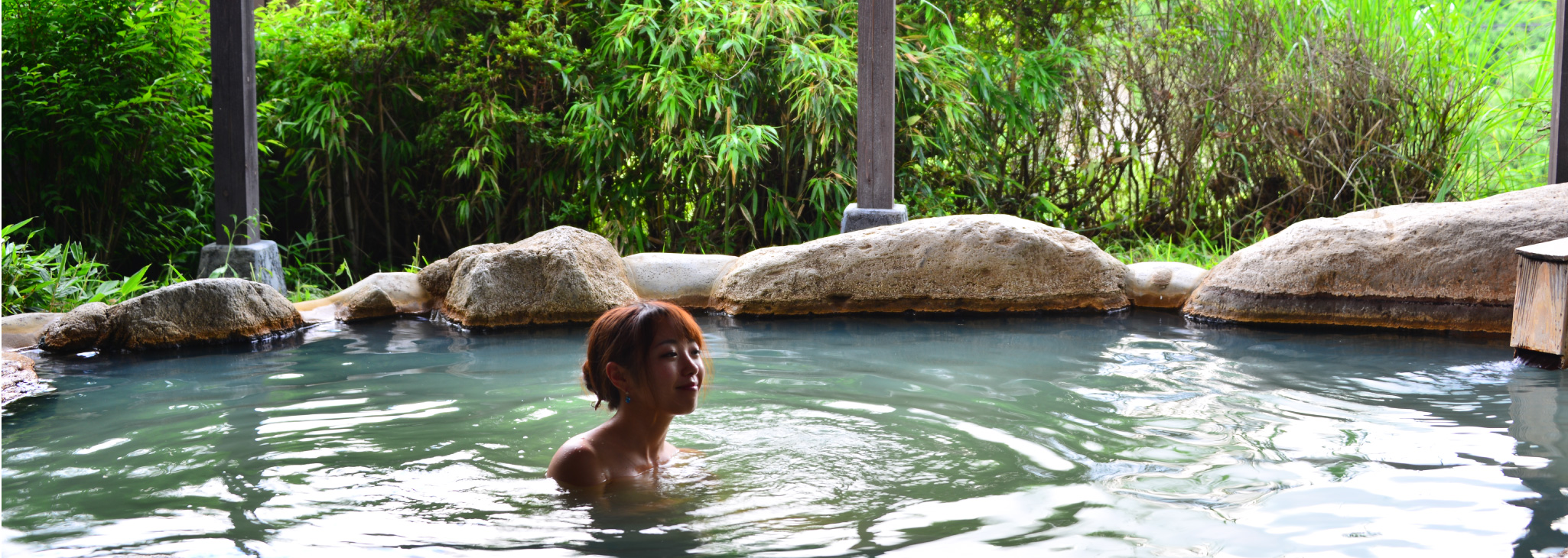
A detached inn offering private, free-flowing natural hot springs in every room, renowned for their skin-beautifying benefits.
Ryokan Kounoyu
旅館こうの湯
6784 Manganji, Minami-Oguni machi, Aso-gun, Kumamoto, 869-2402, JAPAN
Phone:+81-(0)967-48-8700
Spring Quality
Sodium, Calcium –
Hydrogen carbonate / Sulfate / Chloride springs
ナトリウム・カルシウム―炭酸水素塩・硫酸塩・塩化物泉
(Hypotonic, Neutral, High temperature spring)
Excellent 100% natural free-flowing hot spring
with multiple properties —
for beautiful skin, hydration, warmth, and healing
Hot springs are believed to form when rainwater or snowmelt seeps underground, or when ancient seawater becomes trapped deep within the earth. Heated by magma or the earthʼs internal heat, this water dissolves minerals from underground rocks and slowly rises to the surface over years—or even tens of thousands of years.
Onsen Components
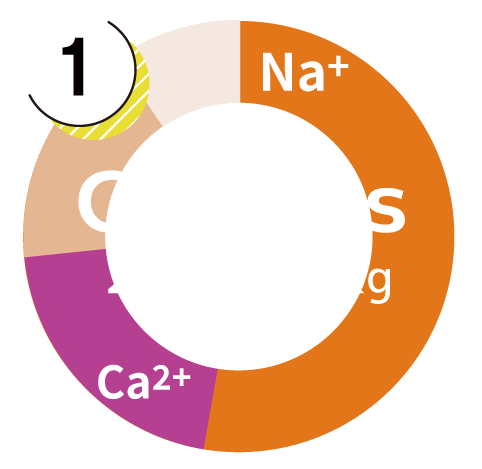
160.9 mg/kg
52.96mval%
■ Helps improve dry skin through its moisturizing effect
■ Relieves muscle tension and alleviates pain
■ Promotes blood circulation, helping to reduce sensitivity to cold
■ Boosts metabolism and supports detoxification
54.0 mg/kg
20.39mval%
■ Supports the formation and regeneration of the skin barrier
■ Helps soothe pain and inflammation
■ Regulates the contraction and dilation of blood vessels
■ Strengthens the skin’s barrier function
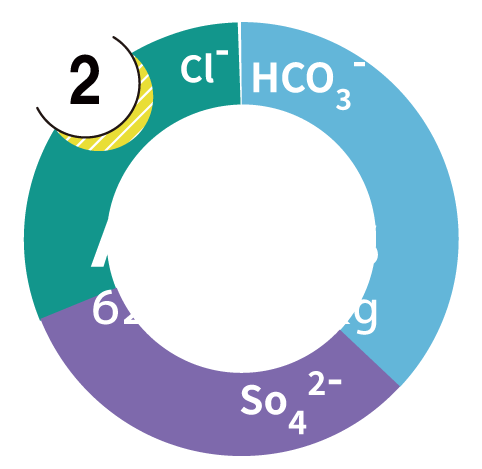
288.8 mg/kg
37.01mval%
■ Helps remove old keratin and excess sebum for smoother skin
■ Leaves the skin feeling fresh and refreshed after bathing
■ Washes away impurities, keeping the skin clean
■ Helps improve circulation by dilating blood vessels
■ The main component of Hydrogen carbonate springs, known as one of the “Hot springs for beautiful skin”
197.2 mg/kg
32.10mval%
■ Dilates blood vessels and promotes circulation to the extremities
■ The warming effect from increased blood flow helps regulate the autonomic nervous system
■ Promotes skin metabolism, improving firmness and elasticity
■ Supports recovery from skin issues such as dry skin and minor cuts
■ The main component of Sulfate springs, known as one of the “Hot springs for beautiful skin”
138.7mg/kg
30.59mval%
■ Salt’s bactericidal effect helps treat minor cuts and wounds
■ Salt helps block sweat glands, enhancing heat retention
■ Improved heat retention contributes to balancing the autonomic nervous system
■ A salt coating helps promote moisture retention
397mg/kg
Exceeds the hot spring standard value of 340 mg/kg
■■ Acts like a natural soap, emulsifying dead skin cells and sebum for gentle cleansing
■■ Leaves the skin smooth and well-hydrated after bathing
■■ Provides a refreshing, clean feeling after bathing
■■ A cleansing-type onsen known as “Hot springs for beautiful skin”
This component is formed by the combination of the cation ■Sodium ions (160.9 mg/kg, 7.00 mval, 52.96 mval%) and the anion ■Hydrogen carbonate ions (288.8 mg/kg, 4.73 mval, 37.01 mval%). When present at 340 mg/kg or higher, it qualifies as a hot spring component. Commonly known as baking soda, it emulsifies sebum (breaking oils into fine particles so they mix with water), making it easier to wash away. This process softens dead skin cells and leaves the skin smooth and refined. It is a key component that characterizes “Hot springs for beautiful skin”.
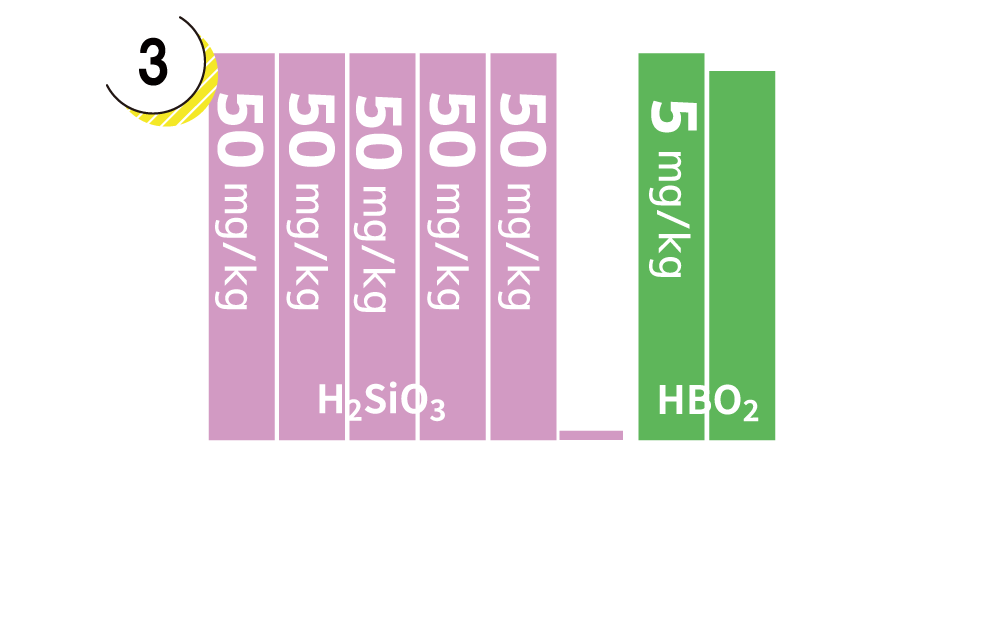
*The bars for Metasilicic acid 50 mg/kg and Metaboric acid 5 mg/kg represent the qualification criteria for hot springs. The number of bars indicates values such as “more than XX times the hot spring standard” or “about XX times the hot spring standard”.
 Metasilicic Acid
 251.4 mg/kg
■ Natural moisturizing component
■ More than 5 times the hot spring standard (50 mg/kg)
Metaboric Acid 9.7 mg/kg
■ Helps keep the skin clean
■ About 2 times the hot spring standard (5 mg/kg)
 +
+ +
+
Total Dissolved Substances
(excluding gaseous)
1,180 mg/kg
 8-11 times more components than commercial bath additives!

Hydrogen Ion
Concentration
pH 6.4
Neutral
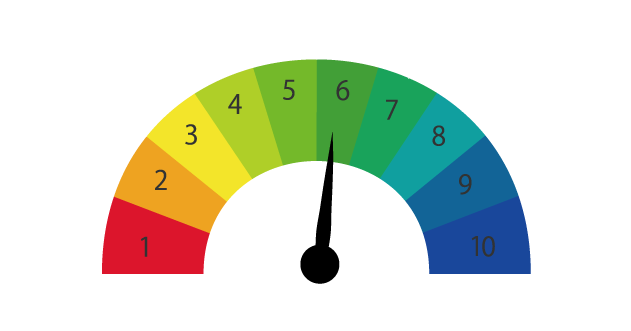
with the skin’s natural pH
Spring Temperature
60.5 ℃
Maintained at a comfortable temperature by adjusting the water flow
Color /
Aroma

Faintly yellow and clear

Faint hydrogen sulfide odor
Hot Spring Flow Rate
150~200 L/min
(Private source / Mechanically pumped)

Hot Spring Water Flow per Person (Spring Discharge Rate / Maximum Guest Capacity)
→ 50–200 L÷ 45 guests = 3.3~4.4L /min per guest
*Note: For 100% free-flowing hot spring water (gensen kakenagashi), a minimum flow rate of 1L/min per bather is generally regarded as a guideline.
Status of Hot Spring Utilization
| Water added | Heated | Disinfected | Circulated | Bath additives |
|---|---|---|---|---|
| No | No | No | No | No |
*All baths are supplied with 100% natural free-flowing hot spring water
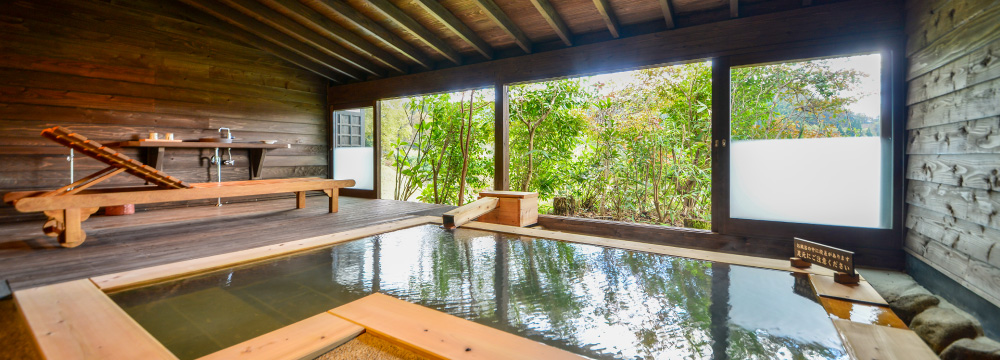
Semi Open-air Bath in the one-story Guest room “Suoh”
All guest rooms have a private open-air bath or semi open-air bath. Keeping the “Kurokawa-ness” atmosphere of being close to nature, the rooms are quieter and offer private time and space where you do not have to worry about anyone else. The semi open-air bath at “Suoh” has a unique “L” shape.
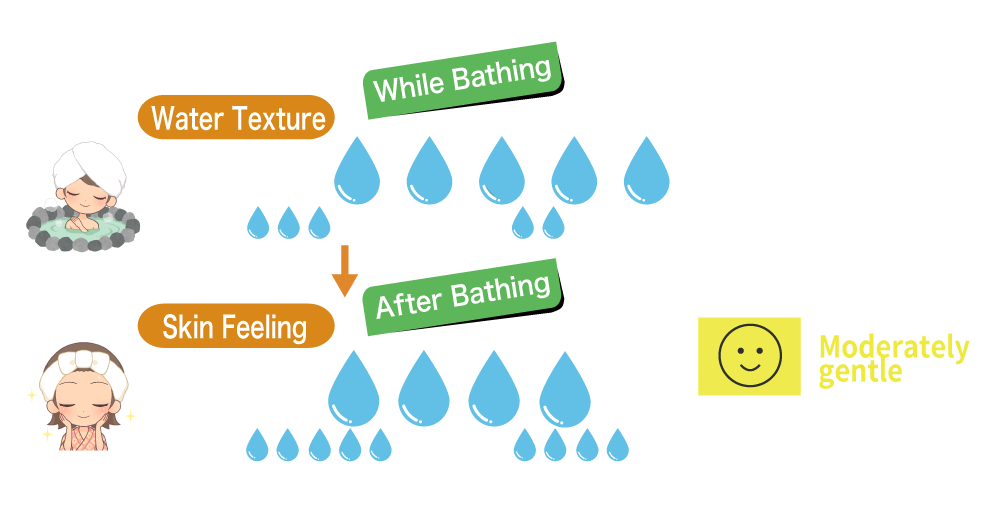
Skin Feeling Gauge
Ideal for:
People interested in skin‑beautifying effects
People who enjoy a refreshing post-bath feeling

People looking to improve skin firmness and radiance
People with minor cuts

People sensitive to cold
People with dry skin
People looking to relax and relieve stress

Indications by Spring Quality
(for bathing)
 Cuts
Cuts Peripheral circulatory disturbance
 Sensitivity to cold
 Depression
 Dry skin
General Indications (for bathing)
Chronic pains or stiffness of muscles or joints (chronic phase of rheumatoid arthritis, osteoarthritis, lower back pains, nerve pains, frozen shoulder, bruises, sprains, etc.), Muscle stiffness in motor paralysis, Sensitivity to cold, Peripheral circulatory disturbance, Gastrointestinal hypofunction (slow digestion, intestinal gas formation, etc.) Mild hypertension, Impaired glucose tolerance (diabetes), Mild hypercholesterolemia, Mild asthma or Emphysema, Hemorrhoidal pains, Autonomic instability, Various symptoms from stress (sleep disorders, depression, etc.), Restorative phase from illness, Recovery from fatigue, Health promotions
General Contraindications (for bathing)
Active stage of diseases (especially when fever is accompanied), Active tuberculosis, Advanced
malignant tumor or the case of significant debility involving severe anemia, Severe cardiac or lung
diseases involving suffocation feelings with a little movement, Severe kidney diseases involving
edema, Gastrointestinal bleeding, When bleeding is visible, Acute exacerbation stage of chronic
diseases
*There are no general indications or contraindications for drinking.
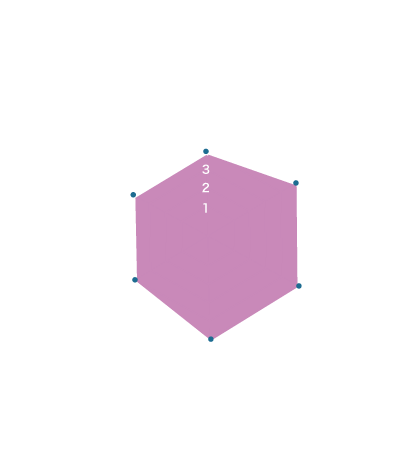
Onsen Power Chart

100% natural free-flowing hot spring water
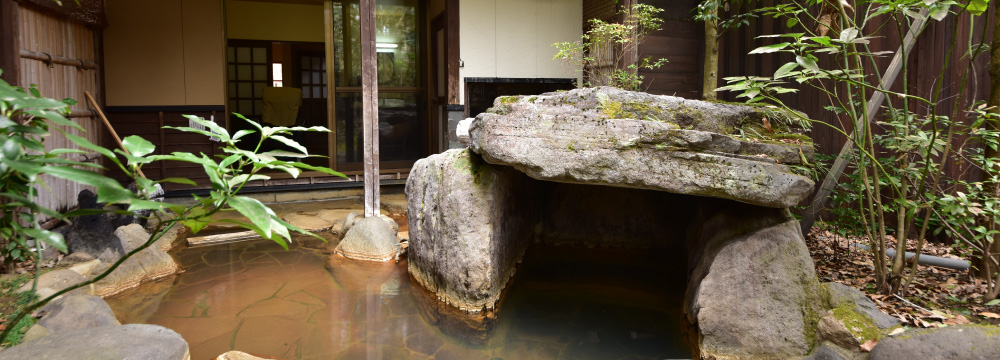
Open-air Bath in the maisonette Guest room “Asebi”
The open-air baths in the maisonette-type guest rooms are all rock baths with large, boldly arranged rocks. Guests can bathe while enjoying the seasonal expressions of the trees and the starlit sky that only the clear mountain air can provide. Room “Asebi” has a rock cave and a sleeping bath.
Keywords of this Onsen
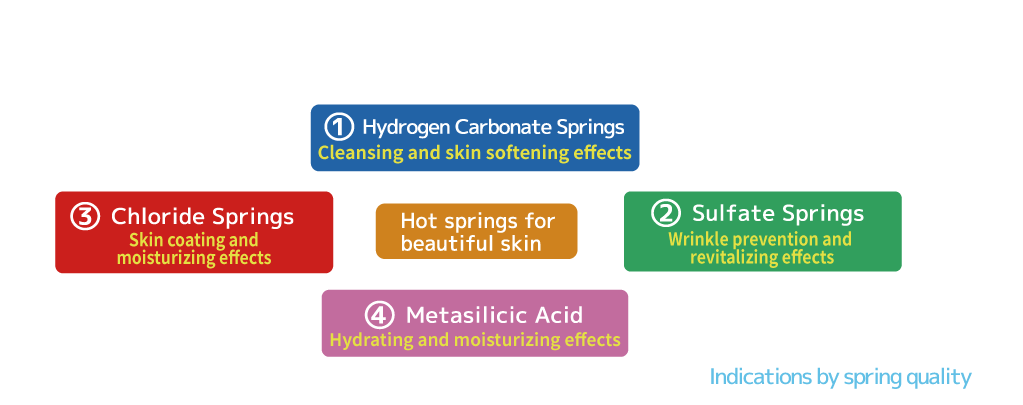
Cuts・・・① cleanses the wound ② promotes tissue regeneration, and ③contributes to disinfection.
Peripheral circulatory disturbance・・・① and ② dilate blood vessels to promote blood flow, while ③ sustains the warming effect
Sensitivity to cold・・・① conditions the skin for better heat penetration ② boosts circulation to warm the body from within, and ③locks in warmth from the outside with a protective salt film.
Dry skin・・・① exfoliates dead skin cells to smooth the skin, ② and ④ provide rich hydration, ③ maintains moisturizing effects with a
salt film.
Depression・・・② improves circulation to balance the autonomic nervous system, while ③ promotes parasympathetic activity through lasting warmth
to relieve mental tension.
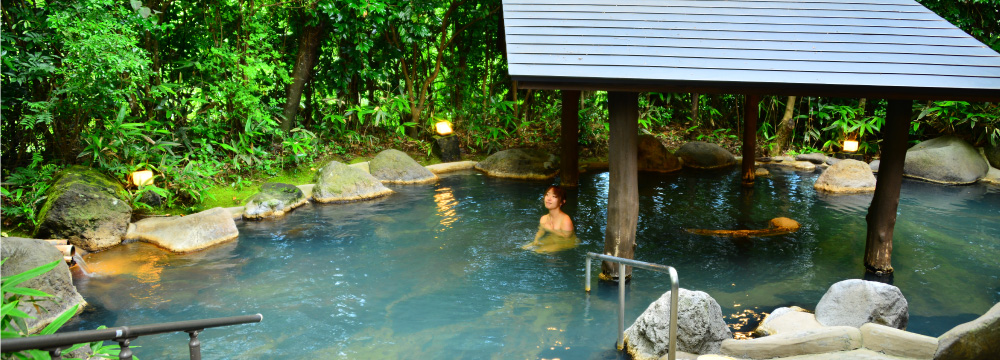
Large Public Baths for men and women “Mori-no-Yu”
The vast public open-air baths are surrounded by trees, and both the men's and women's baths are spacious enough to accommodate 20 adults. There is also a roof over the baths and a rock cave, allowing visitors to enjoy bathing even when the weather is bad. The washing area is also located in a hut, making it easy to use.
Onsen Classification
️Hot springs are classified not only by their spring quality, but also by three additional factors: osmotic pressure, hydrogen ion concentration (pH level), and spring temperature.
Osmotic Pressure
(Hypotonic, Weakly alkaline, High temperature spring)
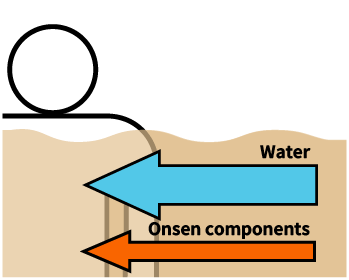
In hot spring classification, “osmotic pressure” refers to comparing the concentration of dissolved components in the spring water (mainly salts) with that of human body fluids (such as blood and intracellular fluid). Based on this comparison, springs are categorized as hypotonic, isotonic, or hypertonic. The difference in concentration serves as an indicator of how easily water moves between the hot spring water and body fluids.
Total Dissolved Substances
1,180 mg/kg
Classified as a Hypotonic spring
|
|||||
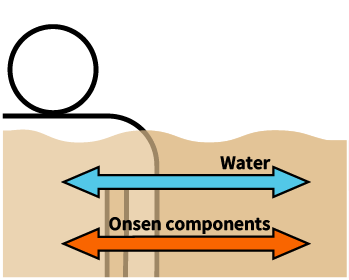 |
Isotonic 👤 Body fluid concentration ≒ ♨ Onsen concentration Water・・・Hardly moves into or out of the body Onsen components・・・Minimally absorbed and act gently on the body Isotonic means having the same osmotic pressure as human body fluids. It is equivalent to a saline solution made by dissolving approximately 8.8 g of salt in 1 liter of water. Because its concentration is close to that of body fluids, there is little movement of water or onsen components due to osmotic pressure. As a result, it is considered to place the least strain on the body and to be the gentlest in terms of stimulation. |
||||
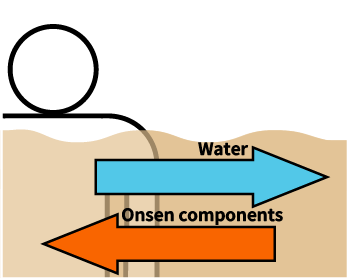 |
Hypertonic 👤 Body fluid concentration < ♨ Onsen concentration Water・・・Easily moves out of the body Onsen components・・・Easily absorbed into the body Because its osmotic pressure is higher than that of human body fluids (isotonic fluids), water tends to move out of the body more easily, while onsen components are more readily absorbed into the body. As a result, stronger therapeutic effects may be expected. However, hypertonic hot springs are also more likely to cause “hot spring fatigue (yu-atari)” and can be more physically demanding. They are generally regarded as “rich or highly concentrated hot springs”. Among Japanese hot springs, hypertonic springs are relatively uncommon, and a comparatively large proportion are classified as mineral springs (below 25°C) rather than hot springs (25°C or higher). |
||||
Hydrogen Ion Concentration
(Hypotonic, Neutral, High temperature spring)
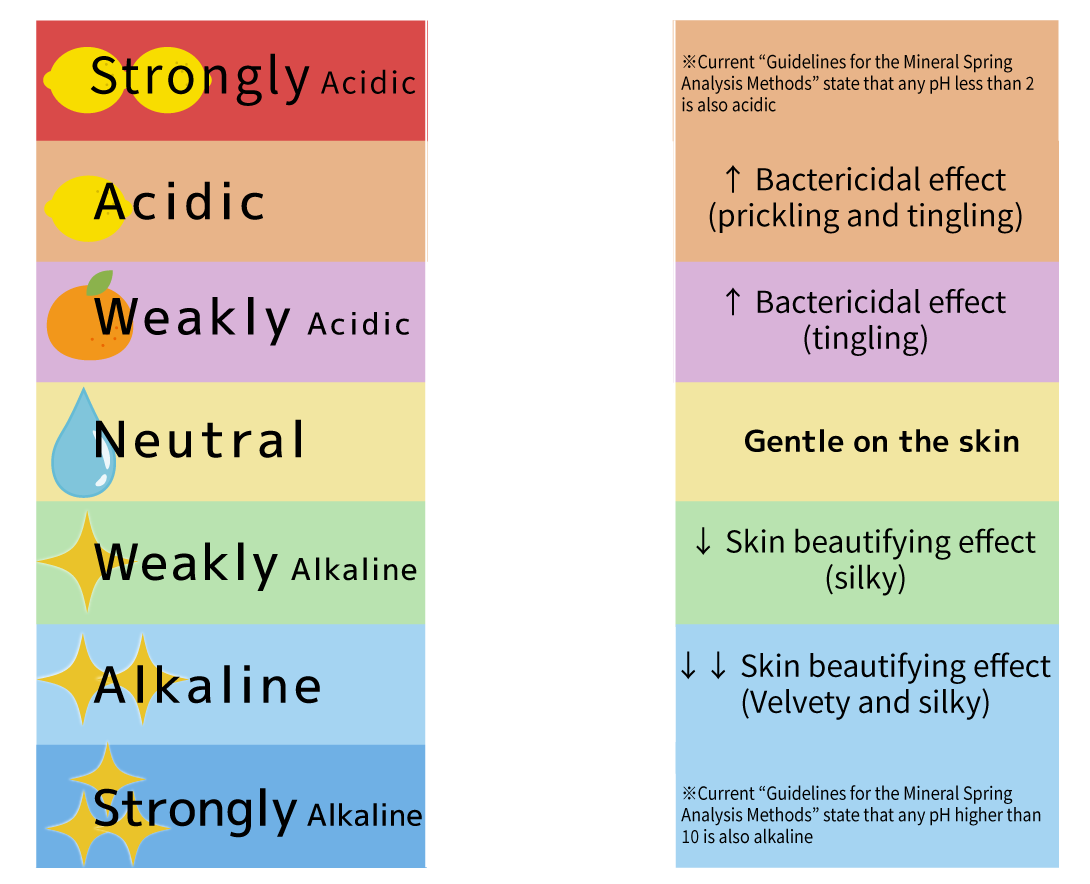
In the hot spring analysis report, the section titled “Examination and test results at gushing location” includes the listed pH value. Chemically, a pH of 7.0 is considered neutral; values below this are acidic, and values above it are alkaline. According to the “Guidelines for the Mineral Spring Analysis Methods”, the chemical nature of a mineral spring is classified based on its pH value at the time of emergence, as shown in the table below.
pH 6.4
Classified as Neutral
Spring Temperature
(Hypotonic, Neutral, High temperature spring)
60.5℃
Classified as High temperature spring
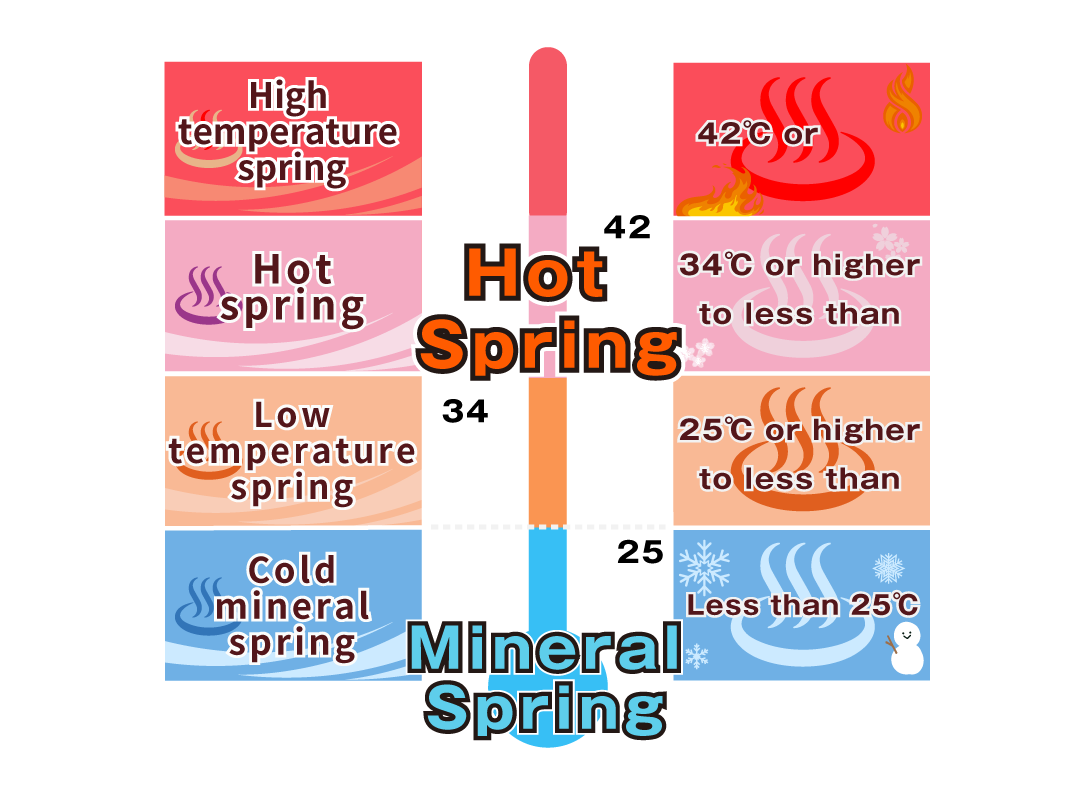
Under the “Hot Springs Act”, water that contains one or more designated substances at or above the legally specified levels and has a source temperature of 25°C or higher is classified as a “hot spring”. If the temperature is below 25°C, it is labeled a “cold mineral spring”. Furthermore, as noted above, hot springs are classified by source temperature as high-temperature spring, hot spring, or low-temperature spring.
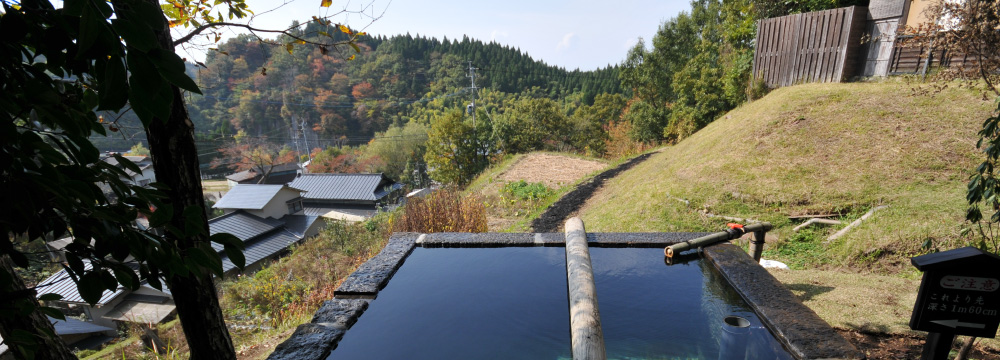
Standing Bath in the Large Public Baths for men and women “Mori-no-Yu”
When the bathhouse was renovated in 2009, the “Deepest Standing Bath in Japan” was created in the men's bath. There is a wooden stick to hold on to, but please be careful when bathing. In winter, when the leaves are falling, the view of the satoyama can be seen through the branches of the trees.
Facility Data
| Founded in | 2002 (Heisei 14) |
|---|---|
| Check in | 3:00 PM |
| Check out | 10:00 AM |
| Location | Mountains |
| Rooms | Total of 9 rooms (6 Japanese-style rooms [all with bath and toilet], and 3 Japanese-Western style rooms [all with bath and toilet]) |
| Capacity | 45 persons |
| Parking | 20 cars |
| Facilities | Shop, Foot bath |
| Internet | Wi-Fi available |
| Barrier-free | Not supported |
| Bidet toilet | Equipped |
Keywords for this inn
| Located on a hillside at the edge of Kurokawa Onsen, offering sweeping views over the valley |
| All rooms feature private open-air baths with natural free flowing hot spring water |
| Every room is a detached villa, providing a secluded stay surrounded by nature |
| A scenic private open-air bath available exclusively for guests |
| Creative kaiseki cuisine featuring a modern take on Kumamoto flavors |
Hot Spring (Onsen) Report
| Kurokawa Onsen has become one of the most popular hot spring areas not only in Kumamoto Prefecture and Kyushu, but also in Japan. The hot spring town stretches along the Tanoharu River in a valley, and is mainly made up of small-scale inns with 30 or fewer guest rooms. The exterior of the inns, all with clay walls and kawara tiled roofs, combined with the surrounding countryside,... Read more → |
Transportation Access
| By bus | ○From Fukuoka: Express buses are available via Hakata Station, Tenjin Station, and Fukuoka Airport (Nishitetsu Express Bus)
○From Kumamoto: Highway buses available via Kumamoto Station, Aso Kumamoto Airport, and Aso Station (Trans Kyushu Bus) ※For Trans Kyushu Bus, there are two types of buses: one includes sightseeing in Aso and the other does not. Also available from Beppu area. ※Sanko Bus is also available from Kumamoto area. Nishitetsu Express Buses are available for Hita Station (many services, transfer at Hita Station) and for Tsuetate Onsen (few services). |
|---|---|
| Shuttle bus | None |
| By car | From Oita Expressway “Hita IC”, 60 min. on Route 212, 70 min. from “Yufuin IC”. 90 min. from Kyushu Expressway “Kumamoto IC”. |
| Address | Kumamoto / Kurokawa Onsen / Ryokan Kounoyu
6784 Manganji, Minami-Oguni machi, Aso-gun, Kumamoto 869-2402 TEL:+81-(0)967-48-8700 |