Kanto > Gunma > Ikaho Onsen
“Kogane-no-yu” 100% natural free-flowing hot spring water / One of the oldest ryokan in Ikaho, established 500 years ago and located in the center of the Stone steps
Chigira Jinsentei
千明仁泉亭
45 Ikaho, Ikaho-machi, Shibukawa-shi, Gunma 377-0102, JAPAN
Phone:+81-(0)279-72-3355
Spring Quality
Calcium, Sodium – Sulfate / Hydrogen carbonate / Chloride springs
カルシウム・ナトリウム-硫酸塩・炭酸水素塩・塩化物泉
(Hypotonic, Neutral, Hot spring)
The renowned “Kogane-no-Yu” Golden Spring: 100% free-flowing
500 years of skin-beautifying tradition in every drop
Hot springs are believed to form when rainwater or snowmelt seeps underground, or when ancient seawater becomes trapped deep within the earth. Heated by magma or the earthʼs internal heat, this water dissolves minerals from underground rocks and slowly rises to the surface over years—or even tens of thousands of years.
Onsen Components
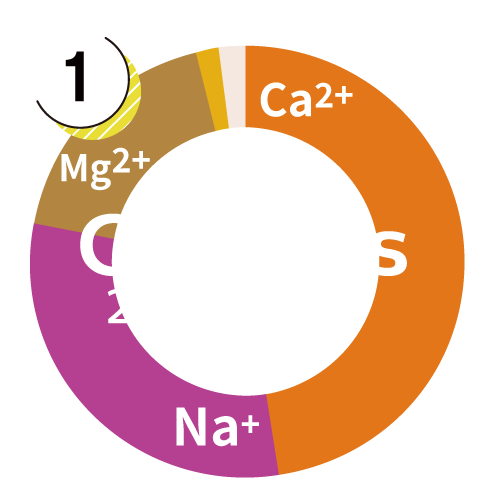
139.0 mg/kg
47.77 mval%
■ Promotes the formation and regeneration of the stratum corneum
■ Soothes pain and inflammation
■ Regulates the contraction and dilation of blood vessels
■ Strengthens the skin’s barrier function
101.0 mg/kg
30.33 mval%
■ Moisturizes and helps soothe dry skin
■ Relieves muscle tension and eases pain
■ Promotes blood circulation, helping to reduce sensitivity to cold
■ Stimulates metabolism and supports natural detoxification
32.2 mg/kg
18.25 mval%
■ Suppresses nerve excitability
■ Relaxes muscles
■ Soothes pain and inflammation
■ Strengthens the skin’s barrier function
7.23 mg/kg
1.78 mval%
■ Thermal effects through improved blood circulation
■ Color change due to oxidation—turning reddish-brown as iron(II) ions oxidize to iron(III) ions
■ Mild antiseptic and astringent properties
■ Helps relieve women-specific concerns, including anemia, menstrual irregularities, menopausal symptoms, and sensitivity to cold
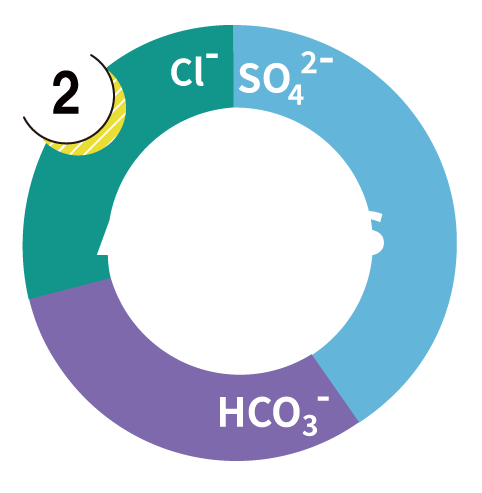
284 mg/kg
40.64 mval%
■ Dilates blood vessels and promotes blood circulation to the extremities
■ Regulates the autonomic nervous system through the warming effect of increased blood flow
■ Promotes skin turnover to restore firmness and elasticity
■ Supports recovery from skin issues such as dry skin and minor cuts
275 mg/kg 30.96 mval%
■ Removes old keratin and excess sebum, leaving the skin smooth and moisturized
■ Leaves the skin feeling fresh and clean after bathing
■ Washes away impurities from the skin, keeping it clean
■ Promotes blood circulation and improves peripheral blood flow
146 mg/kg
28.40 mval%
■ Effective for minor cuts due to the bactericidal effect of salt
■ Salt coats the skin, helping lock in warmth
■ Sustained warmth helps balance the autonomic nervous system
■ Salt coating helps lock in moisture
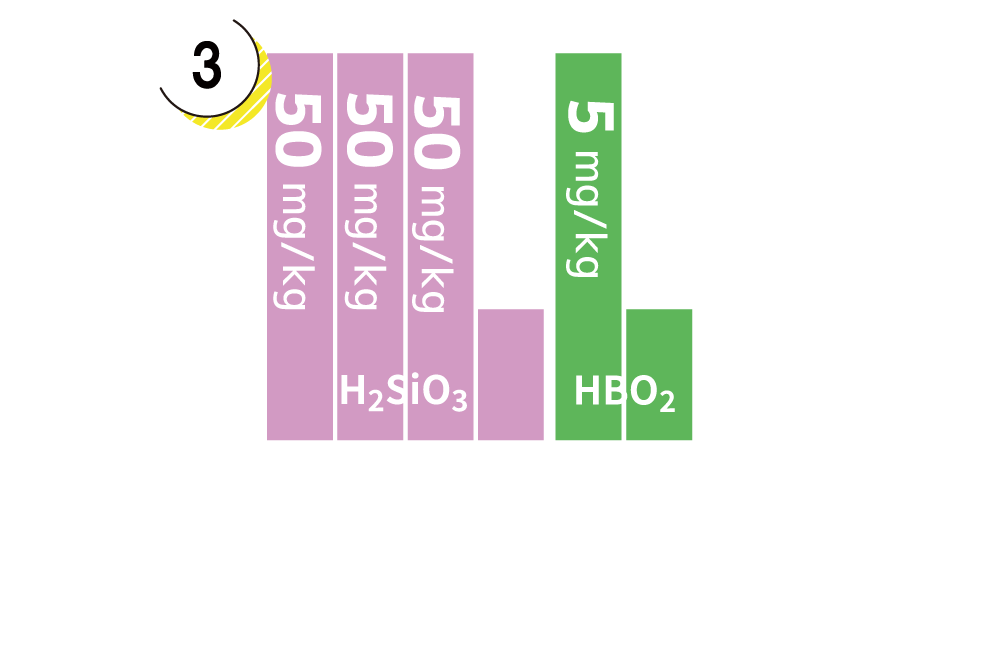
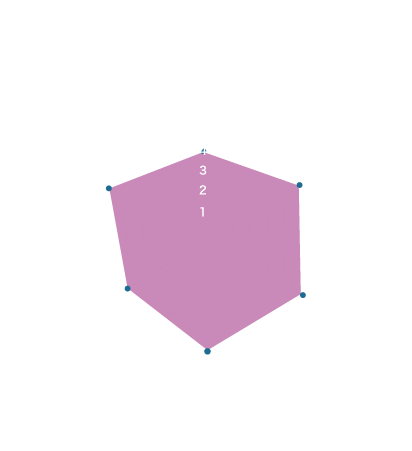
*The bars for Metasilicic acid 50 mg/kg and Metaboric acid 5 mg/kg represent the qualification criteria for hot springs. The number of bars indicates values such as “more than XX times the hot spring standard” or “about XX times the hot spring standard”.
 Metasilicic Acid
 189 mg/kg
■ Natural moisturizing component
■ More than 3 times the hot spring standard (50 mg/kg)
8.30 mg/kg
■ Helps keep the skin clean
■ Exceeds the hot spring standard (5 mg/kg)
 +
+ +
+
Total Dissolved Substances
(excluding gaseous)
1,184 mg/kg
 8 times more components than commercial bath additives!

Hydrogen Ion
Concentration
pH 6.4
Neutral
with the skin’s natural pH
Spring Temperature
41.2 ℃
Maintained at a comfortable temperature by adjusting the water flow
Color of water /
Smell of water

Dark reddish-brown

Slight scent of iron
Hot Spring Flow Rate
400~800 L/min
(Private source / Mechanically pumped)

Hot spring water usage per person (spring discharge / maximum capacity)
→ 400~800L / 130 guests = 3.07~6.15 L / per minute
*To meet the requirements for kakenagashi (flowing directly from the source),
at least 1 L of hot spring water per minute per bather
is required for proper bath management
Status of Source Utilization
| Water added | Heated | Disinfected | Circulated | Bath additives |
|---|---|---|---|---|
| No | Yes/No | No | No | No |
* All baths are supplied with 100% natural free-flowing hot spring water
* Hot spring water is heated except during the summer months
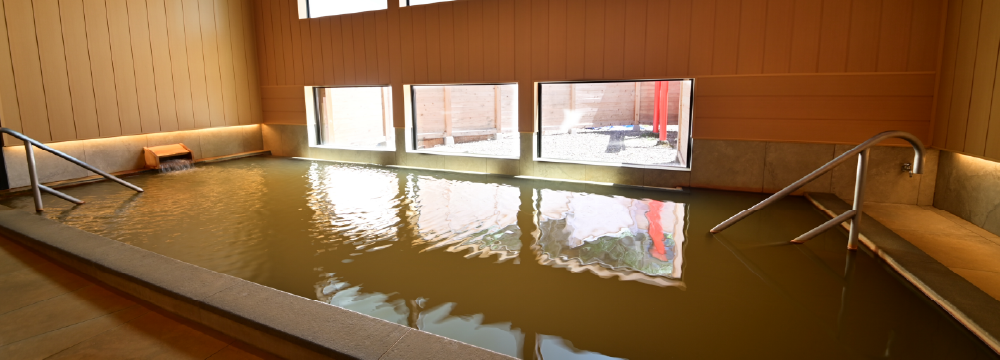
Large public baths for men and women “Megumi-no-Yu”
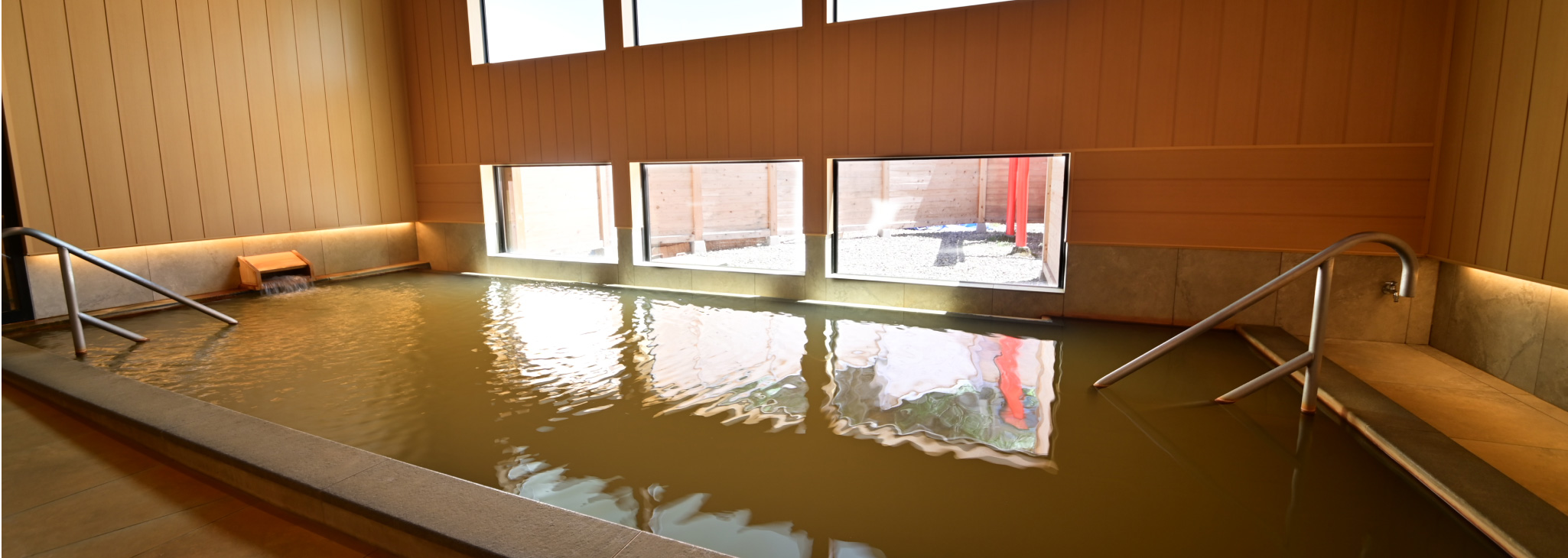
The symbolic large bathhouse of this inn. The baths are filled with “Kogane-no-Yu” (golden water) which is poured luxuriously free-flowing into the bathtub. It looks like an ordinary bathtub, but it is actually 1 meter deep. Regular customers call it a hot spring pool. The size of the bathtub is 5m x 3m, and walking is fine, but if you are lucky enough to use this bath alone, there is a very high probability that you will end up swimming in it.
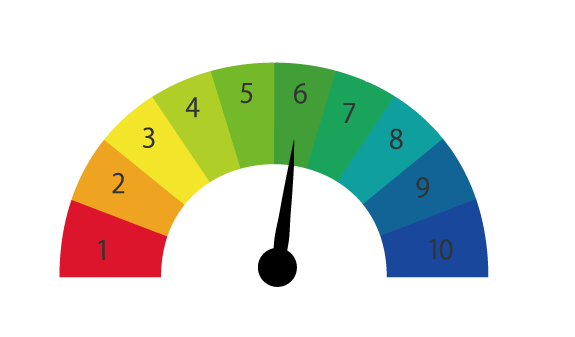
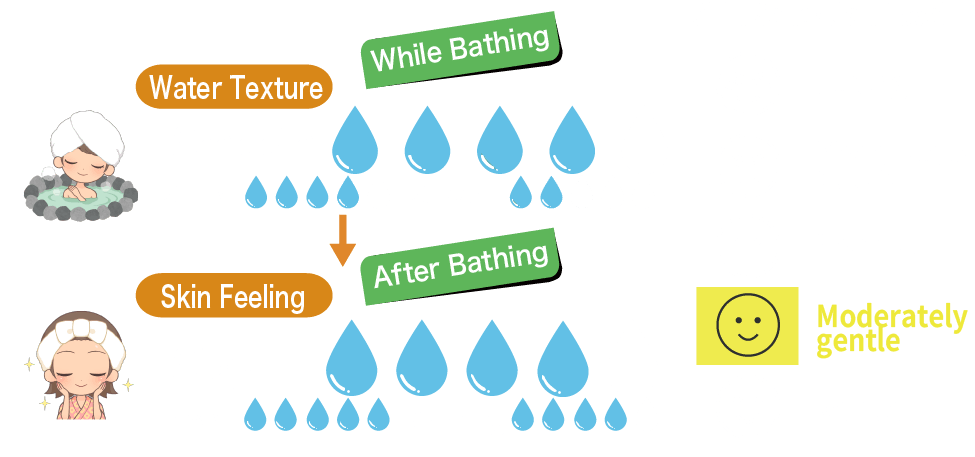
Skin Feeling Gauge
Ideal for:
People interested in skin‑beautifying effects
People who enjoy a refreshing post-bath feeling

People looking to improve skin firmness and radiance
People with minor cuts

People sensitive to cold
People with dry skin
People looking to relax and relieve stress

Indications by Spring Quality
(for bathing)
 Cuts
Cuts Peripheral circulatory disturbance
 Sensitivity to cold
 Depression
 Dry skin
General Indications (for bathing)
Chronic pains or stiffness of muscles or joints (chronic phase of rheumatoid arthritis, osteoarthritis, lower back pains, nerve pains, frozen shoulder, bruises, sprains, etc.), Muscle stiffness in motor paralysis, Sensitivity to cold, Peripheral circulatory disturbance, Gastrointestinal hypofunction (slow digestion, intestinal gas formation, etc.) Mild hypertension, Impaired glucose tolerance (diabetes), Mild hypercholesterolemia, Mild asthma or Emphysema, Hemorrhoidal pains, Autonomic instability, Various symptoms from stress (sleep disorders, depression, etc.), Restorative phase from illness, Recovery from fatigue, Health promotions
General Contraindications (for bathing)
Active stage of diseases (especially when fever is accompanied), Active tuberculosis, Advanced
malignant tumor or the case of significant debility involving severe anemia, Severe cardiac or lung
diseases involving suffocation feelings with a little movement, Severe kidney diseases involving
edema, Gastrointestinal bleeding, When bleeding is visible, Acute exacerbation stage of chronic
diseases
*There are no general indications or contraindications for drinking.
Onsen Power Chart
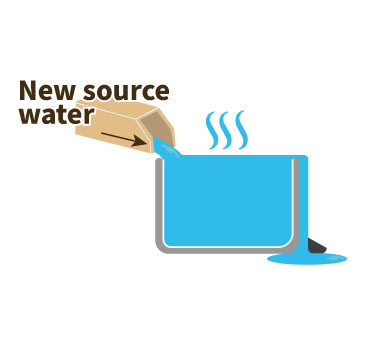
All baths are supplied with 100% natural free-flowing hot spring water
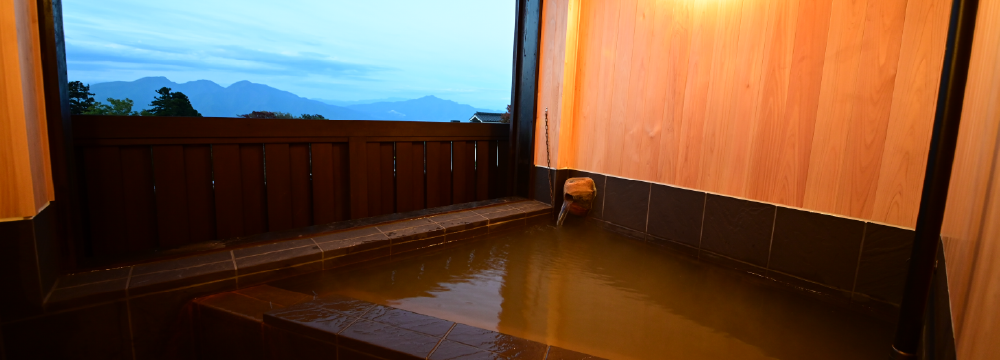
Guest room open-air bath “Benimashiko”
Guest room open-air bath in the special annex “Tsuru-no-Ie”. Taking advantage of the inn's location on the slope of the Ishidan Street, the guest room open-air baths offer a view of Mt. Onokoyama and Mt. Komochiyama. Of course, the hot spring water is 100% “Kogane-no-Yu” (golden water) free-flowing hot spring water. At night, the bath can be used as an indoor bath by closing the window. To be able to freely bathe in the famous hot spring at any time of the day is the ultimate in luxury.
Keywords of this Onsen
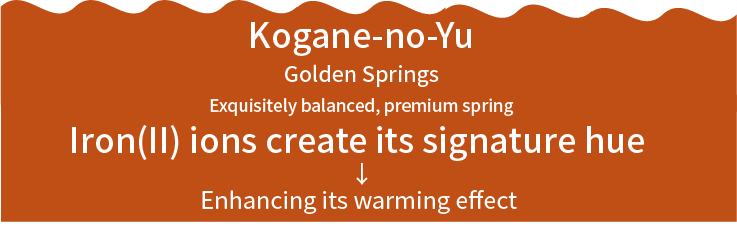
①Sulfate springs promote circulation, warming the body from within, while ③Chloride springs form a protective saline layer to retain heat. ②Hydrogen carbonate springs create a refreshing sensation through gentle moisture evaporation, and ④Metasilicic acid helps maintain skin hydration. Together, these elements define a composition worthy of a renowned hot spring.
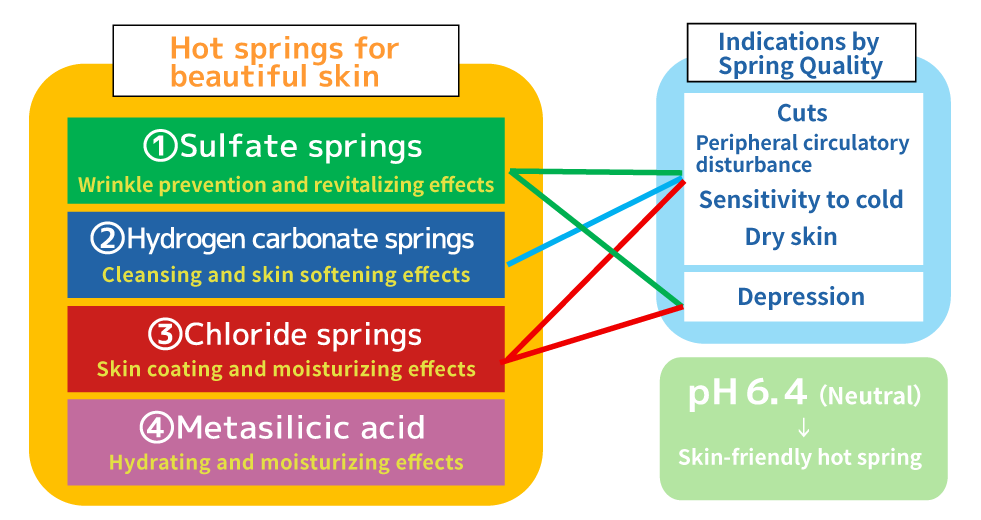
Cuts・・・②Hydrogen carbonate springs help cleanse wounds, ①Sulfate springs promote tissue regeneration, and ③Chloride springs support disinfection.
Peripheral circulatory disturbance・・・②Hydrogen carbonate springs regulate metabolism, ①Sulfate springs dilate blood vessels, and ③Chloride springs prevent heat loss while promoting peripheral blood flow.
Sensitivity to cold・・・②Hydrogen carbonate springs condition the skin to allow heat to penetrate, ①Sulfate springs dilate blood vessels to warm the body from within, and ③Chloride springs lock in warmth with a protective salt layer.
Dry skin・・・②Hydrogen carbonate springs exfoliate dead skin cells to smooth the skin, ①Sulfate springs and ④Metasilicic acid provide rich hydration, and ③Chloride springs help retain moisture with a protective salt layer.
Depression・・・①Sulfate springs help regulate the autonomic nervous system, and ③Chloride springs promote parasympathetic activity, helping to relieve mental tension.
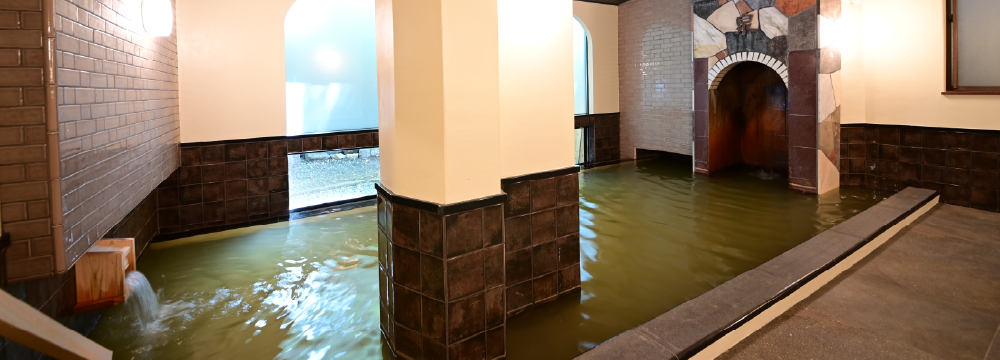
Large public baths for men and women “Takiyu”
The atmosphere has a retro feel that is completely different from “Ninoyu”. As the name of the bath suggests, “Kogane-no-Yu” (golden water) falls into the bathtub like a waterfall. The “Takiyu” and “Ninoyu” are switched at 1:00 a.m. midnight between the men's and women's baths. If you stay overnight, be sure to soak in both baths.
Onsen Classification
️Hot springs are classified not only by their spring quality, but also by three additional factors: osmotic pressure, hydrogen ion concentration (pH level), and spring temperature.
Osmotic Pressure
(Hypotonic, Neutral, Hot spring)
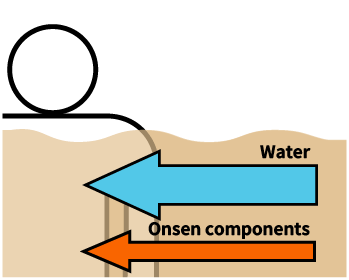
In hot spring classification, “osmotic pressure” refers to comparing the concentration of dissolved components in the spring water (mainly salts) with that of human body fluids (such as blood and intracellular fluid). Based on this comparison, springs are categorized as hypotonic, isotonic, or hypertonic. The difference in concentration serves as an indicator of how easily water moves between the hot spring water and body fluids.
Total Dissolved Substances
1,184 mg/kg
Classified as a Hypotonic spring
|
|||||
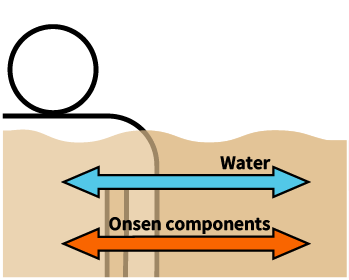 |
Isotonic 👤 Body fluid concentration ≒ ♨ Onsen concentration Water・・・Hardly moves into or out of the body Onsen components・・・Minimally absorbed and act gently on the body Isotonic means having the same osmotic pressure as human body fluids. It is equivalent to a saline solution made by dissolving approximately 8.8 g of salt in 1 liter of water. Because its concentration is close to that of body fluids, there is little movement of water or onsen components due to osmotic pressure. As a result, it is considered to place the least strain on the body and to be the gentlest in terms of stimulation. |
||||
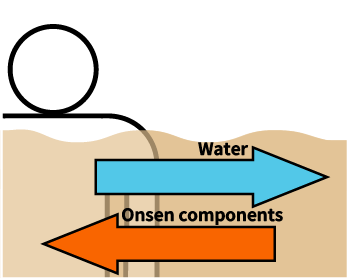 |
Hypertonic 👤 Body fluid concentration < ♨ Onsen concentration Water・・・Easily moves out of the body Onsen components・・・Easily absorbed into the body Because its osmotic pressure is higher than that of human body fluids (isotonic fluids), water tends to move out of the body more easily, while onsen components are more readily absorbed into the body. As a result, stronger therapeutic effects may be expected. However, hypertonic hot springs are also more likely to cause “hot spring fatigue (yu-atari)” and can be more physically demanding. They are generally regarded as “rich or highly concentrated hot springs”. Among Japanese hot springs, hypertonic springs are relatively uncommon, and a comparatively large proportion are classified as mineral springs (below 25°C) rather than hot springs (25°C or higher). |
||||
Hydrogen Ion Concentration
(Hypotonic, Neutral, Hot spring)
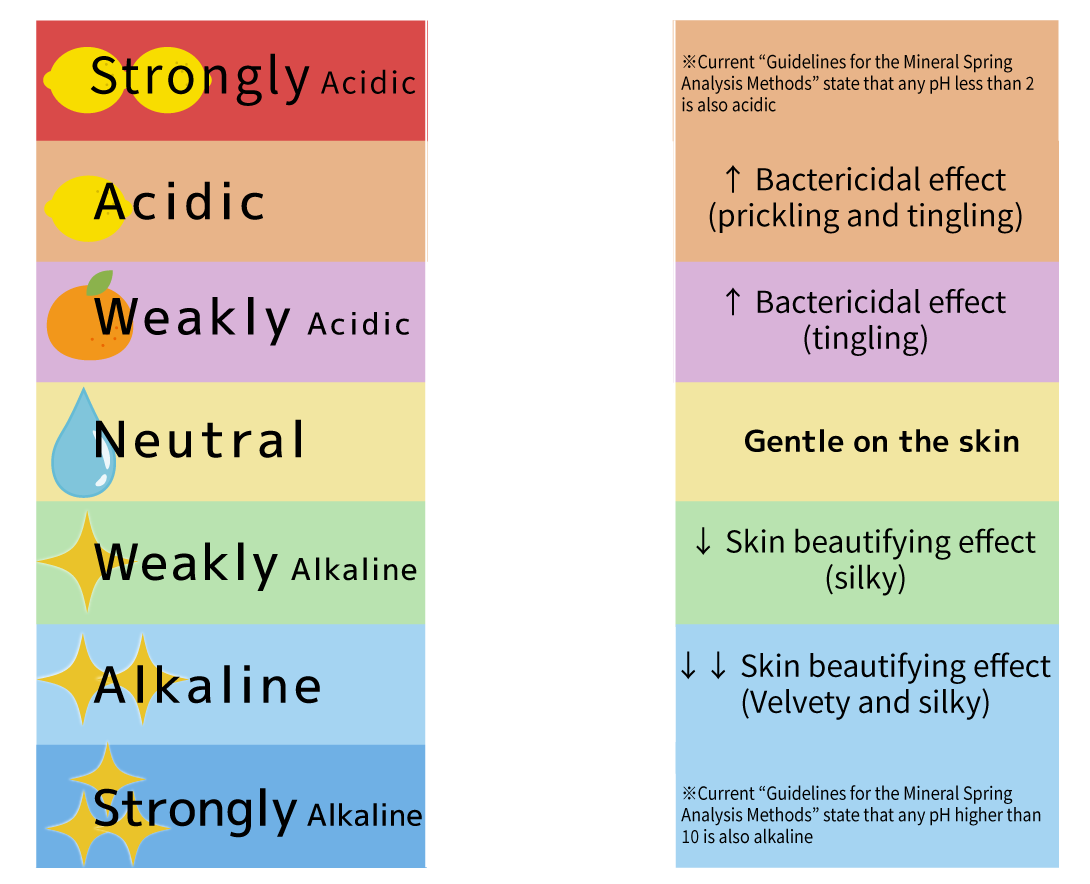
In the hot spring analysis report, the section titled “Examination and test results at gushing location” includes the listed pH value. Chemically, a pH of 7.0 is considered neutral; values below this are acidic, and values above it are alkaline. According to the “Guidelines for the Mineral Spring Analysis Methods”, the chemical nature of a mineral spring is classified based on its pH value at the time of emergence, as shown in the table below.
pH 6.4
Classified as Neutral
Spring Temperature
(Hypotonic, Neutral, Hot spring)
41.2℃
Classified as Hot spring
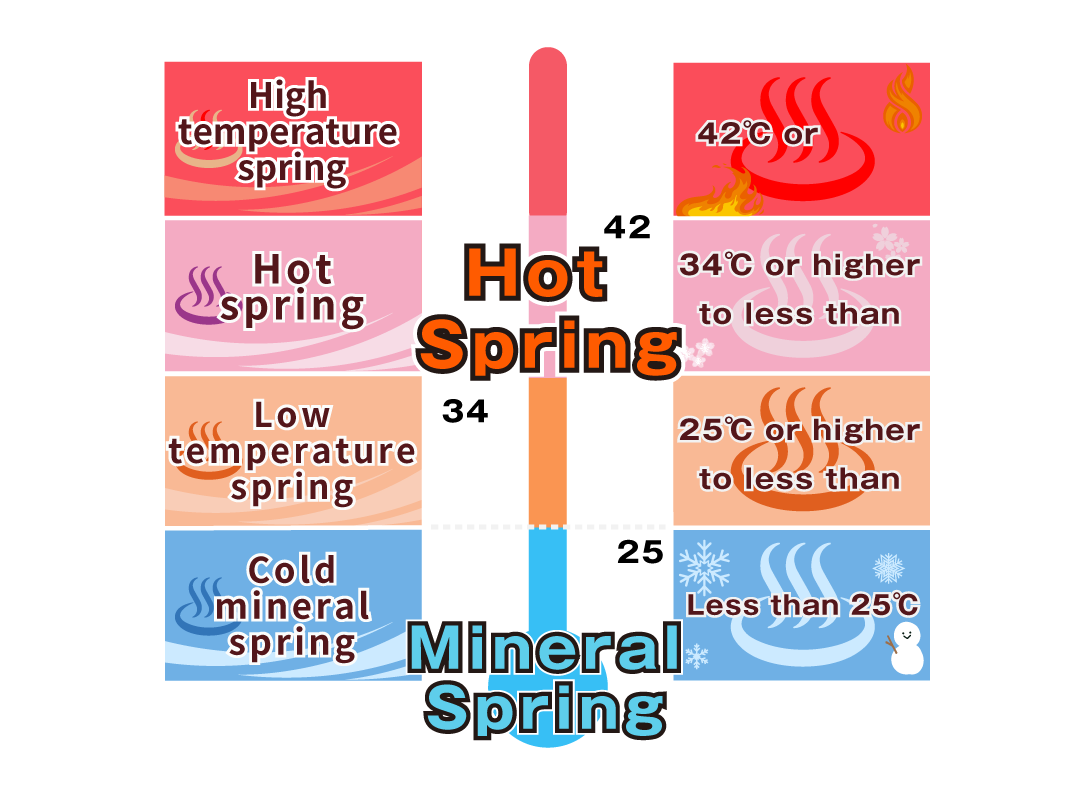
Under the “Hot Springs Act”, water that contains one or more designated substances at or above the legally specified levels and has a source temperature of 25°C or higher is classified as a “hot spring”. If the temperature is below 25°C, it is labeled a “cold mineral spring”. Furthermore, as noted above, hot springs are classified by source temperature as high-temperature spring, hot spring, or low-temperature spring.
Private bath “Kokoro”
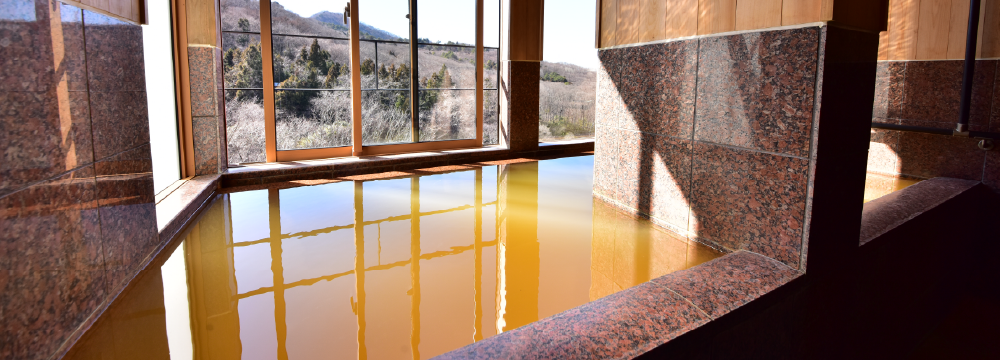
Besides the public baths and open-air baths, the inn is also equipped with a private bath with free-flowing hot spring water, which can be used even late at night. The baths are free of charge. There are three other baths in addition to this one, and even when the inn is fully booked, it is possible to use them without waiting too long.
Facility Data
| Founded in | 1502 (Muromachi period) |
|---|---|
| Check in | 3:00 PM |
| Check out | 10:00 a.m. * “Tsuru-no-Ie”, an annex of guest rooms with open-air baths, is at 11:00 a.m. |
| Location | The center of Onsen town |
| Rooms | All 33 rooms (Main building: 3 rooms with half open-air bath, annex: 4 rooms with half open-air bath, 26 rooms with toilet) |
| Capacity | 130 persons |
| Parking | Available for 100 cars |
| Facilities | Cafe, Bar, Esthetic salon, Table tennis, Private dining rooms, Karaoke, Shop |
| Internet | Wi-Fi available in all rooms |
| Barrier-free | Supported in some areas (wheelchair-accessible guest rooms, handrails on stairs and passageways, wheelchairs for free rental) |
| Toilet with washer | All rooms are equipped |
Keywords for this inn
| A long-established ryokan located on Ikaho’s iconic Stone steps |
| 100% free-flowing “Kogane-no-yu” hot spring, renowned for its skin-beautifying effects |
| Rooms with open-air baths overlooking the mountains of Joshu, Echigo, and Nikko |
| Private baths with natural hot spring water, available anytime |
| Anti-aging esthetic treatments available for couples |
Hot Spring (Onsen) Report
| In Gunma Prefecture, there are 3 excellent hot spring resorts known as the “Three Famous Hot Springs of Joshu” —Kusatsu, Ikaho, and Shima. Among them, Ikaho Onsen is especially well-known for its reddish-brown colored hot spring called “Kogane-no-Yu” (Golden Hot Spring). Located nearly in the center of Gunma Prefecture, Ikaho Onsen is situated at an elevation of 700 to 800 meters on the northeastern... Read more → |
Transportation Access
| By train | From Ueno Station, 105 minutes by express train to Shibukawa Station, 30 minutes by bus / From Tokyo Station, take Shinkansen to Takasaki Station, 25 minutes by Joetsu Line to Shibukawa Station, 30 minutes by bus |
|---|---|
| By bus | Approx. 150 min. from Tokyo/Shinjuku Station by direct highway bus "Ikaho Onsen-go" or Kanetsu Expressway Highway Bus "Jyoshu Yumeguri-go". 7 min. walk from Ikaho Roka Kinenkan-mae stop. |
| By car | Kanetsu Expressway - Exit at Shibukawa/Ikaho IC, 20 min. |
| Address | Gunma / Ikaho Onsen / Chigira Jinsentei 45 Ikaho, Ikaho-machi, Shibukawa-shi, Gunma 377-0102, JAPAN. Phone:+81-(0)279-72-3355 |