Hokkaido > Central Hokkaido > Otaru Asarigawa Onsen
A popular ryokan with a large Japanese garden and 28 guest rooms with open-air baths, each with its own private hot spring
Otaru Kourakuen
おたる宏楽園
5-18-2 Shinko, Otaru City, Hokkaido, 047-0152, JAPAN
Phone:+81-(0)134-54-8221
Spring Quality
Weak Alkaline Simple Hot Springs
弱アルカリ性 単純温泉
(Hypotonic, Weakly Alkaline, Low temperature spring)
A gentle, leading “Hot springs for beautiful skin”, effective for mental fatigue and insomnia.
Hot springs are believed to form when rainwater or snowmelt seeps underground, or when ancient seawater becomes trapped deep within the earth. Heated by magma or the earthʼs internal heat, this water dissolves minerals from underground rocks and slowly rises to the surface over years—or even tens of thousands of years.
Onsen Components
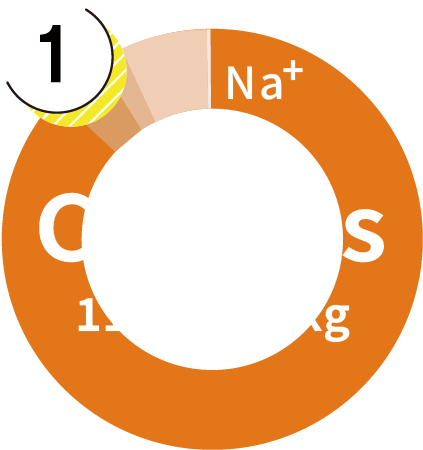
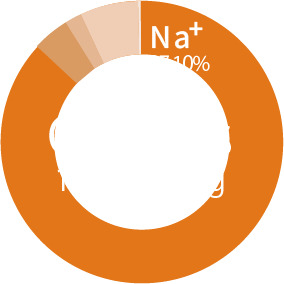
101 mg/kg
87.10 mval%
■ Moisturizes and helps soothe dry skin
■ Relieves muscle tension and eases pain
■ Promotes blood circulation, helping to reduce sensitivity to cold
■ Stimulates metabolism and supports natural detoxification
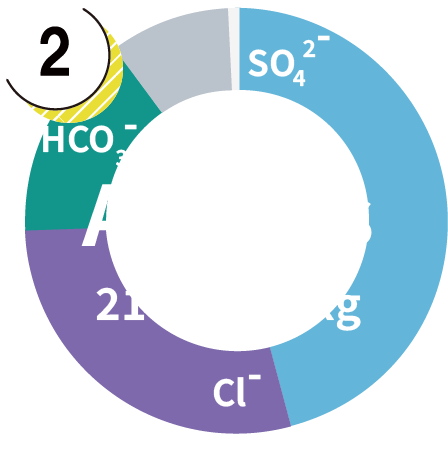
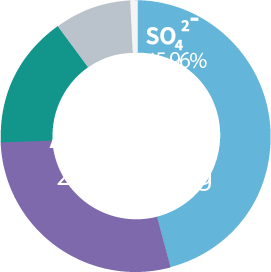
106.8 mg/kg
45.96 mval%
■ Dilates blood vessels and promotes blood circulation to the extremities
■ Regulates the autonomic nervous system through the warming effect of increased blood flow
■ Promotes skin turnover to restore firmness and elasticity
■ Supports recovery from skin issues such as dry skin and minor cuts
■ The main component of Sulfate springs, known as one of the “Hot springs for beautiful skin”
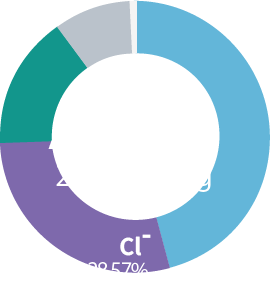
48.8 mg/kg
28.57 mval%
■ Effective for minor cuts due to the bactericidal effect of salt
■ Salt coats the skin, helping lock in warmth
■ Salt coating helps lock in moisture
■ Sustained warmth helps balance the autonomic nervous system
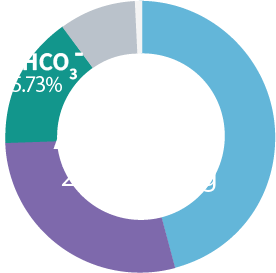
46.4 mg/kg
15.73 mval%
■ Removes old keratin and excess sebum, leaving the skin smooth and moisturized
■ Leaves the skin feeling fresh and clean after bathing
■ Washes away impurities from the skin, keeping it clean
■ Promotes blood circulation and improves peripheral blood flow
■ The main component of Hydrogen carbonate springs, known as one of the “Hot springs for beautiful skin”
* % values are simplified representations of mval%.
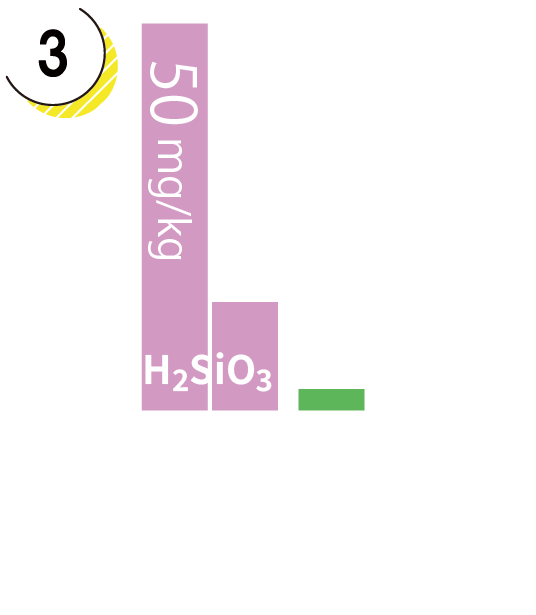
*The bars for Metasilicic acid 50 mg/kg and Metaboric acid 5 mg/kg represent the qualification criteria for hot springs. The number of bars indicates values such as “more than XX times the hot spring standard” or “about XX times the hot spring standard”.
 Metasilicic Acid 74.4 mg/kg
■ Natural moisturizing component
■ More than 1.5 times the hot spring standard (50 mg/kg)
0.5 mg/kg
■ Helps keep the skin clean
■ 4.5 mg/kg short of the hot spring standard (5 mg/kg)
 +
+ +
+
Total Dissolved Substances
(excluding gaseous)
404 mg/kg
 2~4 times more components than commercial bath additives!

Hydrogen Ion
Concentration
pH 8.4
Weakly Alkaline
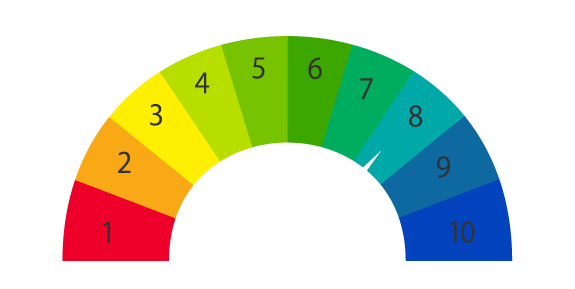
Spring Temperature
25.4 ℃
■ The system heats the water to maintain a comfortable temperature
Color of water /
Smell of water

Clear and Colorless

Odorless
Hot Spring Flow Rate
60 L/min
(Private source / Mechanically pumped)

Hot spring water usage per person (spring discharge / maximum capacity)
→ 60 L / 134 guests = 0.447 L / per minute
*To meet the requirements for kakenagashi (flowing directly from the source),
at least 1 liter of hot spring water per minute per bather
is required for proper bath management
Status of Source Utilization
| Water added | Heated | Disinfected | Circulated | Bath additives |
|---|---|---|---|---|
| Almost No | Yes | Yes | Yes | No |
* The bath is basically 100% natural hot spring water without dilution; however, when the water is replaced, a small percentage of natural spring water from within the property is added
* The water is heated because the source temperature is low
* For hygiene management, a circulation filtration system is used. For 45 minutes of each hour, the bath operates on circulation only, while for the remaining 15 minutes, fresh hot spring water is simultaneously added to the tub (a combination of free-flowing source water and circulation filtration)
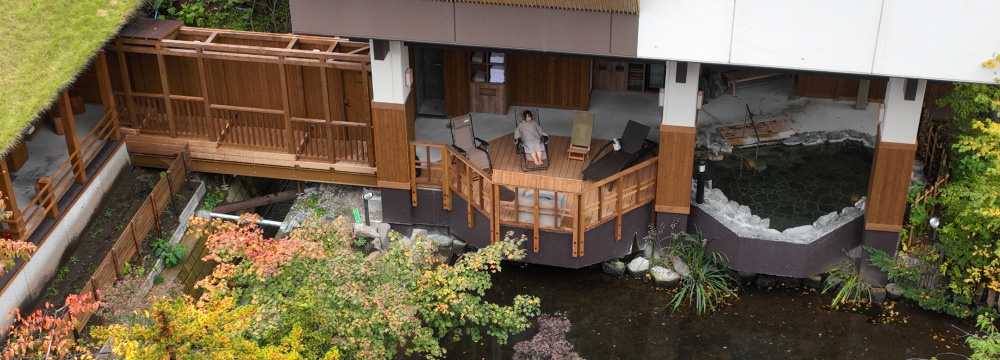
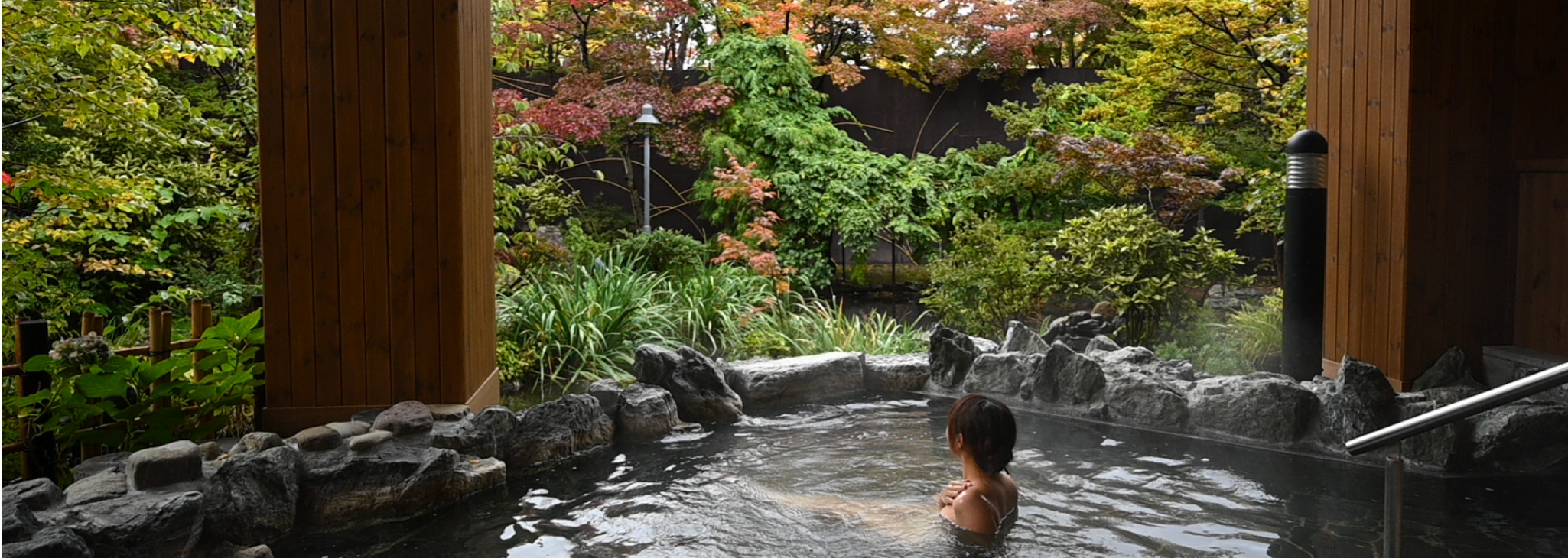
Large Public Open-air Bath “Mori-no-Yuya”
The open-air bath overlooks a spacious Japanese garden featuring a large pond, offering an exceptional sense of openness. In certain seasons, you may hear the croaking of frogs, creating a feeling of being fully immersed in nature. The relaxation area of the adjacent Finnish-style sauna also provides a comfortable and soothing experience.
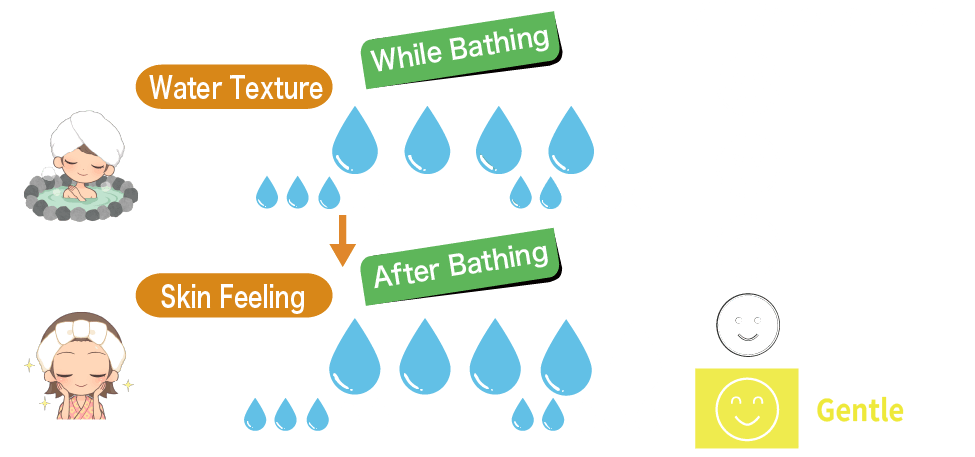
Skin Feeling Gauge
Ideal for:

People who want silky smooth skin
People who prefer gentler hot springs
People with sleep difficulties
People feeling
stressed

People recovering from injury or illness

Indications by Spring Quality
(for bathing)
 Autonomic instability
 Insomnia
 Depression
General Indications (for bathing)
Chronic pains or stiffness of muscles or joints (chronic phase of rheumatoid arthritis, osteoarthritis, lower back pains, nerve pains, frozen shoulder, bruises, sprains, etc.), Muscle stiffness in motor paralysis, Sensitivity to cold, Peripheral circulatory disturbance, Gastrointestinal hypofunction (slow digestion, intestinal gas formation, etc.) Mild hypertension, Impaired glucose tolerance (diabetes), Mild hypercholesterolemia, Mild asthma or Emphysema, Hemorrhoidal pains, Autonomic instability, Various symptoms from stress (sleep disorders, depression, etc.), Restorative phase from illness, Recovery from fatigue, Health promotions
General Contraindications (for bathing)
Active stage of diseases (especially when fever is accompanied), Active tuberculosis, Advanced
malignant tumor or the case of significant debility involving severe anemia, Severe cardiac or lung
diseases involving suffocation feelings with a little movement, Severe kidney diseases involving
edema, Gastrointestinal bleeding, When bleeding is visible, Acute exacerbation stage of chronic
diseases
*There are no general indications or contraindications for drinking.
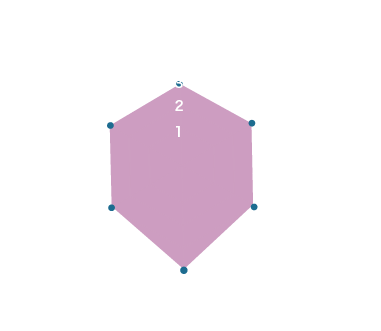
Onsen Power Chart
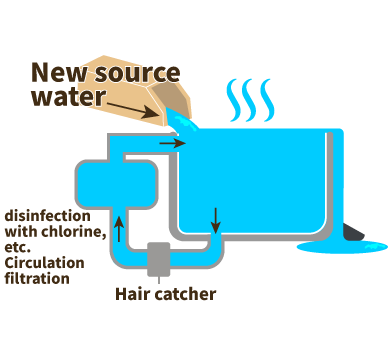
Combination of free-flowing hot spring water + circulation and filtration system
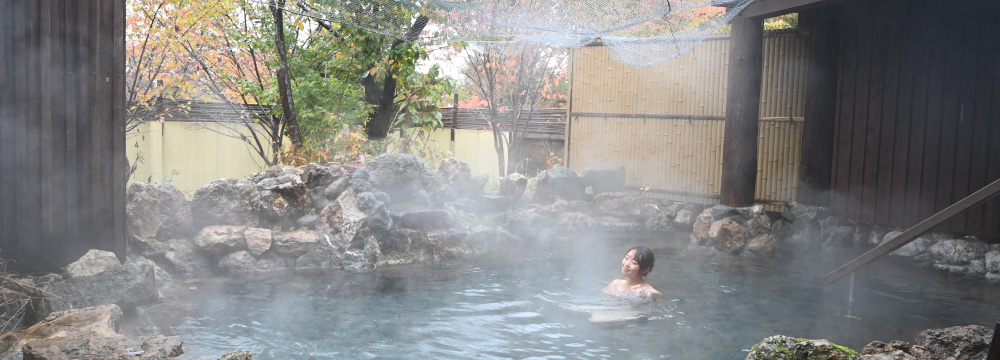
Large Public Open-air Bath “Iwa-no-Yu”
The open-air bath is designed with natural stones, creating a stunningly rustic atmosphere. In spring, cherry blossoms bloom, and guests can enjoy the changing scenery throughout the seasons. In addition to the spacious indoor bath with a sense of openness, a fully equipped Finnish-style sauna is also available.
Keywords of this Onsen
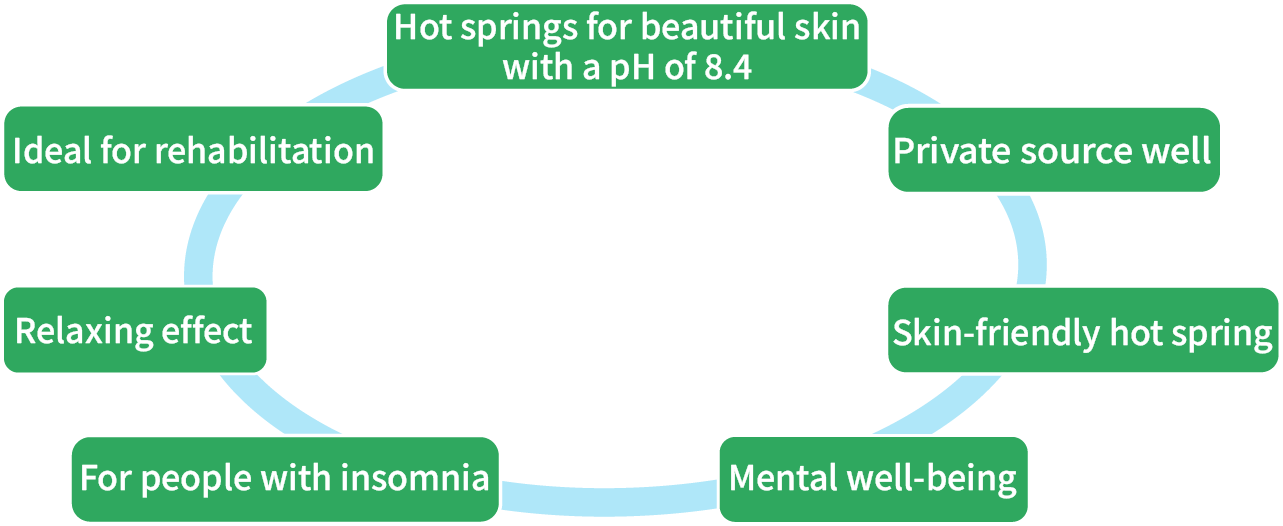
Hot springs for beautiful skin with a pH of 8.4
The synergistic effect of skin-smoothing weakly alkaline hot springs and moisturizing metasilicic acid
Private source well
The short distance from the source well to the bath helps keep the water fresh and minimizes degradation
Skin-friendly hot spring
With a relatively mild mineral content, the water is gentle and suitable for everyone, from infants to seniors
Mental well-being
The warming thermal effects help activate the parasympathetic nervous system, easing stress and lifting your spirits if you've been feeling down or unmotivated
→ Indications by spring quality: Autonomic instability
Perfect for those seeking deeper, more restful sleep
The gentle warming effect of the bath temporarily raises your core body temperature. As it gradually cools afterward, both body and mind relax, releasing tension and naturally promoting restful sleep
→ Indications by spring quality:Insomnia * This indication is officially recognized only for simple hot springs
Relaxing effect
Bathing in this low-irritation, gentle spring is less likely to cause hot spring fatigue, promoting mental stability and a deep sense of relaxation that sets both body and mind free
→ Indications by spring quality: Depression
Ideal for rehabilitation
Because of its gentle, skin-friendly properties, this spring is well suited for therapeutic use and has long been known as “Hot springs for stroke prevention” and “Hot springs for neuralgia”
What is the Weak Alkaline Simple Hot Springs of the “Sodium – Sulfate / Chloride springs” type?
If the total dissolved substances exceed 1,000 mg/kg, the spring is classified as a “Sodium – Sulfate / Chloride springs”. Since the total dissolved substances here are below 1,000 mg/kg, it is categorized as a “Simple Hot Springs”, which is characterized by being gentle and low in irritation to the skin. The water is rich in sulfate ions, which promote blood circulation and anti-aging, as well as chloride ions, which provide lasting warmth and bactericidal effects. In addition, its weakly alkaline nature helps remove old keratin and excess sebum, creating well-balanced “Hot springs for beautiful skin”.
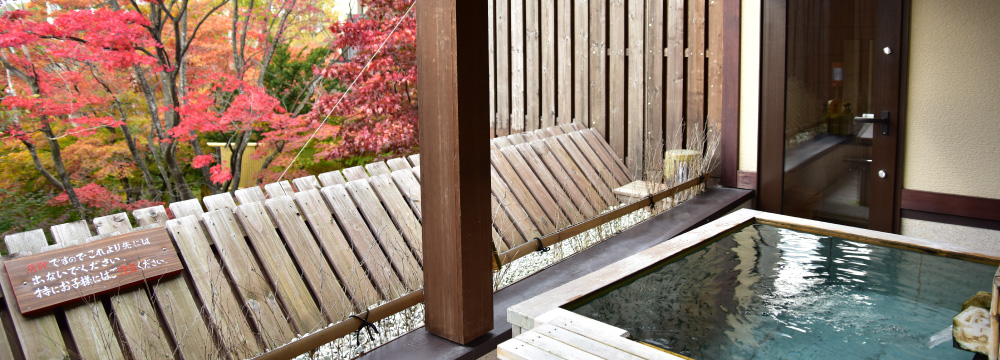
Open-air bath in guest room “Tsukimisou”
Each guest room features an open-air bath overlooking a lush garden, allowing guests to enjoy the changing scenery of each season. You can soak in the hot spring at any time and indulge in a truly relaxing and luxurious experience. With views that vary by room, this inn is beloved by many returning guests.
Onsen Classification
️Hot springs are classified not only by their spring quality, but also by three additional factors: osmotic pressure, hydrogen ion concentration (pH level), and spring temperature.
Osmotic Pressure
(Hypotonic, Weakly Alkaline, Low temperature Spring)
In hot spring classification, “osmotic pressure” refers to comparing the concentration of dissolved components in the spring water (mainly salts) with that of human body fluids (such as blood and intracellular fluid). Based on this comparison, springs are categorized as hypotonic, isotonic, or hypertonic. The difference in concentration serves as an indicator of how easily water moves between the hot spring water and body fluids.
Total Dissolved Substances
404 mg/kg
Classified as a Hypotonic spring
|
|||||
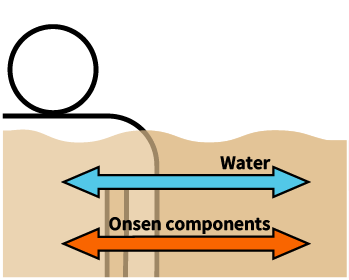 |
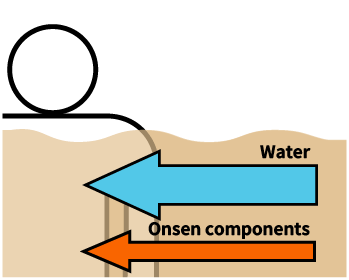
Isotonic 👤 Body fluid concentration ≒ ♨ Onsen concentration Water・・・Hardly moves into or out of the body Onsen components・・・Minimally absorbed and act gently on the body Isotonic means having the same osmotic pressure as human body fluids. It is equivalent to a saline solution made by dissolving approximately 8.8 g of salt in 1 liter of water. Because its concentration is close to that of body fluids, there is little movement of water or onsen components due to osmotic pressure. As a result, it is considered to place the least strain on the body and to be the gentlest in terms of stimulation. |
||||
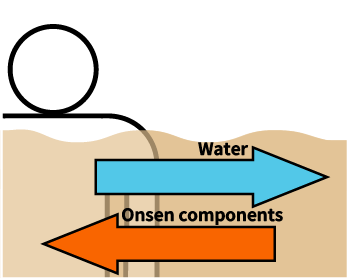 |
Hypertonic 👤 Body fluid concentration < ♨ Onsen concentration Water・・・Easily moves out of the body Onsen components・・・Easily absorbed into the body Because its osmotic pressure is higher than that of human body fluids (isotonic fluids), water tends to move out of the body more easily, while onsen components are more readily absorbed into the body. As a result, stronger therapeutic effects may be expected. However, hypertonic hot springs are also more likely to cause “hot spring fatigue (yu-atari)” and can be more physically demanding. They are generally regarded as “rich or highly concentrated hot springs”. Among Japanese hot springs, hypertonic springs are relatively uncommon, and a comparatively large proportion are classified as mineral springs (below 25°C) rather than hot springs (25°C or higher). |
||||
Hydrogen Ion Concentration
(Hypotonic, Weakly Alkaline, Low temperature Spring)
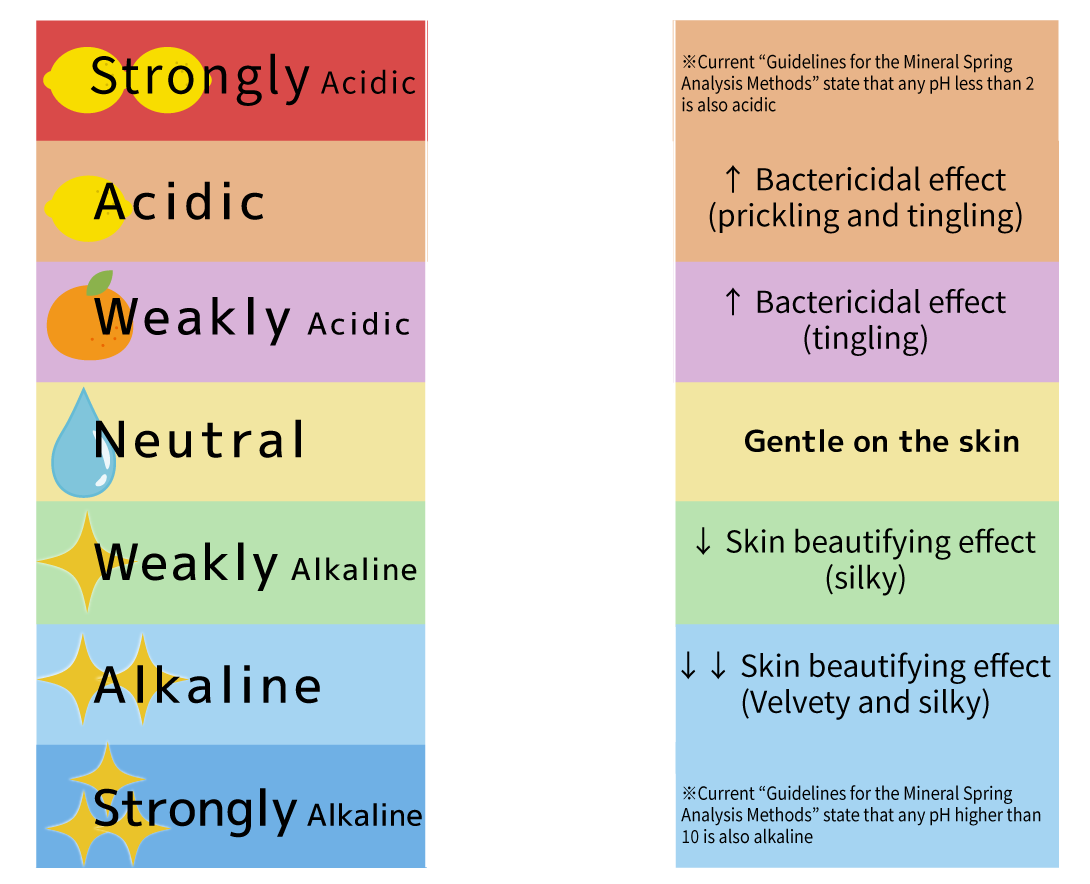
In the hot spring analysis report, the section titled “Examination and test results at gushing location” includes the listed pH value. Chemically, a pH of 7.0 is considered neutral; values below this are acidic, and values above it are alkaline. According to the “Guidelines for the Mineral Spring Analysis Methods”, the chemical nature of a mineral spring is classified based on its pH value at the time of emergence, as shown in the table below.
pH 8.4
Classified as Weakly Alkaline
Spring Temperature
(Hypotonic, Weakly Alkaline, Low temperature spring)
25.4℃
Classified as Low temperature spring
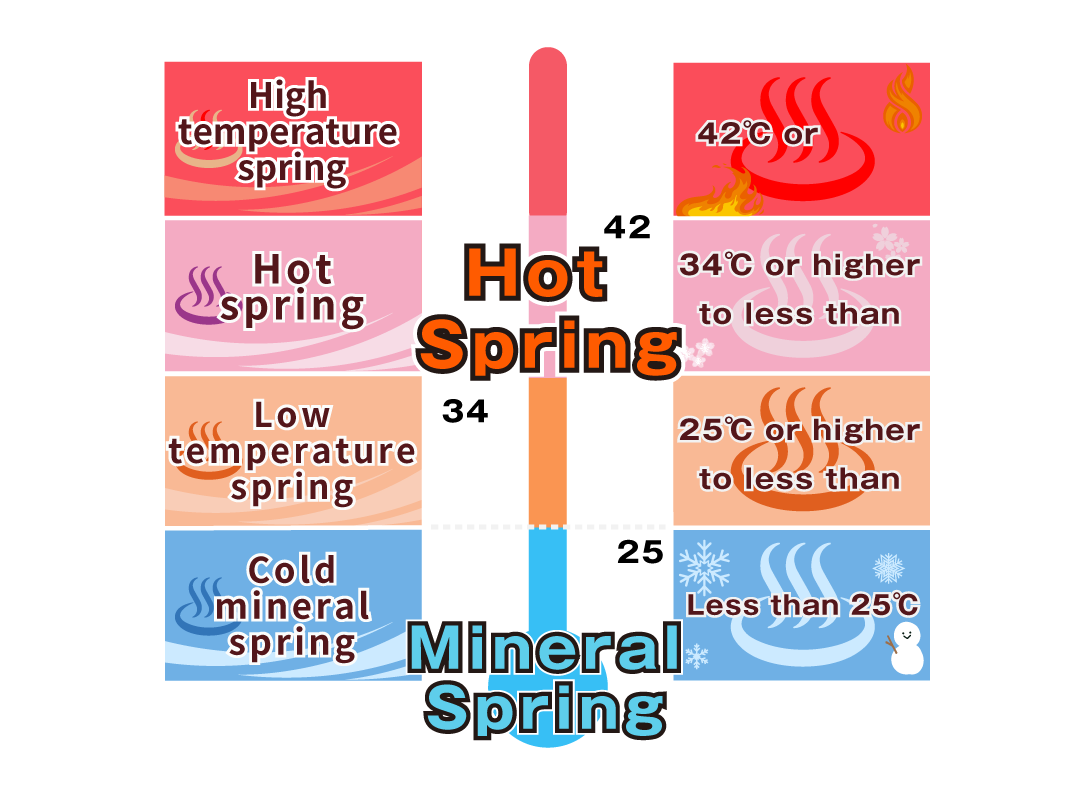
Under the “Hot Springs Act”, water that contains one or more designated substances at or above the legally specified levels and has a source temperature of 25°C or higher is classified as a “hot spring”. If the temperature is below 25°C, it is labeled a “mineral spring”. Furthermore, as noted above, hot springs are classified by source temperature as high-temperature spring, hot spring, or low-temperature spring.
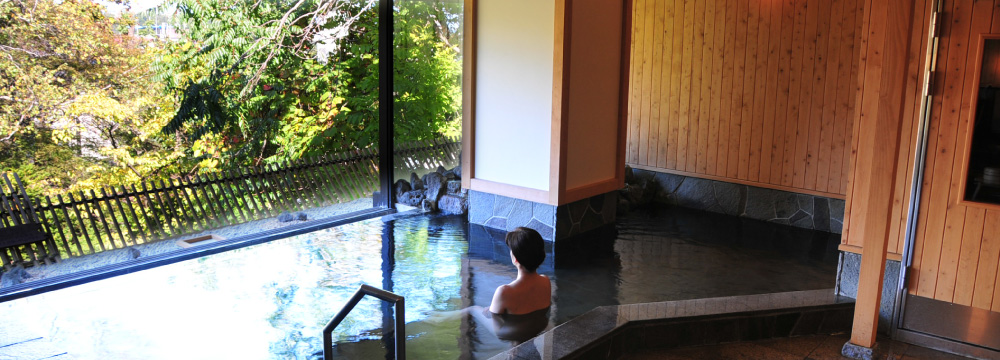
Private bath “Kokage-no-Ideyu”
This bathtub was originally part of the annex’s large public bath and has been renovated into a private bath, offering an impressive sense of spaciousness. Opening the large windows gives it the feel of a semi open-air bath. From here, you can enjoy a view of the inn’s proud Japanese garden below.
Facility Data
| Founded in | 1957 (Showa 32) |
|---|---|
| Check in | 3:00 PM |
| Check out | 11:00 AM |
| Location | Garden |
| Rooms | Total 35 rooms |
| Capacity | 134 people |
| Parking | 30 cars |
| Facilities | Lounge, Tea room, Spa treatment room, Smoking room, Banquet hall |
| Internet | Wi-Fi available |
| Barrier-free | Supported |
| Bidet toilet | Equipped |
Keywords for this inn
| Japanese garden stretching across 8,000 tsubo (approx. 26,400 m²) property, offers beautiful seasonal scenery throughout the year |
| 28 open-air bath guest rooms in a variety of styles |
| All 28 open-air bath guest rooms come in various types, including Japanese and Japanese–Western rooms |
| Genuine Finnish-style sauna where you can enjoy self-löyly |
| Convenient access to popular sightseeing spots, including the Otaru Canal |
Hot Spring (Onsen) Report
| Otaru Kourakuen has its own private source of spring on the premises. The advantage of private hot springs is that the distance between the spring and the bathtub is shorter, which reduces the chance of impurities mixing with the hot spring water before it is poured into the bathtub, keeping the water fresher. The further the bathtub is from the source well, the more the hot spring components deteriorate. Whether or not a facility has its own hot spring source is an important factor that hot spring enthusiasts should not overlook. The Japanese garden that stretches across the grounds is illuminated... Read more → |
Transportation Access
| By train | ●From JR New Chitose Airport Station Take the rapid airport train bound for Otaru (approx. 80 min.) →JR Otaru Chikko Station Approx. 10 min. by cab after train. ●From JR Sapporo Station Take the rapid train bound for Otaru (approx. 30 min.) →JR Otaru Chikko Station Approx. 10 min. by cab after train. |
|---|---|
| Shuttle bus | Available [Shuttle service upon arrival at Kaminoyama-Onsen Station by phone reservation (for hotel guests only)] |
| By car | Approximately 60 minutes from New Chitose Airport (from Chitose IC to Asazato IC on the Hokkaido Expressway) Approximately 40 minutes from Sapporo (to Asazato IC on the Hokkaido Expressway) Approximately 1 minute from the Asazato IC of the Sapporo Expressway |
| Address | Hokkaido/Otaru Asarigawa Onsen/Otaru Kourakuen 5-18-2 Shinko, Otaru City, Hokkaido, 047-0152, JAPAN +81-(0)134-54-8221 |