BETTEI SENJUAN
| Calcium, Sodium - Sulfate / Chloride Springs | pH |
|
| (低張性 弱アルカリ性 温泉) | ||
| (Hypotonic, Weakly alkaline, Hot Spring) | ||
| 旧泉質名:含食塩-石膏泉 | ||
Ideal for:
- People sensitive to cold
- People with dry skin
- People concerned about small cuts or wrinkles
- People interested in skin-beautifying effects
- People feeling stressed
- Address
- 614, Tanigawa, Minakami-machi, Tone-gun, Gunma 379-1619, JAPAN
- Phone
- +81-(0)278-20-4141

Official Website

Travel Journal
Hot Spring Power Chart (5-point scale)
Hydrogen Ion Concentration (pH)

- Comment
- A hot spring with skin-beautifying and wrinkle-preventing effects
Hot spring Specification
※This is an easy-to-understand expression based on the indications for each type of spring in the “Guidelines for the Mineral Spring Analysis Methods” revised in July 2014 by the Ministry of the Environment.
| ①Mental recovery | ②Insomnia | ③Promote blood circulation | ④Sensitivity to cold | ⑤Dry skin |
| ⑥Cuts | ⑦Skin diseases | ⑧Hypertension (mild) | ⑨Heartburn (drinking) | ⑩Gastrointestinal disorders (drinking) |
| ⑪Constipation (drinking) | ⑫Lifestyle-related disease | ⑬Diabetes | ⑭Gout | ⑮Countermeasures against metabolic syndrome |
| ⑯Biliary system anxiety | ⑰Anaemia | ⑱Arthritis rheumatica | ⑲Spinal pain | ⑳Improved immunity |
| ㉑Muscle pain・Neuralgia | ㉒Mild asthma | ㉓Hemorrhoidal pain | ㉔Recovery from an illness | ㉕Recovery from fatigue |
- ※Note①・・・Indications for each spring include autonomic instability and depression.(Simple springs・Chloride springs・Carbon dioxide springs)
- ※Note③・・・Indications for each spring include peripheral circulatory disturbance(Chloride springs・Carbonate springs・Carbon dioxide springs・Hydrogen sulfide type Sulfur spring)
- ※Note④・・・Indications for each spring include sensitivity to cold(Chloride springs・Carbonate springs・Sulfur springs・Carbon dioxide springs)and Iron containing springs
- ※Note⑦・・・Indications for each spring include xeroderma, atopic dermatitis, plaque psoriasis, epidermoid suppuration, chronic eczema(Chloride springs・Carbonate springs・Sulfate spring・Acid springs・Sulfur springs)
- ※Note⑨・・・Indications for drinking each spring include reflux esophagitis(Carbonate springs)
- ※Note⑩・・・Indications for drinking each spring include atrophic gastritis, gastroduodenal ulcerations(Chloride springs・Carbonate springs)
- ※Note⑪・・・For drinking, Chloride springs and Sulfate spring
- ※Note⑫・・・Indications for each spring include hypercholesterolemia, diabetes, gout(for bathing, Acid springs・Radioactive springs/for drinking, Carbonate springs・Iodine containing springs・Sulfur springs)
- ※Note⑮・・・Indications for drinking each spring include hypercholesterolemia(Sulfate spring・Iodine containing springs・Sulfur springs)
- ※Note⑱⑲・・・Indications for each spring include rheumatoid arthritis, ankylosing spondylitis(Radioactive springs)
- ※Note⑳・・・Radioactive springs
- ※Note㉑㉔・・Simple springs is suitable for rehabilitation due to its low level of stimulation, and is also called "hot spring for neuralgia" and "hot spring for stroke", although these are not listed as indications by spring quality.
| Applicable to indications by spring quality | Applicable to general indications |
7 Elements of Hot Springs for Beautiful Skin
Total4Points ※The number of points represents the quality of the “Hot springs for beautiful skin”.
| Skin cleansing effect | Anti-wrinkle and skin revitalizing effects | Skin whitening and spot prevention effects |
|---|---|---|
| Hydrogen carbonate springs | Sulfate Springs | Sulfur Springs |
| Skin smoothing effects | Skin coating and moisturizing effects | Dewy and moisturizing effects | Cleaning effects |
|---|---|---|---|
| (Weak) Alkaline Springs | Chloride Springs | Metasilicic acid (over 100 mg/kg) | Metaboric acid (over 10 mg/kg) |
- ※The “Four Best Beauty Springs” are said to be “Carbonate springs”, “Sulfate springs”, “Sulfur springs”, and “(Weak) Alkaline simple hot springs”.
- ※The “Chloride springs” coats the skin with a salt pack, keeping it warm and moisturized at the same time. It is also called “Hot spring for finishing touch” to be taken after the “Hot spring for beautiful skin” in which exfoliation has been removed.
- ※Hot springs containing 100 mg/kg or more of metasilicicic acid have an excellent moisturizing effect and is said to be “Hot spring for beautiful skin”.
- ※Hot springs containing 10 mg/kg or more of metaboric acid have a cleansing effect, is used in some eye drops, and is said to be effective in treating acne.
Water texture while bathing (5-point evaluation)
| Smooth |  |
|
|
|
|
Velvety | |
 |
|
|
|
|---|---|---|---|---|---|---|---|---|---|---|---|
| Satiny | |
|
|
|
|
Supple | |
|
|
|
|
| Fizzy | |
|
|
|
|
Tingling | |
|
|
|
|
 Indoor bath in a public bathhouse Indoor bath in a public bathhouse |
|||||||||||
Skin feeling after bathing(5-point evaluation)
| Silky | |
|
|
|
|
Dryness | |
|
|
|
|
|---|---|---|---|---|---|---|---|---|---|---|---|
| Satiny | |
|
|
|
|
Sticky | |
|
|
|
|
| Dewy | |
|
|
|
|
Warming | |
|
|
|
|
| Indoor bath in a public bathhouse |
|||||||||||
View from the open-air bath (5-point evaluation)

 View View |
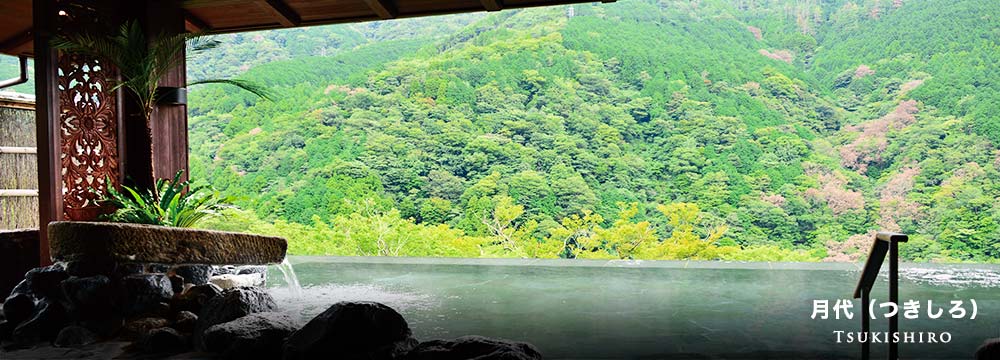
Views of the Tanigawa River below, surrounded by forests |
|---|
| Bath |
Open-air bath “Hotaru-no-Yu” and “Suzumushi-no-Yu” |
|---|
 |
|
|
|
Point 4 |
|---|
Hot Spring Source Usage
| Water added No |
Heated No |
Disinfected No |
Circulated No |
Bath additive No |
|---|---|---|---|---|
| ○ | △ | ○ | ○ | ○ |
| *All bathtubs are 100% natural free-flowing hot spring water *Only in winter, the temperature may be heated to keep it at a suitable temperature for bathing. |
||||
| Percentage of hot spring source |
100% | ||||
|---|---|---|---|---|---|
| Replacement frequency of hot spring water | Once a day for guest room open-air baths / once every 3 days for public bath | ||||
| Yield of hot spring water |
Three private sources of spring water by power pumping are mixed and used | ||||
| Distance from the source to the bathtub |
Kuraoki-no-Yu : 500m Senju-no-Yu : 130m Kajika-no-Yu : 60m |
||||
| How hot spring water is drawn | Drawn by a pipe | ||||
| How water temperature is adjusted | Adjust the volume of hot water | ||||
| Drinking Spring | None | ||||
| “Gensen-Kakenagashi” Bath | Public bath for men and women x 2, Open-air Bath x 2, Guest room Open-air Bath x 18 | ||||
Hot Spring Composition TableHot Spring Analysis Report
| Spring Quality | Calcium, Sodium - Sulfate / Chloride Springs (Hypotonic, Weakly alkaline, Hot Spring) 旧泉質名:含食塩-石膏泉 |
|---|---|
| Color of hot spring | Clear and colorless |
| Scent of hot spring | Odorless |
| Dissolved substances | 1,293 mg/kg (Sum of components (1) + (2) + (3), excluding gaseous substances) |
| Temperature of spring | 41.4℃ |
| pH | 8.4 (Weakly alkaline) |
| Yield | About 360 liters per minute (Total value of three private sources) Kuraoki-no-Yu - 180L/minute, 35°C Senju-no-Yu - 120L/minute, 43°C Kajika-no-Yu - 60L/minute, 50°C Amount of hot spring use per person (yield / bath capacity): About 7.2 liters/person(maximum capacity of 50 people) |
Hot Spring Composition (Amount contained in 1 kg of spring)
 |
|||
|---|---|---|---|
| ①Cation | mg | mval | mval% |
| Calcium Ion (Ca2+)★ | 259.00 | 12.90 | 68.82 |
| Sodium Ion (Na+)★ | 130.00 | 5.65 | 30.23 |
| Potassium Ion (K+) | 3.50 | 0.09 | 0.48 |
| Magnesium Ion (Mg2+) | 0.74 | 0.06 | 0.32 |
| Ferro Ion (Fe2+) | 0.36 | 0.01 | 0.07 |
| Manganese Ion (Mh2+) | 0.21 | 0.01 | 0.04 |
| Aluminum Ion (Al3+) | 0.06 | 0.01 | 0.04 |
| Cations Total(1) | 394 | 18.7 | 100.00 |
 |
|||
|---|---|---|---|
| ②Anion | mg | mval | mval% |
| Sulfate Ion (SO42-)★ | 682 | 14.2 | 75.69 |
| Chloride Ion (Cl-)★ | 150 | 4.24 | 22.62 |
| Hydrogen Carbonate Ion (HCO3-) | 8.5 | 0.14 | 0.74 |
| Carbonate Ion (CO32-) | 3.0 | 0.1 | 0.53 |
| Fluoride Ion (F-) | 1.5 | 0.08 | 0.42 |
| Anion Total(2) | 845 | 18.8 | 100.00 |
| ③Undissociated Components | mg | mmol |
|---|---|---|
| Metasilicic Acid (H2SiO3) | 43.6 | 0.56 |
| Metaboric Acid (HBO2)★ | 10.6 | 0.24 |
| Undissociated Components Total(3) | 54.2 | 0.80 |
| ④Dissolved Gas Components | mg | mmol | |
|---|---|---|---|
| Free Carbon Dioxide (CO2) | 0.0 | 0.00 | |
| Free Hydrogen Sulfide (H2S) | 0.0 | 0.00 | |
| Dissolved Gas Components Total(4) | 0.0 | 0.00 | |
| Other Trace Components | |||
|---|---|---|---|
| Total Arsenic 0.017mg/kg, Total mercury, Lead Ion, and Copper Ion not detected |
★are the components related to the “spring quality” and the components that qualify conditions for “Hot spring” and “Therapeutic hot spring”.
Indications by Spring Quality for Bathing (Revised on July 1, 2014)
Cuts, Peripheral circulatory disturbance, Sensitivity to cold, Depression, Dry skin
General Indications for Bathing (Revised on July 1, 2014)
Chronic pain or stiffness of muscles or joints (chronic phase of rheumatoid arthritis, osteoarthritis, lower back pain, neuralgia, frozen shoulder, bruises, sprains, etc.),
muscle stiffness by motor paralysis, sensitivity to cold, peripheral circulatory disturbance,
gastrointestinal hypofunction (slow digestion, intestinal gas formation, etc.),
mild hypertension, impaired glucose tolerance (diabetes), mild hypercholesterolemia,
mild asthma or emphysema, pains of hemorrhoidals, autonomic instability,
various symptoms from stress (sleep disorders, depression, etc.),
restorative phase from illness, recovery from fatigue, health promotions
Contraindications by Spring Quality for Bathing (Revised on July 1, 2014)
Same as General Contraindications
General Contraindications for Bathing (Revised on July 1, 2014)
Active stage of diseases (especially when fever is accompanied), active tuberculosis,
advanced malignant tumor, or the case of significant debility involving severe anemia,
severe cardiac or lung diseases involving suffocation feelings with a little movement,
severe kidney disease involving edema, gastrointestinal bleeding,
when there is visible bleeding, acute exacerbation stage of chronic diseases, etc.
Indications by Spring Quality for Drinking
Not drinkable ※Not submitted an application for drinking to the health department
Date of Analysis (The above hot spring composition table is cited from the survey data of the following institution)
May 26, 2015 (Gunma Pharmaceutical Association)
- ※Indications and contraindications for hot springs are in accordance with “Guidelines for the Mineral Spring Analysis Methods” revised on July 1, 2014.
- ※Data was provided by the ryokan.
20 qualifications for “Hot spring” and 8 qualifications for “Therapeutic hot spring”
| Conditions/Components (contained amount in 1kg) ※If even one of the conditions is cleared, it is a “Hot spring” or “Therapeutic hot spring” |
A【Hot Springs Act】 Conditions of the “Hot spring” |
B【The Guideline for analysis of Kosen】 Conditions of the “Therapeutic hot spring” |
|
|---|---|---|---|
| 1 | Temperature (when collected from source) | 25℃ or more | |
| 2 | Dissolved Substances (excluding gaseous) | Total amount 1,000 mg or more | |
| 3 | Free Carbon Dioxide (CO2) | 250 mg or more | 1000 mg or more(Carbon dioxide springs) |
| 4 | Lithium Ion (Li+) | 1 mg or more | ― |
| 5 | Strontium Ion (Sr2+) | 10 mg or more | ― |
| 6 | Barium Ion (Ba2+) | 5 mg or more | ― |
| 7 | Total Iron Ion[Fe2+(Iron(Ⅱ) Ferro ion)+Fe3+(Iron(Ⅲ) Ferri ion)] | 10 mg or more | 20 mg or more(Iron containing springs) |
| 8 | First Manganese Ion (Mn2+) | 10 mg or more | ― |
| 9 | Hydrogen Ion (H+) | 1 mg or more | 1 mg or more(Acid springs) |
| 10 | Bromine Ion (Br-) | 5 mg or more | ― |
| 11 | Iodide Ion (I-) | 1 mg or more | 10 mg or more (Iodine containing Springs) |
| 12 | Fluoride Ion (F-) | 2 mg or more | ― |
| 13 | Hydro Arsenate Ion (HAsO42-) | 1.3 mg or more | ― |
| 14 | Meta-arsenic Acid (HAsO2) | 1 mg or more | ― |
| 15 | Total sulfur (S) [HS-(Hydrogen Sulfide Ion)+S2O32-(Thiosulfate Ion)+H2S(Free Hydrogen Sulfide)] | 1 mg or more | 2 mg or more (Sulfur Springs) |
| 16 | Metaboric Acid (HBO2) | 5 mg or more | ― |
| 17 | Metasilicic Acid (H2SiO3) | 50 mg or more | ― |
| 18 | Sodium Hydrogen Carbonate (Sodium Bicarbonate) (NaHCO3) |
340 mg or more | ― |
| 19 | Radon (Rn) | 20 or more(unit: ten ppb curie) 20×10-10Ci(curie) or more 20 or more(ten ppb curie) =74Bq(becquerel)/5.5 mache or more |
30 nanocurie or more(Radioactive springs) 30×10-10Ci(curie) or more 30(ten ppb curie) or more =111Bq(becquerel)/8.25 mache or more |
| 20 | Radium Salt (as Ra) | 10-8 mg or more 1/100 million mg or more |
― |
| Number of conditions cleared this “Hot spring” or “Therapeutic hot spring” is: | 3 (out of 20) | 2 (out of 8) | |
| Total 5 Points | |||
※Conditions called “Hot spring” in Japan are expressed in terms of number of points.
Hot Spring Legends and More
Traditionally documented efficacies
Gastrointestinal disorders, Neuralgia, Sensitivity to cold
Historical figures who bathed in this hot spring
Novelist Osamu Dazai (1909-1948), poet Makisui Wakayama (1885-1928), novelist and literary critic Yasunari Kawabata (1899-1972)
Celebrities who bathed in this hot spring
Numerous cultural and celebrity visitors, not mentioned due to private use
Hot Spring (Onsen) Report
At Bettei Senjuan in Tanigawa Onsen, Gunma Prefecture, three private hot spring sources are blended for use.
These sources are called “Kuraoki-no-Yu,” “Kajika-no-Yu,” and “Senju-no-Yu,” and the mixing ratio is 5:8:12.
The discharge volume and temperature of each source are as follows:
Kuraoki-no-Yu: 180 L/min, 35℃
Kajika-no-Yu: 60 L/min, 50℃
Senju-no-Yu: 120 L/min, 43℃
The standard temperature for each bathtub is set at 41.4℃, but this is adjusted by modifying the blending ratio according to the outdoor temperature, without adding water.
In winter, the water may be heated to keep it at a suitable bathing temperature, though heating has far less impact on spring quality than water addition.
All sources are mechanically drawn, meaning they are extracted by drilling deep boreholes.
Although each spring has a different temperature, by blending them, the water is supplied to all baths at the optimum temperature in a 100% free-flowing system (gensen kakenagashi).
Gensen kakenagashi refers to a system where hot spring water flows directly from the source into the bathtub, and the excess water simply overflows into the drain and is discarded.
This is considered a luxurious use of hot spring water, but it is also regarded as the most effective system for maximizing the natural benefits of the spring.
The total discharge volume from the three private sources is approximately 360 liters per minute.
With a maximum guest capacity of 50 at Bettei Senjuan, this allows for an estimated 7.2 liters per person per minute.
It is said that, to enjoy a hygienic gensen kakenagashi system, approximately 1 liter of hot spring water per minute per person is required. If the discharge volume does not meet this level, a circulation and filtration system with chlorine disinfection is usually needed. At this inn, the available spring volume far exceeds the standard, even numerically.
The spring quality is classified as “Calcium, Sodium – Sulfate, Chloride Springs” (Hypotonic, Weakly alkaline, Hot spring). According to the former classification system, it was referred to as a “Salt-containing Gypsum Spring”.
The total amount of dissolved substances, excluding gaseous components, is 1,293 mg/kg.
Many hot spring inns around Tanigawa Onsen are classified as so-called simple springs, with total dissolved substances of less than 1,000 mg/kg.
Compared to those, the hot spring at this inn is a colorless and clear water with no peculiar smell or taste, but the content is quite “dense”, qualifying it as a rich and therapeutic hot spring.
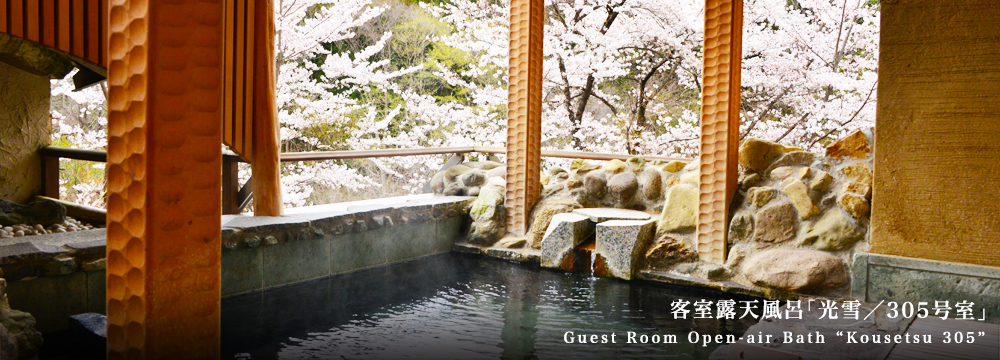
The inn has a total of 18 guest rooms, and all rooms are equipped with open-air baths where guests can enjoy seasonal views throughout the year.
In addition to the private baths, there are two gender-separated public baths, “Ichinokura” and “Sennokura”, each featuring an indoor bath and an open-air bath named “Suzumushi-no-Yu” and “Hotaru-no-Yu” respectively.
While the size of each bath varies, a total of 22 bathtubs are supplied with 100% free-flowing hot spring water.
Compared to many inns that struggle to secure enough hot spring water, this is surely an enviable condition.
The primary characteristic of this hot spring is the combination of calcium ions (cations) and sulfate ions (anions), forming a “Calcium–Sulfate Spring”.
Calcium ions help regulate the contraction and dilation of blood vessels, have a calming effect on the nervous system, and relieve pain and inflammation. They also contribute to promoting skin regeneration.
Sulfate ions have bactericidal properties, making them effective for treating minor cuts.
Sulfate springs are often referred to as “Hot springs for cuts”. In addition, these ions help dilate blood vessels and increase oxygen delivery in the bloodstream, which is why they are also known as “Hot springs for stroke prevention”. By promoting blood circulation, they can help with sensitivity to cold and peripheral circulatory disturbances. These warming effects also support the regulation of the autonomic nervous system and may help alleviate depression. Sulfate ions also have a moisturizing effect on dry skin, making them effective for dry skin conditions.
When combined with calcium ions, this becomes a “Calcium–Sulfate Spring”, which was traditionally referred to as a “Gypsum Spring”. Calcium ions support the formation and renewal of the stratum corneum, while sulfate ions enhance skin elasticity and help prevent wrinkles. As such, “Calcium–Sulfate Springs” are considered one type of “Hot springs for beautiful skin”.
The second key component of this spring is the combination of sodium ions (Na⁺) and chloride ions (Cl⁻), forming a “Sodium–Chloride Spring”.
Sodium ions, which are cations, act on the stratum corneum of the skin and provide moisturizing effects.
They help the skin retain moisture, making them beneficial for improving dry skin conditions.
Sodium ions are also known to relax muscle tension and relieve joint and muscle pain, making them suitable for fatigue recovery and easing symptoms of rheumatism. Furthermore, through osmotic effects, they promote blood circulation and enhance metabolism, which can contribute to improving sensitivity to cold and supporting detoxification. Bathing in sodium-rich hot springs also enhances the overall relaxation effect, aiding recovery from fatigue. In addition, sodium ions help remove dirt and waste from the skin, keeping it clean.
When combined with chloride ions, they become a “Sodium–Chloride Spring”, which forms a salt film on the surface of the skin. This contributes to preventing dry skin by maintaining moisture, and the salt pack helps block sweat glands, thereby enhancing heat retention. For this reason, it is also referred to as a “Hot springs for warmth”.
Its sustained warming effect is considered effective for peripheral circulatory disturbances and sensitivity to cold. By helping to stabilise the autonomic nervous system, it may also bring a sense of mental calm.
The increase in body temperature suppresses the secretion of stress hormones, potentially improving mood and proving beneficial for depression.
Additionally, due to its bactericidal effects, it promotes the healing of skin inflammation and minor cuts, earning it the nickname “Hot springs for cuts”.
Chloride springs are often referred to as “Hot springs for finishing touch.” This is because, after bathing in so-called “Hot springs for beautiful skin” — such as weak alkaline simple springs, which help remove dead skin cells, and hydrogen carbonate, sulfate, or sulfur springs — entering a chloride spring provides salt coating & moisturizing effects that help seal in the beneficial components absorbed from the previous bath and maintain skin hydration.
The hot spring at Bettei Senjuan is also characterised by its pH of 8.4, classifying it as Weakly alkaline.
Since human skin is generally mildly acidic, bathing in weak alkaline water causes a slight reaction on the skin’s surface, resulting in a smooth and silky texture.This sensation occurs because the weak alkalinity gently dissolves old keratin layers on the skin. After bathing, one will notice the skin feels noticeably smoother and softer.
The combination of sulfate springs with anti-aging properties that may help prevent wrinkles and promote skin rejuvenation, weak alkaline hot springs that gently remove dead skin cells to leave the skin smooth and silky, and chloride springs that offer salt-based coating and moisturizing effects, clearly qualifies the hot spring at Bettei Senjuan as a “Hot springs for beautiful skin”.
In addition to the major cations and anions, attention should also be paid to the non-dissociated components.
Metasilicic acid (H₂SiO₃), often referred to as a natural moisturizing substance, is present at 43.6 mg/kg.
Although it does not reach the threshold of 50 mg/kg required to officially qualify as a hot spring component, it is still sufficient to provide notable effects. When present at 100 mg/kg or more, it is considered—though in a secondary sense—as one of the criteria for being called a “Hot spring for beautiful skin”.
Metaboric acid (HBO₂) is also contained in a relatively high amount—10.6 mg/kg.
This exceeds twice the minimum requirement of 5 mg/kg for qualifying as a hot spring component.
Metaboric acid is known for its cleansing effects and is said to be effective in preventing acne.
When it reaches 10 mg/kg or more, it is regarded—albeit in a supplementary capacity—as one of the indicators for being called a “Hot springs for beautiful skin”.
The explanation so far has focused primarily on the chemical properties and therapeutic effects of the hot spring.
However, the benefits of a hot spring experience go far beyond its components alone.
At Bettei Senjuan, guests can enjoy open-air baths with superior spring quality while being surrounded by the changing beauty of the seasons.
Located in a serene mountain valley at the foot of Mount Tanigawa, one of Japan’s 100 famous mountains, the environment offers fresh, clean air and breathtaking scenery.
Soaking in these natural hot springs not only soothes the body, but also contributes significantly to mental and emotional well-being.
Although a hot spring is not a medicine, it can gently help correct imbalances in the mind and body from a different approach.
In that sense, a stay at Bettei Senjuan is more than just bathing—it is an experience of restoration and renewal, both physically and spiritually.
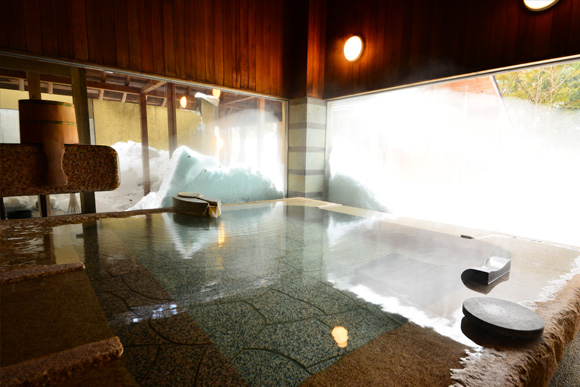
| Public Bath for men and women, Indoor bath “Ichi-no-Kura” | Public Bath for men and women, Open-air bath “Suzumushi-no-Yu” |
|---|---|
 |
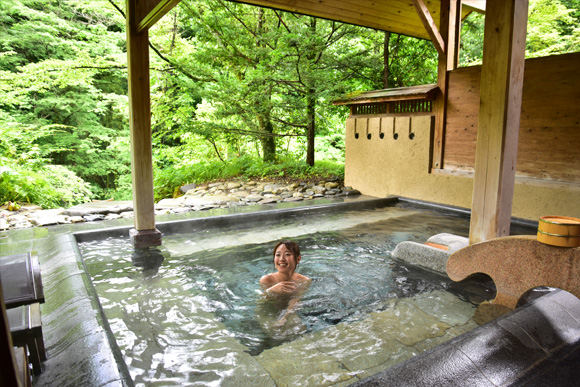 |
| Public bath “Ichi-no-Kura” is a pair with an open-air bath “Suzumushi-no-Yu”, and men and women are switched by the hours. The stone bathtub evokes the power of nature. There is also a dry sauna with excellent thermal efficiency covered by a wall of bincho charcoal. | The view from the bathtub, with the Tanigawa River flowing below and lush greenery, is soothing to both body and soul. The bottom of the bathtub is paved with stones, providing a pleasant sensation of moderate pressure. If you listen carefully, you can hear the chirping of wild birds, and you will be able to enjoy a luxurious time while experiencing the fresh hot spring water. |
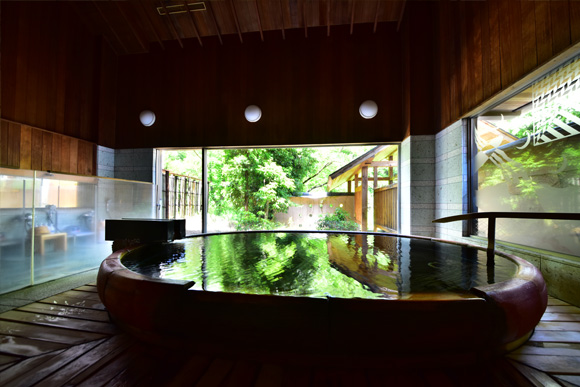
| Public Bath for men and women, Indoor bath “Sen-no-Kura” | Public Bath for men and women, Open-air bath “Hotaru-no-Yu” |
 |
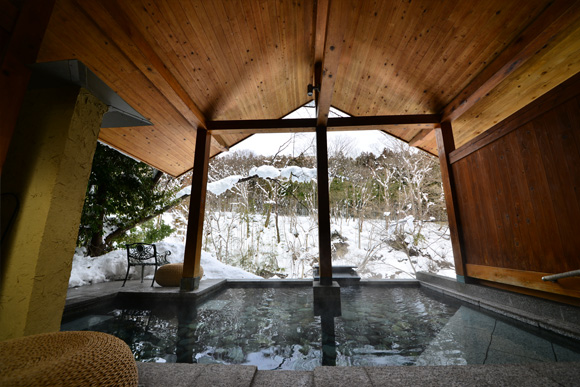 |
| The public bath “Sen-no-Kura” is a pair with an open-air bath “Hotaru-no-Yu”, and the men and women are switched by the hours. The huge cypress bathtub painted with red lacquer is impressive. “Sen-no-Kura” has a low-temperature mist sauna attached to it. It is recommended especially for women because it is gentle on the skin. | The impression is as if you are bathing quietly in the forest. There is also a terrace where you can feel the pleasant breeze blowing in the Tanigawa valley. Repeating this cycle of warming up in the hot spring and cooling down on the terrace is called “contrast water therapy”, and is said to be highly effective in relieving fatigue. |
Facility Report
Tanigawa Onsen is located on the border between Gunma and Niigata prefectures, amidst a mountain stream and forest filled with negative ions, with a view of the famous Mt. Tanigawadake (altitude 1977m). Tanigawa Onsen is a relatively small hot spring area, but it seems to attract many travelers because of its one of a kind atmosphere and nature-rich environment. Tanigawa Onsen is said to have opened around 1400. There are records that literary figures and artists such as Osamu Dazai, Makisui Wakayama, and Yasunari Kawabata visited the area during the Taisho and early Showa eras. The “Bettei Senjuan” opened in 1997 as an annex of Ryokan Tanigawa on a vast site of 8,000 tsubo (about 6.5 Acres), which has now been expanded with the purchase of additional land to 20,000 tsubo (about 16 Acres). At the time, there were several inns in Japan offering guest rooms with open-air baths, but Senjuan may have been the first inn to offer open-air baths in every room. In 2012, the hotel was approved to join Relais & Chateaux, a prestigious hotel and restaurant group based in France. To become a member, a hotel or restaurant is subject to a strict “5C” assessment: Courtesy (heartfelt hospitality), Charm (refined and attractive space), Character (distinctive and individual style), Calm (calm and relaxing atmosphere), and Cuisine (high quality cuisine). Only a few hotels and lodging facilities in Japan have been approved to join Relais & Chateaux, and one of them is “Bettei Senjuan”. The “Bettei Senjuan” has continued to thrive since its opening. This is probably due to the fact that the facilities are continually evolving and repeat customers keep coming back. A reading room was built in 1998, and dining rooms were added in 2000, 2006, and 2008. In 2004, an esthetic salon and footbath were opened. In 2008, a garden terrace with a hand bath was opened. The company is planning to hold events using the garden terrace and spacious courtyard to unite with nature, and we can look forward to its further evolution. The high level of not only the tangible aspect but also the intangible aspect of “hospitality” can be felt from many of the staff members. Under the leadership of Hidehiro Kubo, the president of the inn, the spirit to create a good facility can be felt. An inn that improves its intangible aspects in parallel with the tangible aspects of its facilities will also have a high level of customer satisfaction. The customers who frequent this facility may be more accurately described as supporters than repeaters. Spending time in a luxurious space in a quiet mountain setting is the happiest moment for a human being. It is a wise choice to spend a blissful time at the “Bettei Senjuan”.
Travel JournalRates Data
| 1 night/2 meals fee | From 48,550 yen |
|---|---|
| Private bath fee when overnight stay |
All rooms have an open-air bath |
| Day stay | No settings |
| Private bath for day-stay |
No settings |
Facility Data
| Establishment | Established in 1997 |
|---|---|
| Check-In | 1:00 p.m. |
| Check-Out | 11:00 a.m. |
| Location and Environment | Mountain |
| Number of Rooms | All 18 rooms 15 Japanese-style rooms, 1 Japanese/Western-style room, 2 Western-style rooms (all with bath and toilet) |
| Number of People Accommodated |
50 persons |
| Parking Area | Available for 17 cars |
| Facilities | Bar, Esthetic salon, Shop, Garden, Reading room |
| Internet | Wi-Fi available in all rooms |
| Barrier Free | Only one room is supported |
| Toilet with washer | All rooms are equipped |
Transportation Access
| By train | From Jyoetsu Line “Mizukami Station” 10 min. by car |
|---|---|
| By bus | From “Jomo Kogen Station” of Shinkansen, about 25 min. by bus |
| By car | From Kanetsu Expressway Mizukami IC, about 10 min. |
| Address | Gunma / Tanigawa Onsen / BETTEI SENJUAN 614, Tanigawa, Minakami-machi, Tone-gun, Gunma 379-1619, JAPAN Phone:+81-(0)278-20-4141 |
- Data
- Jan. 23, 2026