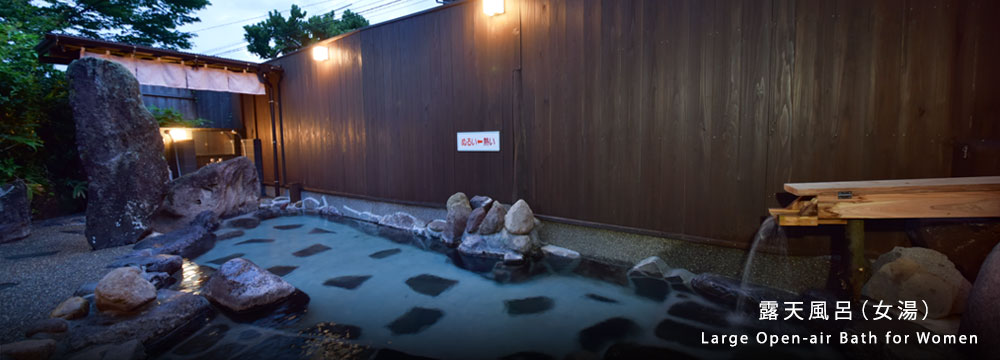
Yufu-no-Oyado HOTARU
| Alkaline Simple Hot Springs | pH |
|
| (低張性 アルカリ性 高温泉) | ||
| (Hypotonic, Alkaline, High temperature spring) | ||
| 旧泉質名:単純温泉 | ||
Ideal for:
- People who want silky smooth skin
- People with sleep difficulties
- People feeling stressed
- People who prefer mild hot springs
- People recovering from injury or illness
- People seeking skin‑beautifying effects
- Address
- 1791-1 Kawakita, Yufuin-cho, Yufu City, Oita Prefecture, 879-5114, JAPAN
- TEL
- +81-(0)977-84-5151

Official Website

Travel Journal
| Source | Status of Source Utilization | |
|---|---|---|
| Status of Source Emergence | (Self-Flowing from Drilled Well) |
Onsen Power Chart (5-point scale)
※Guest room open-air baths
Onsen Beauty Benefits Chart (5-point scale)
Hydrogen Ion Concentration (pH)

- Comment
- Hot spring for beautiful skin that dissolves dead skin cells and makes your skin smooth
Hot spring Specification
※This is an easy-to-understand expression based on the indications for each type of spring in the “Guidelines for the Mineral Spring Analysis Methods” revised in July 2014 by the Ministry of the Environment.
| ①Mental recovery | ②Insomnia | ③Promote blood circulation | ④Sensitivity to cold | ⑤Dry skin |
| ⑥Cuts | ⑦Skin diseases | ⑧Hypertension (mild) | ⑨Heartburn (drinking) | ⑩Gastrointestinal disorders (drinking) |
| ⑪Constipation (drinking) | ⑫Lifestyle-related disease | ⑬Diabetes | ⑭Gout | ⑮Countermeasures against metabolic syndrome |
| ⑯Biliary system anxiety (drinking) | ⑰Anaemia | ⑱Arthritis rheumatica | ⑲Spinal pain | ⑳Improved immunity |
| ㉑Muscle pain・Neuralgia | ㉒Mild asthma | ㉓Hemorrhoidal pain | ㉔Recovery from an illness | ㉕Recovery from fatigue |
- ※Note①・・・Indications for each spring include autonomic instability and depression.(Simple springs・Chloride springs・Carbon dioxide springs)
- ※Note③・・・Indications for each spring include peripheral circulatory disturbance(Chloride springs・Carbonate springs・Carbon dioxide springs・Hydrogen sulfide type sulphur spring)
- ※Note④・・・Indications for each spring include sensitivity to cold(Chloride springs・Carbonate springs・Sulfur springs・Carbon dioxide springs)and Iron containing springs
- ※Note⑦・・・Indications for each spring include xeroderma, atopic dermatitis, plaque psoriasis, epidermoid suppuration, chronic eczema(Chloride springs・Carbonate springs・Sulfate spring・Acid springs・Sulfur springs)
- ※Note⑨・・・Indications for drinking each spring include reflux esophagitis(Carbonate springs)
- ※Note⑩・・・Indications for drinking each spring include atrophic gastritis, gastroduodenal ulcerations(Chloride springs・Carbonate springs)
- ※Note⑪・・・For drinking, Chloride springs and Sulfate spring
- ※Note⑫・・・Indications for each spring include hypercholesterolemia, diabetes, gout(for bathing, Acid springs・Radioactive springs/for drinking, Carbonate springs・Iodine containing springs・Sulfur springs)
- ※Note⑮・・・Indications for drinking each spring include hypercholesterolemia(Sulfate spring・Iodine containing springs・Sulfur springs)
- ※Note⑱⑲・・・Indications for each spring include rheumatoid arthritis, ankylosing spondylitis(Radioactive springs)
- ※Note⑳・・・Radioactive springs
- ※Note㉑㉔・・・Simple Springs is suitable for rehabilitation due to its low irritation, and is also called “Hot springs for neuralgia” and “Hot springs for strokes”, although these are not listed as indications by spring quality.
| Applicable to indications by spring quality | Applicable to general indications |
7 Elements of Hot Springs for Beautiful Skin
Total2Points ※The number of points represents the quality of the “Hot springs for beautiful skin”.
| Skin cleansing effects | Anti-wrinkle and skin revitalizing effects | Skin whitening and spot prevention effects |
|---|---|---|
| Hydrogen carbonate springs | Sulfate springs | Sulfur springs |
| Skin smoothing effects | Skin coating and moisturizing effects | Dewy and moisturizing effects | Cleaning effects |
|---|---|---|---|
| (Weak) Alkaline springs | Chloride springs | Metasilicic acid (more than 100 mg/kg) | Metaboric acid (more than 10 mg/kg) |
- ※The “Four Best Beauty Springs” are said to be “Carbonate springs”, “Sulfate springs”, “Sulfur springs”, and “(Weak) Alkaline simple hot springs”.
- ※The “Chloride springs” coats the skin with a salt pack, keeping it warm and moisturized at the same time. It is also called “Hot spring for finishing touch” to be taken after the “Hot spring for beautiful skin” in which exfoliation has been removed.
- ※Hot springs containing 100 mg/kg or more of metasilicicic acid have an excellent moisturizing effect and is said to be “Hot spring for beautiful skin”.
- ※Hot springs containing 10 mg/kg or more of metaboric acid have a cleansing effect, is used in some eye drops, and is said to be effective in treating acne.
Water texture while bathing (5-point evaluation)
| Smooth |  |
|
|
|
|
Velvety | |
|
|
|
|
|---|---|---|---|---|---|---|---|---|---|---|---|
| Satiny | |
|
 |
|
|
Supple | |
|
|
|
|
| Fizzy | |
|
|
|
|
Tingling | |
|
|
|
|
 Guestroom Open-air Baths |
|||||||||||
Skin feeling after bathing (5-point evaluation)

| Silky | |
|
|
|
|
Tight | |
|
|
|
|
|---|---|---|---|---|---|---|---|---|---|---|---|
| Refreshing | |
|
|
|
|
Tacky | |
|
|
|
|
| Dewy | |
|
|
|
|
Warming | |
|
|
|
|
| Guestroom Open-air Bath |
|||||||||||
View from the open-air bath (5-point evaluation)

 View |
Panoramic views of Mt. Yufu |
|---|
| Bath |
Guestroom Open-air Bath |
|---|
 |
|
|
|
Point 4 |
|---|
Hot Spring Source Usage
| Water added No |
Heated No |
Disinfected No |
Circulated No |
Bath additive No |
|---|---|---|---|---|
| ○ | △ | ○ | ○ | ○ |
| ※Partially heated only in winter | ||||
| Percentage of hot spring source |
100% | ||||
|---|---|---|---|---|---|
| Replacement frequency of hot spring water | Everyday | ||||
| Yield of hot spring water |
Private source of power pumping hot water (source pumped by boring) | ||||
| Distance from the source to the bathtub |
About 100 meters (gushing on site) | ||||
| How hot spring water is drawn | Drawn by a pipe | ||||
| How water temperature is adjusted | Adjust the volume of hot water | ||||
| Drinking Spring | None | ||||
| “Gensen-Kakenagashi” Bath | Guest rooms with Open-air Bath x 9, Open-air Bath x 2, Private Bath x 2 | ||||
Hot Spring Composition TableHot Spring Analysis Report
| Spring Quality | Alkaline Simple Hot Springs (Hypotonic, Alkaline, High temperature spring) 旧泉質名:単純温泉 |
|---|---|
| Color of hot spring | Clear and colorless |
| Scent of hot spring | Almost odorless |
| Dissolved substances | 297.4 mg/kg (Sum of components (1) + (2) + (3), excluding gaseous substances) |
| Temperature of spring | 43.6℃ (Outside was 11.7℃ at time of survey) |
| pH | 9.7 (Alkaline) |
| Yield | About 70 liters per minute Amount of hot spring use per person (yield / bath capacity):About 2 liters/person(maximum capacity of 35 people) |
Hot Spring Composition (Amount contained in 1 kg of spring)
 |
|||
|---|---|---|---|
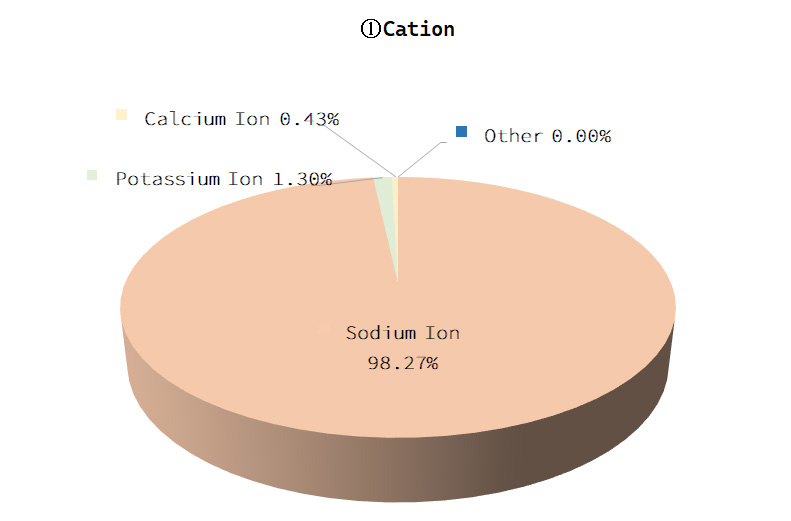
| ①Cation | mg | mval | mval% |
| Sodium Ion (Na+) | 52.10 | 2.27 | 98.27 |
| Potassium Ion (K+) | 1.30 | 0.03 | 1.30 |
| Calcium Ion (Ca2+) | 0.20 | 0.01 | 0.43 |
| Cations Total(1) | 53.60 | 2.31 | 100.00 |
 |
|||
|---|---|---|---|
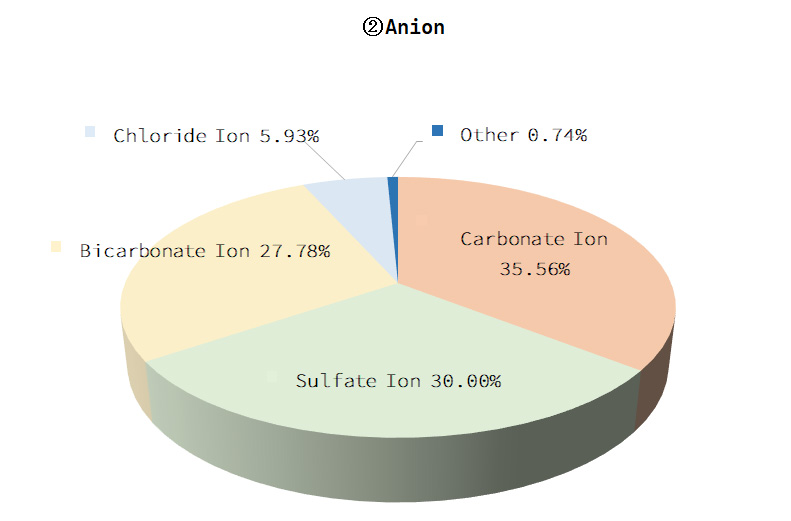
| ②Anion | mg | mval | mval% |
| Carbonate Ion (CO32-) | 28.70 | 0.96 | 35.56 |
| Sulfate Ion (SO42-) | 39.10 | 0.81 | 30.00 |
| Hydrogen Carbonate Ion (HCO3-) | 45.70 | 0.75 | 27.78 |
| Chloride Ion (Cl-) | 5.70 | 0.16 | 5.93 |
| Fluoride Ion (F-) | 0.4 | 0.02 | 0.74 |
| Anion Total(2) | 119.6 | 2.70 | 100.00 |
| ③Undissociated Components | mg |
|---|---|
| Metasilicic Acid (H2SiO3)★ | 123.8 |
| Metaboric Acid (HBO2) | 0.4 |
| Undissociated Components Total(3) | 124.2 |
| ④Dissolved Gas Components | mg |
|---|---|
| Dissolved Gas Components Total(4) | 0.0 |
| Other Trace Components | |||
|---|---|---|---|
| Total arsenic less than 0.007 mg, Total mercury less than 0.0005 mg, Lead Ion less than 0.01 mg, Copper Ion less than 0.01 mg |
★are the components related to the “spring quality” and the components that qualify conditions for “Hot spring” and “Therapeutic hot spring”.
Indications by Spring Quality for Bathing (Revised on July 1, 2014)
Autonomic instability, Insomnia, Depression
General Indications for Bathing (Revised on July 1, 2014)
Chronic pain or stiffness of muscles or joints (chronic phase of rheumatoid arthritis, osteoarthritis, lower back pain, neuralgia, frozen shoulder, bruises, sprains, etc.),
muscle stiffness by motor paralysis, sensitivity to cold, peripheral circulatory disturbance,
gastrointestinal hypofunction (slow digestion, intestinal gas formation, etc.),
mild hypertension, impaired glucose tolerance (diabetes), mild hypercholesterolemia,
mild asthma or emphysema, pains of hemorrhoidals, autonomic instability,
various symptoms from stress (sleep disorders, depression, etc.),
restorative phase from illness, recovery from fatigue, health promotions
Contraindications by Spring Quality for Bathing (Revised on July 1, 2014)
None
General Contraindications for Bathing (Revised on July 1, 2014)
Active stage of diseases (especially when fever is accompanied), active tuberculosis,
advanced malignant tumor, or the case of significant debility involving severe anemia,
severe cardiac or lung diseases involving suffocation feelings with a little movement,
severe kidney disease involving edema, gastrointestinal bleeding,
when there is visible bleeding, acute exacerbation stage of chronic diseases, etc.
Indications by Spring Quality for Drinking
Not drinkable ※Not submitted an application for drinking to the health department
Date of Analysis (The above hot spring composition table is cited from the survey data of the following institution)
December 22, 2010 / Reissued November 18, 2016 (Oita Prefectural Institute of Health and Environment)
- ※Indications and contraindications for hot springs are in accordance with “Guidelines for the Mineral Spring Analysis Methods” revised on July 1, 2014.
- ※Data was provided by the inn.
20 qualifications for “Hot spring” and 8 qualifications for “Therapeutic hot spring”
| Conditions/Components (contained amount in 1kg) ※If even one of the conditions is cleared, it is a “Hot spring” or “Therapeutic hot spring” |
A【Hot Springs Act】 Conditions of the “Hot spring” |
B【The Guideline for analysis of Kosen】 Conditions of the “Therapeutic hot spring” |
|
|---|---|---|---|
| 1 | Temperature (when collected from source) | 25℃ or more | |
| 2 | Dissolved substances (excluding gaseous) | Total amount 1,000 mg or more | |
| 3 | Free carbon dioxide (CO2) | 250 mg or more | 1000 mg or more (Carbon dioxide springs) |
| 4 | Lithium Ion (Li+) | 1 mg or more | ― |
| 5 | Strontium Ion (Sr2+) | 10 mg or more | ― |
| 6 | Barium Ion (Ba2+) | 5 mg or more | ― |
| 7 | Total Iron Ion[Fe2+(Iron(Ⅱ) Ferro ion)+Fe3+(Iron(Ⅲ) Ferri ion)] | 10 mg or more | 20 mg or more (Iron containing springs) |
| 8 | First Manganese Ion (Mn2+) | 10 mg or more | ― |
| 9 | Hydrogen Ion (H+) | 1 mg or more | 1 mg or more (Acidic springs) |
| 10 | Bromine Ion (Br-) | 5 mg or more | ― |
| 11 | Iodide Ion (I-) | 1 mg or more | 10 mg or more (Iodine containing springs) |
| 12 | Fluoride Ion (F-) | 2 mg or more | ― |
| 13 | Hydro Arsenate Ion (HAsO42-) | 1.3 mg or more | ― |
| 14 | Meta-arsenic Acid (HAsO2) | 1 mg or more | ― |
| 15 | Total sulfur (S) [HS-(Hydrogen sulfide ion)+S2O32-(Thiosulfate Ion)+H2S(Free hydrogen sulfide)] | 1 mg or more | 2 mg or more (Sulfur springs) |
| 16 | Metaboric acid (HBO2) | 5 mg or more | ― |
| 17 | Metasilicic acid (H2SiO3) | 50 mg or more | ― |
| 18 | Bicarbonate soda (NaHCO3) | 340 mg or more | ― |
| 19 | Radon (Rn) | 20 or more (unit: ten ppb curie) 20×10-10Ci(curie) or more 20 or more(ten ppb curie) =74Bq(becquerel)/5.5 mache or more |
30 nanocurie or more(Radioactive springs) 30×10-10Ci(curie) or more 30 or more(ten ppb curie) =111Bq(becquerel)/8.25 mache or more |
| 20 | Radium salt (as Ra) | 10-8mg or more 1/100 million mg or more |
― |
| Number of conditions cleared this “Hot spring” or “Therapeutic hot spring” is: | 2 | 1 | |
| Total 3 Points | |||
※Conditions called “Hot spring” in Japan are expressed in terms of number of points.
Hot Spring Legends and More
Traditionally documented efficacies
ー
Historical figures who bathed in this hot spring
Businessman Kumahachi Aburaya (1863-1935), Doctor of Forestry Seiroku Honda (1866-1952)
Celebrities who bathed in this hot spring
Numerous cultural and celebrity visitors, not mentioned due to private use
Hot Spring (Onsen) Report
Yufuin Onsen boasts the second largest volume of hot springs in Japan, following Beppu Onsen in Oita Prefecture.
Most of its springs are simple hot springs, but each of the source wells in the Yufuin basin has slightly different characteristics.
Yufu-no-Oyado HOTARU's spring water is an Alkaline Simple Hot Springs with a Hydrogen ion concentration (pH value) of 9.7, one of the highest among Yufuin's hot springs.
Since human skin is generally slightly acidic, soaking in alkaline hot spring water causes the surface of the skin to react and dissolve dead skin cells. This results in a silky smooth skin texture. However, because the pH value of the hot springs here is particularly high, the texture of the hot spring water is more than smooth; it would be more accurate to describe the water as thick and creamy. The feeling of the water clinging to the skin can be felt as soon as one takes a bath. The clear, colorless water is also referred to as “Hot spring water like lotion” by regular visitors.
After bathing, the skin feels smooth and renewed because the dead skin cells have been removed. The alkaline nature of the water is one of the conditions for its being called “Hot springs for beautiful skin”.
Since dead skin cells are removed, skin metabolism is also activated. The skin tissue newly created by bathing comes to the surface in about a one-month cycle, depending on the individual, so it is known that the skin beautifying effect can be obtained not only immediately after bathing, but also about one month later.
However, it is important to note that there may be hidden pitfalls even in the beautiful skin baths. The removal of dead skin cells means that a barrier on the surface of the skin is removed. In other words, the skin is more prone to dryness, so in the winter when the air is dry, or if you have dry skin to begin with, you should put on some cream after taking a bath.
The hot spring is rich in Metasilicic acid. It contains 123.8 mg/kg of metasilicic acid, more than twice the hot spring standard value (50 mg/kg). Metasilicic acid is a natural moisturizing component and is sometimes used as component of some lotions. It has a moisturizing effect and leads to moist skin after bathing. The alkaline component removes excess dead skin cells from the skin, and the moisturizing component metasilicic acid penetrates into the skin.
Metasilicic acid meets one of the requirements for qualification as a hot spring when present at 50 mg/kg or more. At 100 mg/kg or more, it provides a noticeable moisturizing effect. Although it plays a supporting role, this can also be considered one of the conditions for “Hot springs for beautiful skin”.
Carbonate ions (CO₃²⁻), which have the most abundant content among anions, are also noteworthy. When alkaline simple hot springs contain high levels of carbonic acid ions, they more effectively wash away sebum and dirt on the surface of the skin, resulting in a strong feeling of wetness and smoothness after bathing. And it also exhibits a higher cleaning effect.
Sodium ions (Na⁺), which make up the majority of the cations, combine with Hydrogen carbonate ions (HCO₃⁻), producing the so-called “baking soda” effect and further enhancing the smooth feel of the water. The hydrogen carbonate ion is said to enhance the skin's ability to retain moisture in the stratum corneum, which means that the skin tends to feel less tight and more moist after bathing.
A simple hot spring is a hot spring with less than 1,000 mg of dissolved substances in 1 kg of the source. Because of the low dissolved substances, this type of hot spring is said to be “Gentle hot spring” because it is hypoallergenic. Therefore, it is said to have a particularly relaxing effect, and indications unique to this spring include Autonomic instability, Insomnia, Depression, and other mental health issues.
These conditions are thought to have been selected as indications for Simple Hot Springs because of the gentle nature of the water.
With a relatively small amount of dissolved substances and its low-irritation nature, the water places less strain on the body, making it easier to enjoy a long, relaxing soak.
The thermal effects, buoyancy, and water pressure of hot spring bathing help relieve physical and mental tension and promote relaxation. In addition, the gradual decrease in core body temperature after bathing helps promote natural sleepiness.
For these reasons, Simple Hot Springs are thought to help relieve autonomic instability, insomnia, and depression.
Even though the amount of dissolved substances in simple hot spring water is low, compared to commercially available highly concentrated bath additive (with approximately 100 mg of dissolved substances per kilogram), the dissolved substances in the Yufu-no-Oyado HOTARU source are approximately 300 mg/kg, which is considered about 3 times higher.
The greatest advantage of simple hot spring is that it is hypoallergenic, so people of all ages and both sexes can bathe in it at their leisure. Therefore, it is sometimes used for stroke rehabilitation, and is therefore sometimes referred to as “Hot springs for strokes” or “Hot springs for neuralgia”.
When a hot spring contains less than 1,000 mg/kg of dissolved substances, it is generally classified as Simple Hot Springs. However, lumping all such springs under a single label makes it difficult to convey their true individual qualities. For example, according to the Hot Spring Analysis Report, if the total amount of dissolved substances in the hot spring at Yufu-no-Oyado HOTARU were to exceed 1,000 mg/kg, it would be classified as Sodium‒Sulfate / Hydrogen Carbonate Springs.
In other words, it would possess the properties of both a Sodium‒Sulfate Spring (formerly known as Glauber’s Salt Spring) and a Sodium‒Hydrogen Carbonate Spring (formerly known as Sodium Bicarbonate Spring).
The Sodium‒Sulfate Spring promotes skin regeneration by stimulating collagen production, earning it the nickname “Hot springs for rejuvenation”.
Meanwhile, the Sodium‒Hydrogen Carbonate Spring has a cleansing effect similar to soap, gently removing excess sebum and leaving the skin smooth—making it a quintessential “Hot springs for beautiful skin”. This demonstrates that even “simple hot springs” can possess powerful and diverse benefits—ones that can only be discovered by taking a closer look at the spring’s detailed analysis.
The temperature of the spring water is 43.6℃, which is the ideal temperature for a free-flowing hot spring water.
Free-flowing hot spring water is a luxurious use of water, in which the hot water is poured into the bathtub and any overflow is disposed of as it is. The possibility of always being able to soak in fresh hot spring water is a great attraction for hot spring enthusiasts.
If the temperature of the source is not at the perfect level, it is necessary to go extra steps to make the hot spring flow, such as adding tap water to lower the temperature or using a boiler to raise the temperature, which may compromise some of the original power of the hot spring.
This process is also costly. The temperature of the spring is also important, especially for those who are particular about hot springs. In the case of free-flowing hot spring water (when no chlorine or other disinfectants are used), it is said that a standard amount of 1 liter/minute of spring water per person in the inn is necessary to keep the baths clean and enjoyable. The hot spring here is about twice the standard value, which means that the source can be used in a luxurious and hygienic way.
Furthermore, the hot spring here is a private source.
The benefits of this are that the distance between the spring and the baths is close. This reduces the risk of impurities mixing with the hot spring water before it is poured into the baths, and most importantly, the hot spring water is fresh and ready to soak.
The further away the hot tub is from the spring, the more likely it is that the hot spring components will deteriorate. Whether or not a hot spring has its own hot spring source is a point that hot spring enthusiasts should not overlook.
The hot spring here is 100% natural free-flowing hot-spring water, which is poured into the large baths, private baths, and open-air baths in guest rooms.
Once you soak in the excellent hot spring with its particular use of hot water as mentioned above, you will be so surprised by the tender feeling of the hot spring that you may say that this hot spring is so sinful that your impression of other hot springs in Yufuin may fade away.
| Large Public Open-air Bath for Men | Private bath (Family bath) “Yufu-no-Yu” |
|---|---|
 |
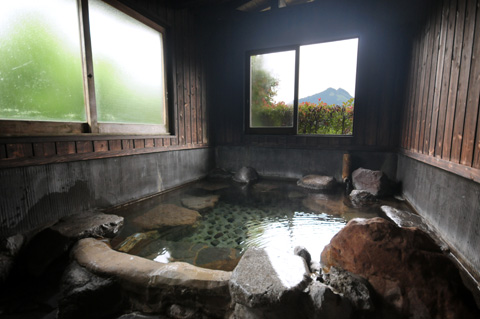 |
| The hot spring features alkaline water with a silky, lotion-like texture that feels wonderfully smooth on the skin, making it especially popular with women. Guests can also enjoy the luxury of 100% natural free-flowing hot spring water from the property's own private source. At selected times of the day, the open-air bath is available free of charge as a private bath (excluding the day before holidays and public holidays). | Surrounded by greenery, the open-air baths offer an outstanding sense of openness. You can experience forest bathing at the same time as bathing in the hot spring, and enjoy the scenery that changes with the seasons. Both men's and women's baths are similarly constructed, and men and women do not switch according to the time of day. |
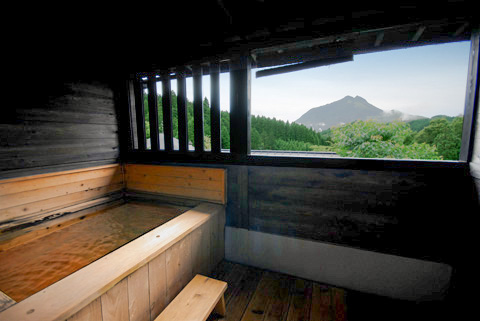
| In-Room Semi-Open-Air Hinoki Bath | In-Room Rock Open-Air Bath |
 |
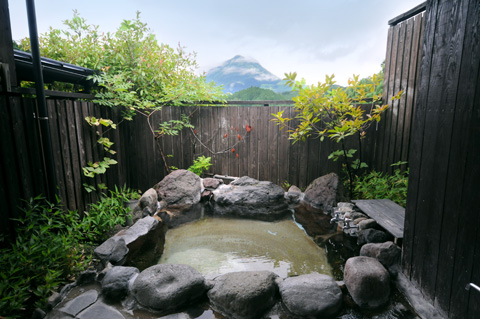 |
| Rooms 103 and 105 feature an in-room semi-open-air hinoki bath. The fragrant cypress tub, paired with large open windows, creates a wonderfully airy atmosphere. Soak in 100% natural free-flowing hot spring water while enjoying spectacular views of Mt. Yufu for a truly unforgettable bathing experience. | The open-air baths in Villas 2 and 3 feature natural rock tubs that create a wonderfully rustic atmosphere. Spacious enough for two adults, they offer a relaxing soak while overlooking the magnificent Mt. Yufu, with breathtaking views from the bath. |
Facility Report
“Yufu-no-Oyado HOTARU” is a hot spring inn located a little far from the central area of Yufuin Onsen. Its location overlooking Mt. Yufu is also an attractive feature of this ryokan.
You can experience the lotion-like hot spring water from its own hot spring source in the men's and women's open-air baths, as well as in the private baths available free of charge.
The guest rooms are in a detached style with a roofed corridor connecting them. The guest rooms include a variety of types, such as a guest room with an open-air bath made of rocks, a Japanese-style room with a half-open-air hinoki bath, a Japanese-style room with two adjoining rooms with a great view, and a Western-style room for the barrier-free.
The inn's atmosphere, which enhances a sense of the extraordinary, and its sumptuous dinner prepared by a veteran chef with a special attention to detail, yet at a reasonable price, make it a popular choice for many repeat guests.
Once you stay here, you will see that the owner's wish is strongly reflected: “I want anyone to feel free to come and enjoy this hot spring and know what Yufuin has to offer”.
Travel Journal
Rates Data
| 1 night/2 meals fee | From 22,000 yen |
|---|---|
| 1 night/Breakfast fee | No settings |
| Stay without meals | No settings |
| Staying alone | From 28,600 yen |
| Private bath fee when overnight stay |
Free |
| Day stay | Available |
| Private bath for day-stay |
Available |
Facility Data
| Establishment | Established in 2003 |
|---|---|
| Check-In | 3:00 p.m. |
| Check-Out | 10:00 a.m. |
| Location and Environment | A detached inn with a view of Mt. Yufu and a panoramic view of the countryside |
| Number of Rooms | All 12 rooms |
| Number of People Accommodated |
35 persons |
| Parking Area | Available for 20 cars |
| Facilities | Restaurant, Store, Esthetic Room |
| Internet | Wi-Fi available |
| Barrier Free | 1 Western-style room with barrier-free access |
| Toilet with washer | Equipped |
Transportation Access
| By train | From JR Hakata Station, approx. 2 hours on the limited express Kudaihonsen Line→7 min. by taxi from JR Yufuin Station From JR Oita Station, approx. 50 min. on the limited express train Kudaihonsen Line→7 min. by taxi from JR Yufuin Station. From Fukuoka Airport: 1 hr. 35 min. by highway bus→3 min. by taxi from Michi no Eki Yufuin From Oita Airport: 55 min. by highway bus→7 min. by taxi from JR Yufuin Station |
|---|---|
| By bus | 15 min. walk/6 min. drive from Yufuin Station Bus Center |
| Shuttle bus | Available for overnight guests. Pick-up at JR Yufuin Station and Yufuin IC (3:00 p.m. to 6:00 p.m. for pick-up, anytime for drop-off) |
| By car | Oita Expressway Yufuin IC→ Turn right at the first traffic light, 2 min. |
| Address | Oita/Yufuin Onsen/Yufu-no-Oyado HOTARU 1791-1 Kawakita, Yufuin-cho, Yufu City, Oita Prefecture, 879-5114, JAPAN Phone:+81-(0)977-84-5151 |
- Data
- Sep. 30, 2026