Yamaai-no-Yado KIYASUYA
| Sodium - Chloride springs | pH |
|
| (低張性 弱アルカリ性 高温泉) | ||
| (Hypotonic, Weakly alkaline, High temperature spring) | ||
| 旧泉質名:純食塩泉 | ||
Ideal for:
- People seeking skin‑beautifying effects
- People with minor cuts
- People sensitive to cold
- People looking to relax and relieve stress
- People with dry skin
- Address
- 527 Onsen, Kokonoe-machi Sujiyu, Kusu-gun, Oita Prefecture 879-4912, JAPAN
- Phone
- +81-(0)973-79-3341

Official Website

Travel Journal
| Source | Status of Source Utilization | |
|---|---|---|
| Status of Source Emergence |
Hot Spring Power Chart (5-point scale)
Hydrogen Ion Concentration (pH)

- Comment
- Hot spring that keeps you warm longer
Hot spring Specification
*This is an easy-to-understand expression based on the indications for each type of spring in the “Guidelines for the Mineral Spring Analysis Methods” revised in July 2014 by the Ministry of the Environment.
| ①Mental recovery | ②Insomnia | ③Promote blood circulation | ④Sensitivity to cold | ⑤Dry skin |
| ⑥Cuts | ⑦Skin diseases | ⑧Hypertension (mild) | ⑨Heartburn (drinking) | ⑩Gastrointestinal disorders (drinking) |
| ⑪Constipation (drinking) | ⑫Lifestyle-related disease | ⑬Diabetes | ⑭Gout | ⑮Countermeasures against metabolic syndrome |
| ⑯Biliary system anxiety | ⑰Anaemia | ⑱Arthritis rheumatica | ⑲Spinal pain | ⑳Improved immunity |
| ㉑Muscle pain・Neuralgia | ㉒Mild asthma | ㉓Hemorrhoidal pain | ㉔Recovery from an illness | ㉕Recovery from fatigue |
- ※Note①・・・Indications for each spring include autonomic instability and depression.(Simple springs・Chloride springs・Carbon dioxide springs)
- ※Note③・・・Indications for each spring include peripheral circulatory disturbance(Chloride springs・Carbonate springs・Carbon dioxide springs・Hydrogen sulfide type sulphur spring)
- ※Note④・・・Indications for each spring include sensitivity to cold(Chloride springs・Carbonate springs・Sulfur springs・Carbon dioxide springs)and Iron containing springs
- ※Note⑦・・・Indications for each spring include xeroderma, atopic dermatitis, plaque psoriasis, epidermoid suppuration, chronic eczema(Chloride springs・Carbonate springs・Sulfate spring・Acid springs・Sulfur springs)
- ※Note⑨・・・Indications for drinking each spring include reflux esophagitis(Carbonate springs)
- ※Note⑩・・・Indications for drinking each spring include atrophic gastritis, gastroduodenal ulcerations(Chloride springs・Carbonate springs)
- ※Note⑪・・・For drinking, Chloride springs and Sulfate spring
- ※Note⑫・・・Indications for each spring include hypercholesterolemia, diabetes, gout(for bathing, Acid springs・Radioactive springs/for drinking, Carbonate springs・Iodine containing springs・Sulfur springs)
- ※Note⑮・・・Indications for drinking each spring include hypercholesterolemia(Sulfate spring・Iodine containing springs・Sulfur springs)
- ※Note⑱⑲・・・Indications for each spring include rheumatoid arthritis, ankylosing spondylitis(Radioactive springs)
- ※Note⑳・・・Radioactive springs
- ※Note㉑㉔・・・Simple Springs is suitable for rehabilitation due to its low irritation, and is also called “Hot springs for neuralgia” and “Hot springs for strokes”, although these are not listed as indications by spring quality.
| Applicable to indications by spring quality | Applicable to general indications |
7 Elements of Hot Springs for Beautiful Skin
Total4Points ※The number of points represents the quality of the “Hot springs for beautiful skin”.
| Skin cleansing effects | Anti-wrinkle and skin revitalizing effects | Skin whitening and spot prevention effects |
|---|---|---|
| Hydrogen carbonate springs | Sulfate springs | Sulfur springs |
| Skin smoothing effects | Skin coating and moisturizing effects | Dewy and moisturizing effects | Cleaning effects |
|---|---|---|---|
| (Weak) Alkaline springs | Chloride springs | Metasilicic acid (more than 100 mg/kg) | Metaboric acid (more than 10 mg/kg) |
- ※The “Four Best Beauty Springs” are said to be “Carbonate springs”, “Sulfate springs”, “Sulfur springs”, and “(Weak) Alkaline simple hot springs”.
- ※The “Chloride springs” coats the skin with a salt pack, keeping it warm and moisturized at the same time. It is also called “Hot spring for finishing touch” to be taken after the “Hot spring for beautiful skin” in which exfoliation has been removed.
- ※Hot springs containing 100 mg/kg or more of metasilicicic acid have an excellent moisturizing effect and is said to be “Hot spring for beautiful skin”.
- ※Hot springs containing 10 mg/kg or more of metaboric acid have a cleansing effect, is used in some eye drops, and is said to be effective in treating acne.
Water texture while bathing (5-point evaluation)
| Smooth |  |
|
|
|
 |
Velvety | |
|
|
|
|
|---|---|---|---|---|---|---|---|---|---|---|---|
| Satiny | |
|
|
|
|
Supple | |
|
|
|
|
| Fizzy | |
|
|
|
|
Tingling | |
|
|
|
|
 Guestroom Open-air Baths Guestroom Open-air Baths |
|||||||||||
Skin feeling after bathing (5-point evaluation)

| Silky | |
|
|
|
|
Tight | |
|
|
|
|
|---|---|---|---|---|---|---|---|---|---|---|---|
| Satiny | |
|
|
|
|
Tacky | |
|
|
|
|
| Dewy | |
|
|
|
|
Warming | |
|
|
|
|
| Guestroom Open-air Baths |
|||||||||||
View from the open-air bath (5-point evaluation)

 View View |
Surrounded by forested trees |
|---|
| Bath |
Public Open-air Bath |
|---|
 |
|
|
Point 3 |
|---|
Hot Spring Source Usage
| Water added No |
Heated No |
Disinfected No |
Circulated No |
Bath additives No |
|---|---|---|---|---|
| △ | △ | ○ | ○ | ○ |
| *All baths are supplied with 100% natural free-flowing hot spring water *Water may be added during the hot summer months (using on‑site spring water or well water) |
||||
| Percentage of hot spring source |
100% | ||||
|---|---|---|---|---|---|
| Replacement frequency of hot spring water | Everyday | ||||
| Yield of hot spring water |
Hot water supplied by Sujiyu Onsen Supply Co., Ltd. | ||||
| Distance from the source to the bathtub |
Several kilometers | ||||
| How hot spring water is drawn | Drawn by a pipe | ||||
| How water temperature is adjusted | Adjust the volume of hot water poured into the bathtub | ||||
| Drinking Spring | None | ||||
| “Gensen-Kakenagashi” Bath | Guest rooms with Open-air Bath x 10, Private Open-air Bath x 2, Private bath x 2 | ||||
Hot Spring Composition TableHot Spring Analysis Report
| Spring Quality | Sodium - Chloride springs (Hypotonic, Weakly alkaline, High temperature spring) 旧泉質名:純食塩泉 |
|---|---|
| Color of hot spring | Clear and colorless |
| Scent of hot spring | Odorless |
| Dissolved substances | 1,554 mg/kg (Sum of components (1) + (2) + (3), excluding gaseous substances) |
| Temperature of spring | 80.3℃ (Outside was 19℃ at time of survey) |
| pH | 7.9 (Weakly alkaline) |
| Yield | About 100 liters per minute Amount of hot spring use per person (yield / bath capacity):About 3.3 liters/person(maximum capacity of 30 people) |
Hot Spring Composition (Amount contained in 1 kg of spring)
 |
|||
|---|---|---|---|
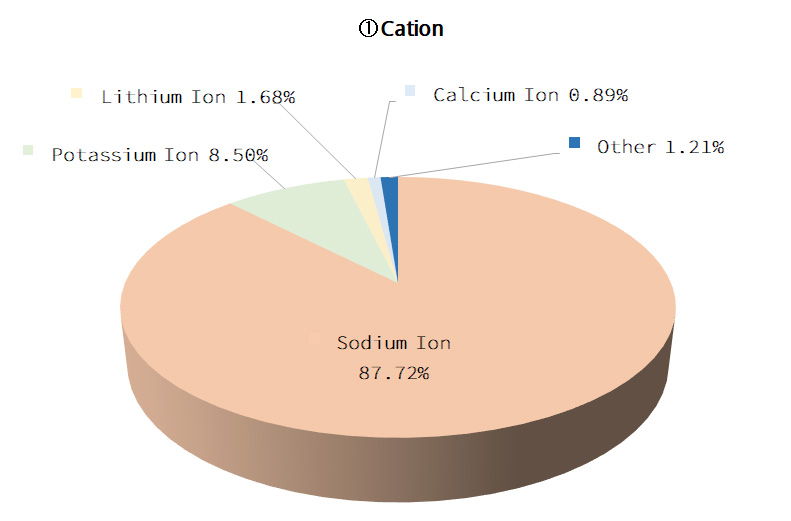
| ①Cation | mg | mval | mval% |
| Sodium Ion (Na+)★ | 432 | 18.79 | 87.72 |
| Potassium Ion (K+) | 71.3 | 1.82 | 8.50 |
| Lithium Ion (Li+)★ | 2.5 | 0.36 | 1.68 |
| Calcium Ion (Ca2+) | 3.8 | 0.19 | 0.89 |
| Magnesium Ion (Mg2+) | 1.0 | 0.08 | 0.37 |
| Aluminum Ion (Al3+) | 0.8 | 0.09 | 0.42 |
| Ferro Ion (Fe2+) | 0.2 | 0.01 | 0.05 |
| Cations Total(1) | 513.0 | 21.42 | 100.00 |
 |
|||
|---|---|---|---|
| ②Anion | mg | mval | mval% |
| Chloride Ion (Cl-)★ | 645 | 18.19 | 84.64 |
| Sulfate Ion (SO42-) | 142 | 2.96 | 13.77 |
| Hydrogen Carbonate Ion (HCO3-) | 14.0 | 0.23 | 1.07 |
| Fluoride Ion (F-) | 1.4 | 0.07 | 0.33 |
| Bromide Ion (Br-) | 1.9 | 0.02 | 0.09 |
| Nitrate Ion (NO3-) | 0.9 | 0.01 | 0.05 |
| Thiosulfate Ion (S2O32-) | 0.3 | 0.01 | 0.05 |
| Anion Total(2) | 805.5 | 21.49 | 100.00 |
| ③Undissociated Components | mg | mmol | |
|---|---|---|---|
| Metasilicic Acid (H2SiO3)★ | 200 | - | |
| Metaboric Acid (HBO2)★ | 35.3 | - | |
| Undissociated Components Total(3) | 235.3 | - | |
| ④Dissolved Gas Components | mg | mmol | |
|---|---|---|---|
| Free Carbon Dioxide (CO2) | 5.7 | - | |
| Free Hydrogen Sulfide (H2S) | 0.00 | - | |
| Dissolved Gas Components Total(4) | 5.7 | - | |
| Other Trace Components | |||
|---|---|---|---|
| Cadmium less than 0.001 mg/kg, Total arsenic less than 0.007 mg/kg, Total mercury less than 0.0005 mg/kg, Lead ion less than 0.01 mg/kg, Copper ion less than 0.05 mg/kg, Fluoride ion 1.4 mg/kg, Free carbon dioxide 5.7 mg/kg |
★are the components related to the “spring quality” and the components that qualify conditions for “Hot spring” and “Therapeutic hot spring”.
Indications by Spring Quality for Bathing (Revised on July 1, 2014)
Cuts, Peripheral circulatory disturbance, Sensitivity to cold, Depression, Dry skin
General Indications for Bathing (Revised on July 1, 2014)
Chronic pain or stiffness of muscles or joints (chronic phase of rheumatoid arthritis, osteoarthritis, lower back pain, neuralgia, frozen shoulder, bruises, sprains, etc.),
muscle stiffness by motor paralysis, sensitivity to cold, peripheral circulatory disturbance,
gastrointestinal hypofunction (slow digestion, intestinal gas formation, etc.),
mild hypertension, impaired glucose tolerance (diabetes), mild hypercholesterolemia,
mild asthma or emphysema, pains of hemorrhoidals, autonomic instability,
various symptoms from stress (sleep disorders, depression, etc.),
restorative phase from illness, recovery from fatigue, health promotions
Contraindications by Spring Quality for Bathing (Revised on July 1, 2014)
None
General Contraindications for Bathing (Revised on July 1, 2014)
Active stage of diseases (especially when fever is accompanied), active tuberculosis,
advanced malignant tumor, or the case of significant debility involving severe anemia,
severe cardiac or lung diseases involving suffocation feelings with a little movement,
severe kidney disease involving edema, gastrointestinal bleeding,
when there is visible bleeding, acute exacerbation stage of chronic diseases, etc.
Indications by Spring Quality for Drinking
Not drinkable
Date of Analysis (The above hot spring composition table is cited from the survey data of the following institution)
October 23, 2023 (Oita Pharmaceutical Association)
- *Indications and contraindications for hot springs are in accordance with “Guidelines for the Mineral Spring Analysis Methods” revised on July 1, 2014.
- *Data was provided by the inn.
20 qualifications for “Hot spring” and 8 qualifications for “Therapeutic hot spring”
| Conditions/Components (contained amount in 1kg) *If even one of the conditions is cleared, it is a “Hot spring” or “Therapeutic hot spring” |
A【Hot Springs Act】 Conditions of the “Hot spring” |
B【The Guideline for analysis of Kosen】 Conditions of the “Therapeutic hot spring” |
|
|---|---|---|---|
| 1 | Temperature (when collected from source) | 25℃ or more | |
| 2 | Dissolved substances (excluding gaseous) | total amount 1,000 mg or more | |
| 3 | Free carbon dioxide (CO2) | 250 mg or more | 1000 mg or more (Carbon dioxide springs) |
| 4 | Lithium Ion (Li+) | 1 mg or more | ― |
| 5 | Strontium Ion (Sr2+) | 10 mg or more | ― |
| 6 | Barium Ion (Ba2+) | 5 mg or more | ― |
| 7 | Total Iron Ion[Fe2+(Iron(Ⅱ) Ferro ion)+Fe3+(Iron(Ⅲ) Ferri ion)] | 10 mg or more | 20 mg or more (Iron containing springs) |
| 8 | First Manganese Ion (Mn2+) | 10 mg or more | ― |
| 9 | Hydrogen Ion (H+) | 1 mg or more | 1 mg or more (Acidic springs) |
| 10 | Bromine Ion (Br-) | 5 mg or more | ― |
| 11 | Iodide Ion (I-) | 1 mg or more | 10 mg or more (Iodine containing springs) |
| 12 | Fluoride Ion (F-) | 2 mg or more | ― |
| 13 | Hydro Arsenate Ion (HAsO42-) | 1.3 mg or more | ― |
| 14 | Meta-arsenic Acid (HAsO2) | 1 mg or more | ― |
| 15 | Total sulfur (S) [HS-(Hydrogen sulfide ion)+S2O32-(Thiosulfate Ion)+H2S(Free hydrogen sulfide)] | 1 mg or more | 2 mg or more (Sulfur springs) |
| 16 | Metaboric acid (HBO2) | 5 mg or more | ― |
| 17 | Metasilicic acid (H2SiO3) | 50 mg or more | ― |
| 18 | Bicarbonate soda (NaHCO3) | 340 mg or more | ― |
| 19 | Radon (Rn) | 20 or more (unit: ten ppb curie) 20×10-10 Ci(curie) or more 20 or more(ten ppb curie) =74Bq(becquerel)/5.5 mache or more |
30 nanocurie or more(Radioactive springs) 30×10-10Ci(curie) or more 30 or more(ten ppb curie) =111Bq(becquerel)/8.25 mache or more |
| 20 | Radium salt (as Ra) | 10-8mg or more 1/100 million mg or more |
― |
| Number of conditions cleared this “Hot spring” or “Therapeutic hot spring” is: | 5 | 2 | |
| Total 7 Points | |||
*Conditions called “Hot spring” in Japan are expressed in terms of number of points.
Hot Spring Legends and More
Traditionally documented efficacies
Muscle relaxing, Muscle disease
Historical figures who bathed in this hot spring
The baths opened in 958, and since the hot spring area was opened in 1658, it has been visited by numerous figures
Celebrities who bathed in this hot spring
Numerous cultural and celebrity visitors, not mentioned due to private use
Hot Spring (Onsen) Report
Yamaai-no-Yado KIYASUYA uses two types of spring sources. The main source is a “Sodium - Chloride springs” (temperature 80.3°C) drawn from Sujiyu Onsen Supply Corporation.
The hydrogen ion concentration is pH 7.9 (Weakly alkaline).
Weakly alkaline hot springs help remove dead skin cells while bathing, leaving the skin smooth and silky after bathing, which is why they are often known as “Hot springs for beautiful skin”.
Among the cations, Sodium ions are the primary component, accounting for 87.72 mval% (milliequivalent percent). They help improve dry skin through their moisturizing effect, relax muscle tension and relieve pain, promote blood circulation to alleviate sensitivity to cold, stimulate metabolism, and contribute to a detoxifying effect.
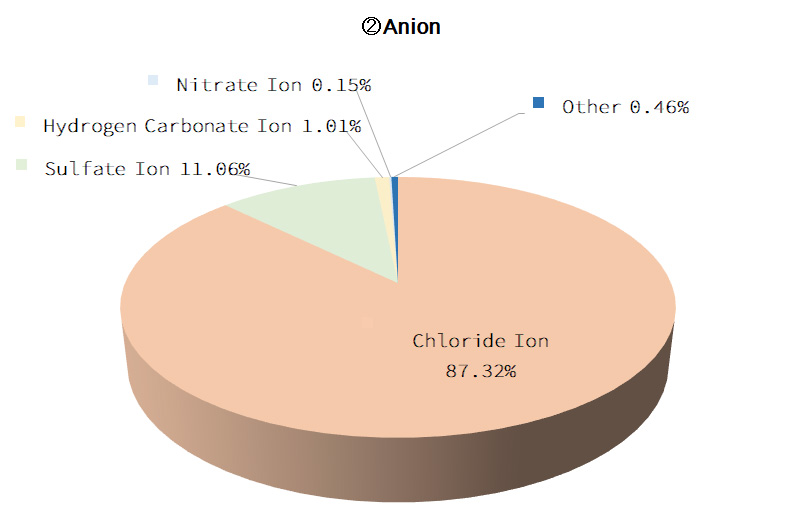
On the other hand, Chloride ions account for 84.64 mval% of the anions.
Their effects include helping treat minor cuts through the bactericidal effects of salt, enhancing heat retention by allowing salt to seal the sweat glands, helping regulate the balance of the autonomic nervous system by raising body temperature, and promoting moisture retention through a protective salt coating on the skin.
The characteristics of chloride springs, together with explanations based on the Indications by spring quality, can be summarized as follows.
Because chloride springs have bactericidal effects, bathing in them may help suppress surface skin troubles such as Cuts. For this reason, they are often called “Hot springs for cuts”.
In addition, when bathing in a chloride spring, the salt content coats the body almost like a protective pack. This coating seals the sweat glands (the organs that secrete perspiration), slowing the loss of body heat after bathing and allowing the warming sensation to last longer.
For this reason, chloride springs are also known as “Hot springs for warmth”. They may help improve Peripheral circulatory disturbance and Sensitivity to cold.
Furthermore, the sustained warming effect is believed to help regulate the autonomic nervous system, suppress the secretion of stress hormones, enhance relaxation, and have positive effects on mental conditions such as Depression.
Chloride springs are also considered beneficial for Dry skin because, as mentioned above, the salt coating helps retain moisture in the skin.
Attention should also be paid to components that do not appear in the spring quality name itself.
Among the cations, Potassium ions (8.50 mval%) are the second most abundant component after the principal sodium ions.
Potassium ions are one of the minerals commonly found in Sodium – Chloride springs.
Within the human body, potassium functions mainly in intracellular fluid, while sodium functions mainly in extracellular fluid. Together, they help regulate nerve signal transmission, muscle contraction (including the relief of muscle cramps in the limbs), and fluid metabolism.
For this reason, potassium ions are considered an essential mineral involved in maintaining intracellular osmotic pressure and regulating electrolyte balance, and are thought to indirectly support the relaxing effects experienced during bathing.
Among the anions, Sulfate ions (13.77 mval%) are the second most abundant component after the principal chloride ions.
Sulfate ions help dilate blood vessels and promote blood circulation to the extremities, while the warming effect produced by the increased circulation is believed to contribute to regulation of the Autonomic nervous system.
They also help stimulate skin metabolism, giving the skin firmness and elasticity. In addition, they are thought to support recovery from skin troubles such as dry skin and minor cuts.
The spring contains 200 mg of Metasilicic acid per kilogram of spring water, more than 4 times the standard value (50 mg/kg).
It is a so-called Natural moisturizing component, and is sometimes used as some skin lotion products. After bathing in hot spring water, it helps to keep the skin moisturized. The presence of metasilicic acid is one of the conditions for being called “Hot springs for beautiful skin”.
Metaboric acid also contains 35.3 mg, which is more than 7 times the standard value (5 mg). Due to its Skin cleansing effects, it is thought to be effective in treating acne and other skin surface problems. This component is also used in some eye drops.
Among the cations, Lithium ions are present at 2.5 mg/kg, which is 2.5 times the hot spring standard value of 1 mg/kg. Lithium ions are said to have Calming effects that help suppress nervous excitement and promote relaxation.
In addition to the main Sodium – Chloride spring, another hot spring source is supplied by the Sujiyu Bunto Association and is primarily blended with the above source for use in the men’s and women’s large public baths.
Its spring quality is classified as a “Simple Hot Springs” with a pH of 7.0 (neutral) and a spring temperature of 91.5°C. Because it contains relatively mild mineral content and causes less stimulation, it is often described as a gentle type of hot spring water.
Due to its mild nature, which makes it suitable for everyone from children to the elderly, it is also known as “Hot springs for family”.
In the men’s and women’s large public baths, the Sodium – Chloride springs and the Simple Hot Springs are blended at an approximate ratio of 7:3.
Here, approximately 100 liters of hot spring water per minute are used in total from two separate sources, with the baths maintained in a free-flowing, continuously replenished style known as kakenagashi.
Kakenagashi is a luxurious style of hot spring bathing in which fresh hot spring water continuously flows into the bath, and the excess water is allowed to overflow and drain away without being reused.
As the maximum capacity of this inn is only 30 guests, the amount of hot spring water available per person works out to approximately 3.3 liters per minute.
As a general guideline, around 1 liter per minute per person is considered sufficient to maintain hygienic, non-recirculated hot spring baths. In other words, this inn possesses more than three times that amount of hot spring water.
The bath temperature is also adjusted naturally by changing the amount of hot spring water flowing into the tubs according to the outdoor temperature.
In midsummer, when the spring temperature becomes especially high, well water may occasionally be added to cool the baths, though the inn strives to keep the water as close to 100% pure hot spring water as possible.
It would not be an exaggeration to say that this inn teaches guests both the true appeal of hot springs and the importance of carefully considered hot spring management.
It should be noted that the hot spring water supplied by Sujiyu Onsen Supply Co., Ltd. (Sodium – Chloride springs) is a type of hot spring close to what is known as an “artificially enhanced spring”. In this system, high-temperature geothermal steam rising from underground is injected into existing hot spring water classified as a simple spring, allowing additional mineral components to dissolve into the water.
The source supplied by Sujiyu Onsen Supply Co., Ltd. is not created by directly piping used geothermal water discharged from the nearby Hatchobaru Geothermal Power Plant after power generation. Instead, geothermal steam from underground is injected into the Simple Hot Springs water supplied by the Sujiyu Bunto Association, enriching the water with additional mineral components before it is distributed to local facilities.
In other words, this system can be described as a “steam-injection artificially enhanced spring”, or a “hybrid enhanced spring in which geothermal steam-derived minerals are added to simple hot spring water”. It represents an advanced example of how geothermal power generation and hot spring tourism can coexist sustainably.
Although Japan is often described as a country poor in energy resources, it possesses the world’s third-largest geothermal resource potential, following the United States and Indonesia. This reflects the enormous geothermal potential of Japan, a country with significant volcanic and geothermal activity.
However, Japan’s actual geothermal power generation capacity cannot be considered among the world’s highest. Behind this are a variety of challenges, including the need to coordinate with the hot spring industry, the fact that many promising geothermal areas lie within national parks, and the high cost of drilling and development.
In particular, coexistence with hot spring resorts has long been a major issue. For this reason, cooperative examples such as the relationship between Hatchobaru Geothermal Power Plant and Sujiyu Onsen have become important models for the future of geothermal utilization.
Geothermal power is a form of renewable energy, like solar and wind power, yet it also possesses the characteristics of a “baseload power source”, capable of providing stable electricity generation with little dependence on weather conditions.
In the future, the value of geothermal energy may be reassessed even more highly.
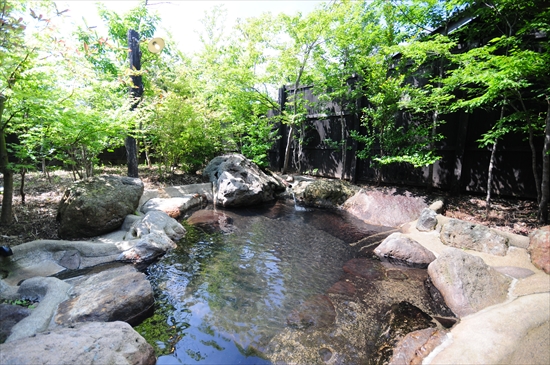
| Open-air bath for women | Private Open-air Bath “Fuku-no-Yu” |
|---|---|
 |
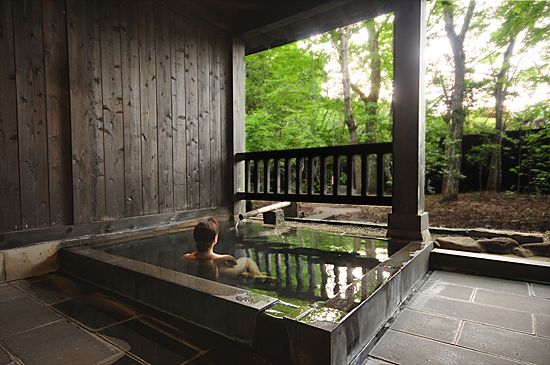 |
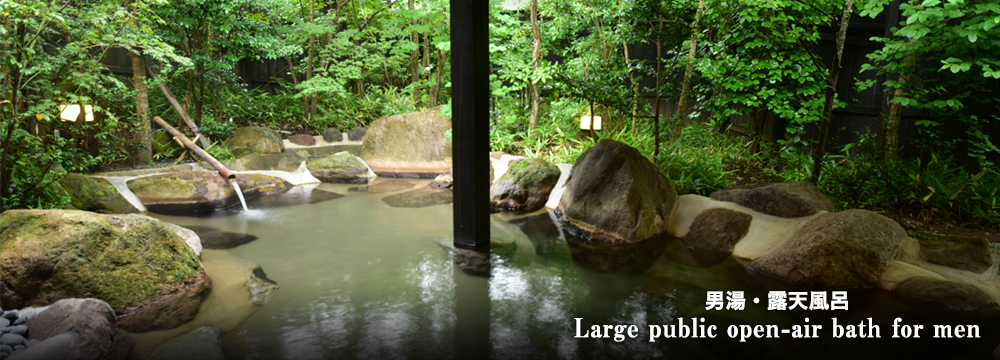
| Beyond the indoor large public bath lies a spacious open-air bath with a wonderfully open atmosphere, where guests can enjoy a rustic hot spring bathing experience surrounded by nature. The water here is a blend of the main “Sodium - Chloride springs” (Weakly alkaline spring with a pH of 7.9) and a Simple Hot Springs (Neutral, with a pH of 7.0). | Outside the main building area where the guest rooms are located, through the parking area, and across a small road is a bathhouse. Two private open-air baths are located in it. Its peaceful and tranquil atmosphere is part of its charm, while the songs of small birds provide a soothing accompaniment. |
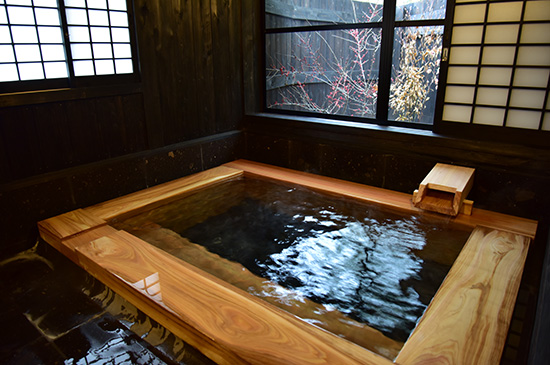
| Family Bath “Momiji” | 10 tatami mats type “Kaze” guest room open-air bath (“Akaishi-buro” red stone bath) |
 |
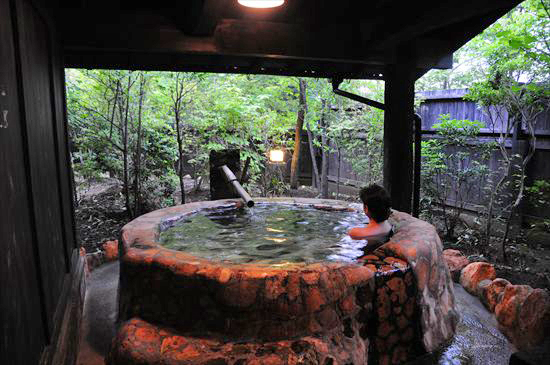 |
| This private bath was newly opened in October 2017 and is referred to by the inn as a “Family bath”. The cypress bathtub provides a wonderfully soothing bathing experience. Another private bath, “Tsukushi”, features a stone-built tub. Although every guest room at the inn is equipped with its own private open-air bath, these baths are perfect for guests who would like to enjoy a slightly different atmosphere. | The bathtub is spacious enough for two adults to bathe together comfortably, allowing guests to enjoy a deeply relaxing soak. A roof is also built over the bath, so it can be enjoyed even on rainy days. In addition to this “Akaishi-buro bath”, other guest rooms feature distinctive bath styles such as the “Kiriishi-buro bath”, “Kuroishi-buro bath”, and “Hinoki-buro bath” each with its own unique character. |
Facility Report
Sujiyu Onsen is located in Aso-Kujyu National Park, surrounded by Mount Waita-san to the northwest, Mount Hitome-yama to the southwest, and the Kuju Mountain Range to the southeast.
The altitude is 1,000 meters, making it very pleasant in summer.
Also, the fresh greenery in spring, the autumn leaves in fall, and of course, the snowy landscape in winter will allow you to experience nature in all four seasons.
There are about 20 inns in Sujiyu Onsen, but “Yamaai-no-Yado KIYASUYA” is located in a quiet area a little far from the center of the hot spring resort area.
The approximately 2,000 tsubo (1.6 acres) site is covered by a wooded area, and is lined with 10 detached guest rooms, all built on a single-story structure.
All guest rooms are equipped with an open-air bath, and there are also large public baths for men and women, an open-air bath, two private open-air baths, and two family baths, offering a luxurious lineup of baths. Moreover, all of them are 100% free-flowing hot spring water.
The cuisine is uniquely KIYASUYA's, surrounded by deep green mountains and clear rivers.
The cuisine is based on locally produced and consumed foods, such as Yamame (landlocked masu salmon) and wild vegetables, without using anything from the sea.
The menu is full of flavor, highlighting the natural ingredients of each season.
Travel Journal
Rates Data
| 1 night/2 meals fee | From 22,000 yen (tax included) |
|---|---|
| 1 night/Breakfast fee | No settings |
| Stay without meals | No settings |
| Staying alone | No settings |
| Private bath fee when overnight stay |
Free |
| Day stay | Large public baths and open-air baths for men and women |
| Private bath for day-stay |
Only for overnight guests |
Facility Data
| Establishment | Established in 1967 / Relocated in 2006 |
|---|---|
| Check-In | 3:00 p.m. |
| Check-Out | 10:00 a.m. |
| Location and Environment | Mountain |
| Number of Rooms | All 10 rooms 10 Japanese-style rooms (10 rooms with open-air bath and toilet) |
| Number of People Accommodated |
30 persons |
| Parking Area | Available for 10 cars |
| Facilities | - |
| Internet | Wi-Fi available in all buildings |
| Barrier Free | - |
| Toilet with washer | Equipped |
Transportation Access
| By train | JR Bungo Nakamura Station - 45 min. by bus - “Sujiyu Onsen” bus stop |
|---|---|
| By bus | - |
| By car | (From Oita/Fukuoka) 30 min. from Kokonoe IC on Oita Expressway (From Kumamoto) 2 hours by Yamanami Highway, etc. |
| Address | Oita Prefecture/Sujiyu Onsen/Yamaai-no-Yado KIYASUYA 527 Onsen, Kokonoe-machi Sujiyu, Kusu-gun, Oita 879-4912, JAPAN Phone:+81-(0)973-79-3341 |
- Data
- May 22, 2026