ARIMAKAN
| Sodium, Calcium - Chloride / Sulfate springs | pH |
|
| ナトリウム・カルシウム―塩化物・硫酸塩泉 | ||
| (Hypotonic, Weakly alkaline, High temperature spring) | ||
| 旧泉質名:含石膏―弱食塩泉 | ||
Ideal for:
- People seeking beautiful skin
- People with dry skin
- People concerned about minor cuts
- People feeling stressed
- People sensitive to cold
- People looking to improve skin firmness and radiance
- Address
- 6-5 Shinyu, Kaminoyama city, Yamagata 999-3141, JAPAN
- TEL
- +81-(0)23-672-2511

Official Website

Travel Journal
| Source | Status of Source Utilization | |
|---|---|---|
| Status of Source Emergence |
Hot Spring Power Chart (5-point scale)
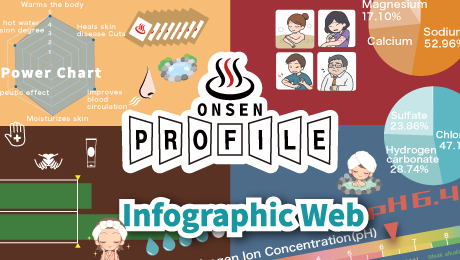
Hydrogen Ion Concentration (pH)

- Comment
- Remove dead skin cells and make your skin smooth and silky.
Hot spring Specification
※This is an easy-to-understand expression based on the indications for each type of spring in the 2“Guideline to the Mineral Spring Analysis Methods” revised in July 2014 by the Ministry of the Environment.
| ①Mental recovery | ②Insomnia | ③Promote blood circulation | ④Sensitivity to cold | ⑤Dry skin |
| ⑥Cuts | ⑦Skin diseases | ⑧Hypertension (mild) | ⑨Heartburn (drinking) | ⑩Gastrointestinal disorders (drinking) |
| ⑪Constipation (drinking) | ⑫Lifestyle-related disease | ⑬Diabetes | ⑭Gout | ⑮Countermeasures against metabolic syndrome |
| ⑯Biliary system anxiety (drinking) | ⑰Anaemia | ⑱Arthritis rheumatica | ⑲Spinal pain | ⑳Improved immunity |
| ㉑Muscle pain・Neuralgia | ㉒Mild asthma | ㉓Hemorrhoidal pain | ㉔Recovery from an illness | ㉕Recovery from fatigue |
- ※Note①・・・Indications for each spring include autonomic instability and depression.(Simple springs・Chloride springs・Carbon dioxide springs)
- ※Note③・・・Indications for each spring include peripheral circulatory failure(Chloride springs・Carbonate springs・Carbon dioxide springs・Hydrogen sulfide type sulphur spring)
- ※Note④・・・Indications for each spring include sensitivity to cold(Chloride springs・Carbonate springs・Sulfur springs・Carbon dioxide springs)and Iron containing springs
- ※Note⑦・・・Indications for each spring include xeroderma, atopic dermatitis, plaque psoriasis, epidermoid suppuration, chronic eczema(Chloride springs・Carbonate springs・Sulfate spring・Acidic springs・Sulfur springs)
- ※Note⑨・・・Indications for drinking each spring include reflux esophagitis(Carbonate springs)
- ※Note⑩・・・Indications for drinking each spring include atrophic gastritis, gastroduodenal ulcerations(Chloride springs・Carbonate springs)
- ※Note⑪・・・For drinking, Chloride springs and Sulfate spring
- ※Note⑫・・・Indications for each spring include hypercholesterolemia, diabetes, gout(for bathing, Acidic springs・Radioactive springs/for drinking, Carbonate springs・Iodine containing springs・Sulfur springs)
- ※Note⑮・・・Indications for drinking each spring include hypercholesterolemia(Sulfate spring・Iodine containing springs・Sulfur springs)
- ※Note⑱⑲・・・Indications for each spring include rheumatoid arthritis, ankylosing spondylitis(Radioactive springs)
- ※Note⑳・・・Radioactive springs
- ※Note㉑㉔・・・Simple hot spring water is suitable for rehabilitation due to its low level of stimulation, and although it is not listed as an indication by spring quality, it is also called “Hot spring for neuralgia” and “Hot spring for stroke”.
| Applicable to indications by spring quality | Applicable to general indications |
7 Elements of Hot Springs for Beautiful Skin
Total 4 Points ※The number of points represents the quality of the “Hot springs for beautiful skin”.
| Skin cleansing effects | Anti-wrinkle and skin revitalizing effects | Skin whitening and spot prevention effects |
|---|---|---|
| Hydrogen carbonate springs | Sulfate springs | Sulfur springs |
| Skin smoothing effects | Skin coating and moisturizing effects | Dewy and moisturizing effects | Cleaning effects |
|---|---|---|---|
| (Weak) Alkaline springs | Chloride springs | Metasilicic acid(more than 100 mg/kg) | Metaboric acid(more than 10 mg/kg) |
- ※The “Four Best Beauty Springs” are said to be “Carbonate springs”, “Sulfate springs”, “Sulfur springs”, and “(Weak) Alkaline simple hot springs”.
- ※The “Chloride springs” coats the skin with a salt pack, keeping it warm and moisturized at the same time. It is also called “Hot spring for finishing touch” to be taken after the “Hot spring for beautiful skin” in which exfoliation has been removed.
- ※Hot springs containing 100 mg/kg or more of metasilicicic acid have an excellent moisturizing effect and is said to be “Hot spring for beautiful skin”.
- ※Hot springs containing 10 mg/kg or more of metaboric acid have a cleansing effect, is used in some eye drops, and is said to be effective in treating acne.
Water texture while bathing (5-point evaluation)
| Smooth |  |
|
|
|
|
Velvety | |
 |
|
|
|
|---|---|---|---|---|---|---|---|---|---|---|---|
| Satiny | |
|
|
|
|
Supple | |
|
|
|
|
| Fizzy | |
|
|
|
|
Tingling | |
|
|
|
|
 Indoor bath of the Large Public Bath Indoor bath of the Large Public Bath |
|||||||||||
Skin feeling after bathing (5-point evaluation)

| Silky | |
|
|
|
|
Dryness | |
|
|
|
|
|---|---|---|---|---|---|---|---|---|---|---|---|
| Satiny | |
|
|
|
|
Sticky | |
|
|
|
|
| Dewy | |
|
|
|
|
Warming | |
|
|
|
|
| Indoor bath of the Large Public Bath |
|||||||||||
View from the open-air bath (5-point evaluation)

 View View |
Kaminoyama Onsen Town |
|---|
| Bath |
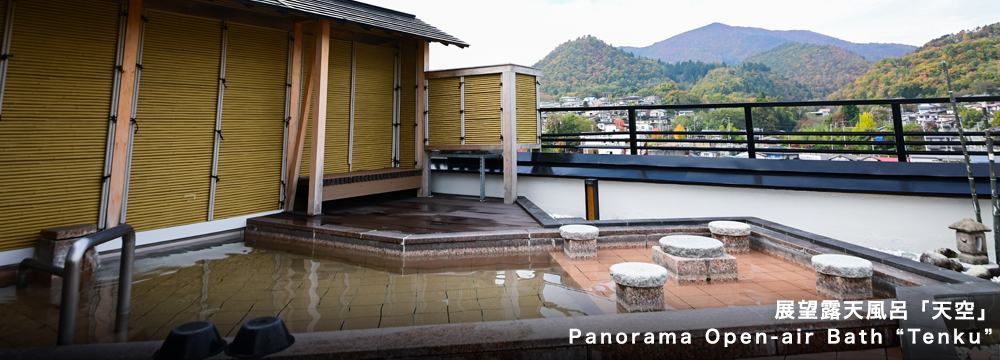
Panaroma open-air bath “Tenku” |
|---|
 |
|
|
|
|
Point 5 |
|---|
Hot Spring Source Usage
| Water added No |
Heated No |
Disinfected No |
Circulated No |
Bath additive No |
|---|---|---|---|---|
| ○ | △ | ○/× | ○/× | ○/× |
| ※The shigaraki-ware bath “Kin-no-Yu” (golden water) and 3 private baths are 100% free-flowing from the source, and the other bathtubs use a combination of free-flowing and circulating spring water ※Heating only in winter when temperatures are low ※Bathtubs with circulation are chlorinated for legionella control and sterilized with ultraviolet light ※Using "Gemstone powder" in the Large Public Bath “Roman-Yu” |
||||
| Percentage of hot spring source |
100% | ||||
|---|---|---|---|---|---|
| Replacement frequency of hot spring water | The 3 private baths change the hot water once a day. In the other bathtubs, half the water is drained at midnight and at 10:00 a.m. when the bathtubs are cleaned, and new hot spring water is added. Replace all hot water once a week. |
||||
| Yield of hot spring water |
Mixing of three power pumped hot water | ||||
| Distance from the source to the bathtub |
About 300 m | ||||
| How hot spring water is drawn | Drawn by a pipe | ||||
| Temperature adjustment | Adjusting and regulating the amount of hot water + Heating as needed | ||||
| Drinking spring | Yes (at the drinking fountain) | ||||
| “Gensen-Kakenagashi” Bath | Large public baths for men and women, 2 open-air baths with “Tsubo-buro” / 2 private open-air baths / 6 open-air baths in the guest rooms of “Rokka” | ||||
Hot Spring Composition TableHot Spring Analysis Report
| Spring Quality | Sodium, Calcium - Chloride / Sulfate springs (Hypotonic, Weakly alkaline, High temperature spring) 旧泉質名:含石膏―弱食塩泉 |
|---|---|
| Color of hot spring | Clear and colorless |
| Scent of hot spring | Odorless |
| Dissolved substances | 2,389 mg/kg(Sum of components (1) + (2) + (3), excluding gaseous substances) |
| Temperature of spring | 62.8℃ |
| pH | 7.6 (Weakly alkaline) |
| Yield | About 67 liters per minute Amount of hot spring use per person (yield / bath capacity):About 0.5 liters/person(maximum capacity of 120 people) |
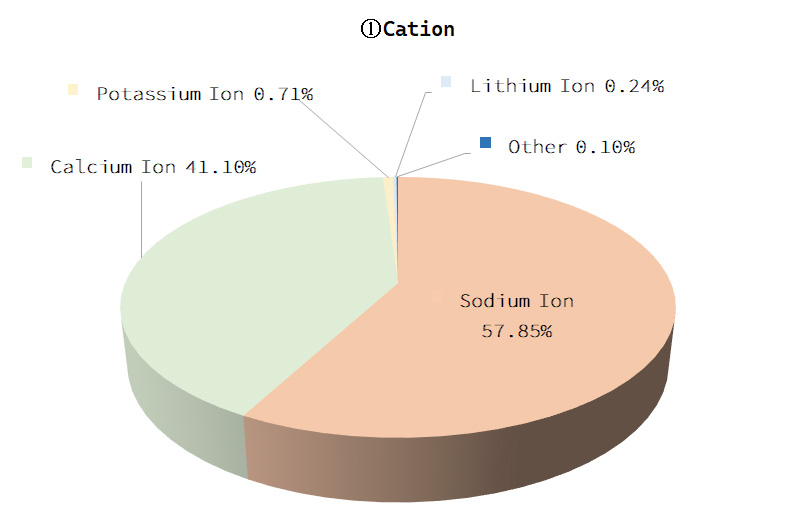
Hot Spring Composition (Amount contained in 1 kg of spring)
 |
|||
|---|---|---|---|
| ①Cation | mg | mval | mval% |
| Sodium Ion (Na+)★ | 505.8 | 22.00 | 57.85 |
| Calcium Ion (Ca2+)★ | 313.3 | 15.63 | 41.10 |
| Potassium Ion (K+) | 10.6 | 0.27 | 0.71 |
| Lithium Ion (Li+) | 0.6 | 0.09 | 0.24 |
| Magnesium Ion (Mg2+) | 0.5 | 0.04 | 0.10 |
| Manganese Ion (Mn2+) | 0.1 | 0.00 | 0.00 |
| Cations Total(1) | 830.9 | 38.03 | 100.00 |
 |
|||
|---|---|---|---|
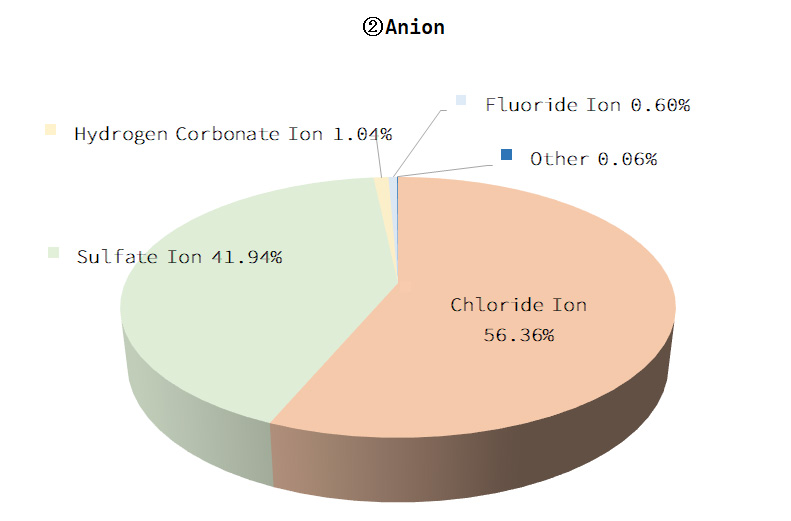
| ②Anion | mg | mval | mval% |
| Chloride Ion (Cl-)★ | 727.3 | 20.51 | 56.36 |
| Sulfate Ion (SO42-)★ | 733.1 | 15.26 | 41.94 |
| Hydrogen Corbonate Ion (HCO3-) | 23.0 | 0.38 | 1.04 |
| Fluoride Ion (F-)★ | 4.2 | 0.22 | 0.60 |
| Bromine Ion (Br-) | 1.9 | 0.02 | 0.06 |
| Anion Total(2) | 1490 | 36.39 | 100.00 |
| ③Non-dissociated Components | mg | mmol | |
|---|---|---|---|
| Metasilicic Acid (H2SiO3)★ | 56.6 | 0.72 | |
| Metaboric Acid (HBO2)★ | 12.0 | 0.27 | |
| Meta-arsenic Acid (HASO2) | 0.2 | 0.00 | |
| Non-dissociated Components Total(3) | 68.8 | 0.99 | |
| Dissolved Gas Components | mg | mmol | |
|---|---|---|---|
| Free Carbon Dioxide (CO2) | 1.0 | 0.02 | |
| Free Hydrogen Sulfide (H2S) | Less than 0.1 | - | |
| Dissolved Gas Components Total(4) | 0.1 | 0.02 | |
| Other Trace Components | |||
|---|---|---|---|
| - |
★are the components related to the “spring quality” and the components that qualify conditions for “Hot spring” and “Therapeutic hot spring”.
Indications by Spring Quality for Bathing (Revised on July 1, 2014)
Cuts, Peripheral circulatory disturbance, Sensitivity to cold, Depression, Dry skin
General Indications for Bathing (Revised on July 1, 2014)
Chronic pains or stiffness of muscles or joints (chronic phase of rheumatoid arthritis, osteoarthritis, lower back pain, nerve pains, frozen shoulder, bruises, sprains, etc.),
Muscle stiffness by motor paralysis, Sensitivity to cold, Peripheral circulatory disturbance,
Gastrointestinal hypofunction (slow digestion, intestinal gas formation, etc.),
Mild hypertension, Impaired glucose tolerance (diabetes), Mild hypercholesterolemia,
Mild asthma or Emphysema, Hemorrhoidal pains, Autonomic instability,
Various symptoms from stress (sleep disorders, depression, etc.),
Restorative phase from illness, Recovery from fatigue, Health promotion
Contraindications by Spring Quality for Bathing (Revised on July 1, 2014)
None
General Contraindications for Bathing (Revised on July 1, 2014)
Active stage of diseases (especially when fever is accompanied), Active tuberculosis,
Advanced malignant tumor, or the case of significant debility involving severe anemia,
Severe cardiac or lung diseases involving suffocation feelings with a little movement,
Severe kidney disease involving edema, Gastrointestinal bleeding,
When bleeding is visible, Acute exacerbation stage of chronic diseases, etc.
Indications by Spring Quality for Drinking
Atrophic gastritis, Constipation, Biliary dysfunction, Hypercholesterolemia
Date of Analysis (The above hot spring composition table is cited from the survey data of the following institution)
March 10, 2020 (Japan Environmental Science)
- ※Indications and contraindications for hot springs are in accordance with “Guideline to the Mineral Spring Analysis Methods” revised on July 1, 2014.
- ※Data was provided by the inn.
20 qualifications for “Hot spring” and 8 qualifications for “Therapeutic hot spring”
| Conditions/Components (contained amount in 1kg) ※If even one of the conditions is cleared, it is a “Hot spring” or “Therapeutic hot spring” |
A【Hot Springs Act】 Conditions of the “Hot spring” |
B【The Guideline for analysis of Kosen】 Conditions of the “Therapeutic hot spring” |
|
|---|---|---|---|
| 1 | Temperature (when collected from source) | 25℃ or more | |
| 2 | Dissolved substances (excluding gaseous) | Total amount 1,000 mg or more | |
| 3 | Free carbon dioxide (CO2) | 250 mg or more | 1000 mg or more(Carbon dioxide springs) |
| 4 | Lithium Ion (Li+) | 1 mg or more | ― |
| 5 | Strontium Ion (Sr2+) | 10 mg or more | ― |
| 6 | Barium Ion (Ba2+) | 5 mg or more | ― |
| 7 | Total Iron Ion[Fe2+(Iron(Ⅱ) Ferro ion)+Fe3+(Iron(Ⅲ) Ferri ion)] | 10 mg or more | 20 mg or more(Iron containing springs) |
| 8 | First Manganese Ion (Mn2+) | 10 mg or more | ― |
| 9 | Hydrogen Ion (H+) | 1 mg or more | 1 mg or more (Acidic springs) |
| 10 | Bromine Ion (Br-) | 5 mg or more | ― |
| 11 | Iodide Ion (I-) | 1 mg or more | 10 mg or more (Iodine containing springs) |
| 12 | Fluoride Ion (F-) | 2 mg or more | ― |
| 13 | Hydro Arsenate Ion (HAsO42-) | 1.3 mg or more | ― |
| 14 | Meta Arsenite (HAsO2) | 1 mg or more | ― |
| 15 | Total sulfur (S) [HS-(Hydrogen sulfide ion)+S2O32-(Thiosulfate Ion)+H2S(Free hydrogen sulfide)] | 1 mg or more | 2 mg or more (Sulfur springs) |
| 16 | Metaboric acid (HBO2) | 5 mg or more | ― |
| 17 | Metasilicic acid (H2SiO3) | 50 mg or more | ― |
| 18 | Bicarbonate soda (NaHCO3) | 340 mg or more | ― |
| 19 | Radon (Rn) | 20 or more (unit: ten ppb curie) 20×10-10Ci(curie)or more 20 or more(ten ppb curie) =74Bq(becquerel)/5.5mache or more |
30 nanocurie or more(Radioactive springs) 30×10-10Ci(curie)or more 30 or more(ten ppb curie) =111Bq(becquerel)/8.25 macheor more |
| 20 | Radium salt (as Ra) | 10-8mg or more 1/100 million mg or more |
― |
| Number of conditions cleared this “hot spring” or “therapeutic hot spring” is: | 5 (out of 20) | 2 (out of 8) | |
| Total 7 Points | |||
Hot Spring Legends and More
Traditionally documented efficacies
Healing wounds (in the legend of the hot spring, a crane soaked its shin to heal it)
Historical figures who bathed in this hot spring
Since its opening in 1458, many people have used the hot spring
Celebrities who bathed in this hot spring
Actor Hiroshi Fujioka
Hot Spring (Onsen) Report
Kaminoyama Onsen, where “Arimakan” is located, is an area that uses a “centralized management” system for its hot springs.
“Centralized management” system is a hot spring management system in which hot spring water is collected from each source well, mixed and stored in a storage tank, and then supplied to each facility. This system efficiently utilizes hot spring sources and stabilizes the quantity and quality of the supply.
“Arimakan” draws hot spring water from three sources that are generally the same in quality, known as the Kaminoyama-source No. 1, No. 2, and No. 3.
Each of the three sources has a different temperature, so they are making efforts to protect the limited hot spring resources for the future by resting the source well with the highest temperature during the summer when the outside temperatures are high.
Originally, the “Arimakan” itself owned the source wells, but now, from a resource protection point of view, the entire hot spring area has agreed to a system of owning and managing the source.
The Hot Spring Analysis Report for the Arimakan shows data from a mixture of these three sources.
The temperature of the spring is slightly high at 62.8°C, but by the time the water is distributed to the bathtubs at each facility, the temperature of the spring has dropped to a suitable level, so it can be said to be an ideal spring temperature.
The pH (hydrogen ion concentration) is 7.6 (Weakly alkaline).
Generally, human skin is a weak acid (pH 4.5 to 6.0), so a soak in a weak alkaline hot spring will dissolve dead skin cells on the surface of the skin, leaving it smooth to the touch. After soaking in a weak alkaline hot spring, dead skin cells are dissolved and the skin feels smooth.
The name of the spring quality is “Sodium, Calcium - Chloride / Sulfate springs”.
In the old name of the spring, it is a “Gypsum - Weakly Salt spring”.
In other words, the spring has two characteristics: Sodium - Chloride spring (old name: Salt spring) and Calcium - Sulfate spring (old name: Gypsum spring).
The five common indications of the “Chloride spring” and “Sulfate spring” are Cuts, Peripheral circulatory disturbance, Sensitivity to cold, Depression, and Dry skin.
First, let's start with the “Sodium - Chloride spring”, which is salty when drunk because salt is its main component.
Its salt content has a antibacterial effect and is effective in treating cuts and burns, and thus the “Chloride spring” is called “Hot spring for cuts”. When you soak in the hot spring water, the salt covers your entire body, and when you get out of the water, the salt is absorbed by your skin, blocking the sweat glands (organs that secrete sweat) and keeping the body warm. Therefore, the blood circulation improves, and it is said to be good for Peripheral circulatory disturbances and Sensitivity to cold, and it is also called “Hot spring for warmth”.
In addition, the lasting warming effect is said to be good for Depression by reducing the secretion of stress hormones, balancing the autonomic nervous system, and promoting a sense of mental stability.
The coating effects, such as the salt pack, also strengthen the moisturizing effect, which is helpful for Dry skin.
Next, the main feature of the “Calcium - Sulfate spring” is probably that it is called “Hot springs for beautiful skin” because of the combination of calcium ions, which promote skin regeneration, and sulfate ions, which increase skin elasticity and prevent wrinkles and sagging. In other words, it stimulates collagen production, leads to skin resuscitation, and activates metabolism. It is also called “Hot springs for rejuvenation” because it is expected to have an anti-aging effect on the skin, making it taut and moisturized.
Sulfate ions also have antibacterial and anti-inflammatory effects, and thus relieve pain and inflammation such as cuts, joints, and muscular pain. Therefore, Sulfate springs, like Chloride springs, are also called “Hot springs for cuts”.
Calcium ions also have the effect of regulating the contraction and dilation of blood vessels, contributing to the stabilization of blood pressure. In other words, by stabilizing blood vessels, blood circulation in peripheral areas (e.g., hands and feet) where blood flow tends to be sluggish is promoted, and Peripheral circulatory disturbance and Sensitivity to cold can be improved. Furthermore, it is effective in improving skin dryness because it replenishes moisture to Dry skin. These effects regulate the autonomic nervous system, affecting stress reduction and mental stability, and contribute to the improvement of Depression.
Note the components that do not appear in the name of the spring.
The Fluoride ions are contained at 4.2 mg/kg per kg of spring water, which is more than twice the standard value (2 mg) for hot spring qualification. Well known as a substance effective in preventing tooth decay, the hot spring is also considered effective in treating and preventing skin diseases because of its antibacterial effects, particularly in inhibiting the growth of bacteria.
In addition, it helps to moisturize the skin and promote metabolism, and trace amounts of fluoride absorbed by the skin may promote skin metabolism and relieve dryness and inflammation.
And it also contains 12.0 mg of Metaboric acid per kg of spring water. This is more than twice the standard value (5 mg) for hot spring qualification. This component is said to have a cleansing effect, mainly in the prevention of acne.
Metasilicic acid is contained at 56.6 mg per 1 kg of spring water, which is more than standard value (50 mg). Metasilicic acid becomes silica gel when dried, a substance used as a desiccant. In short, it has a very high moisture effects, so it can be expected to retain moisture in places that have been exfoliated by the weak alkaline hot spring water. With more than 100 mg, the skin will feel even more moist after the bathing.
In addition, another great attraction of this inn is that it is officially recognized by the public health department as a drinking spring. The drinking spring is very valuable because it is required to pass very strict hygiene standards in order to be allowed to use the spring.
In some parts of Europe and the U.S., drinking mineral spring water is practiced as a form of medical treatment, and its health benefits are well recognized. However, when drinking, be careful not to exceed the specified daily limit (100-150 ml at a time, 200-500 ml per day).
The indications for drinking this hot spring by spring quality, which are common to both “Chloride spring” and “Sulfate spring”, are Constipation. The sodium chloride stimulates the intestinal wall, and the calcium ions stabilize intestinal movement, allowing stool to pass smoothly through the intestines.
In addition, Atrophic gastritis is one of the indications for drinking “Chloride spring” by spring quality. Sodium chloride stimulates the gastric mucosa and promotes gastric acid secretion, while also protecting the gastric mucosa.
Other indications for drinking “Sulfate spring” by spring quality include Biliary dysfunction (sulfate ions promote bile secretion) and Hypercholesterolemia (calcium ions balance blood lipids).
The exfoliating effect of the Weak alkaline components and the skin revitalizing effect of the Sulfate spring fulfill the conditions for “Hot springs for beautiful skin”. And as a side effect, the moisturizing effect of the coating effect of the Chloride spring and the cleansing effect of the Metaboric acid show how excellent the spring quality of “Kaminoyama Onsen” is.
At Arimakan, the baths in the public baths and some of the private baths are 100% free-flowing hot spring method, while other baths use a circulating filtration system in which new hot-spring water is poured into the baths while the chlorine is disinfected.
In bathtubs where an unspecified number of people bathe, it is necessary as an etiquette to rinse oneself before bathing, but even so, chlorine disinfection while circulating and filtering hot spring water is essential to keep the bathtub clean and hygienic.
Some hot spring enthusiasts sometimes criticize that circulating hot spring water dilutes the hot spring's components, but the source of Kaminoyama Onsen has a total of 2,389 mg/kg of cations + anions + non-dissociated components. Remember, this is 16 to 24 times more concentrated than the bath additive ingredients in some well-known common products on the market.
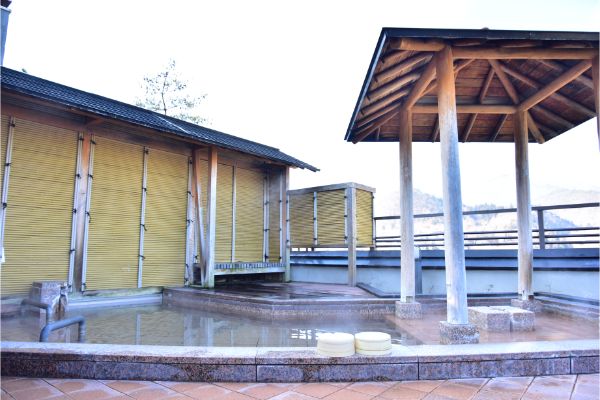
| Panaroma Open-air Bath “Tenku” | Large Public Bath “Roman-Yu” gemstone bath |
|---|---|
 |
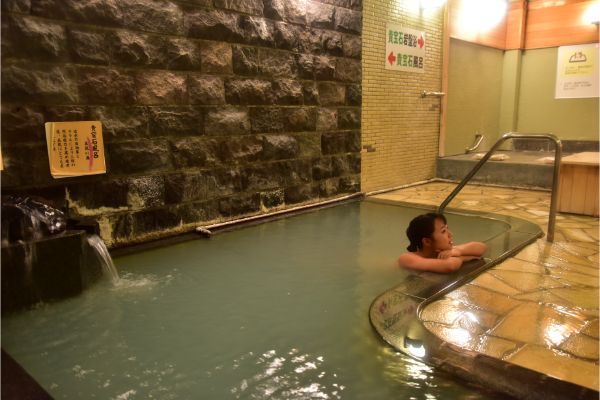 |
| There are two open-air baths in rooftop, which are used as large public baths for men and women during the daytime, and as private baths at night. As the name of the inn implies, you can enjoy a 360 degree view of Kaminoyama city. Enjoying with a view of the majestic mountains in the distance is a special experience. | A bath with gemstone powder added to hot spring water. Gemstones are characterized by their ability to emit far-infrared rays and negative ions. When crushed and mixed with hot spring water, they are expected to promote blood circulation, activate cells, and improve immunity. |
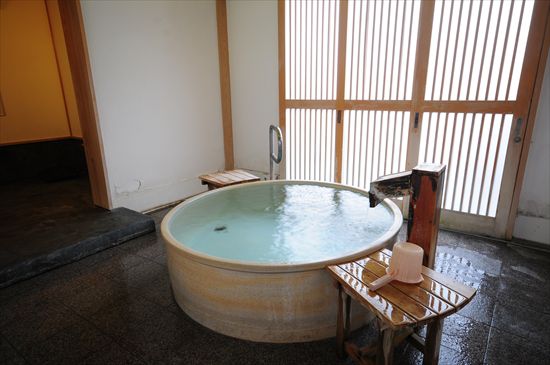
| Large Public Bath “Kin-no-Yu” shigaraki-ware bath | Private Bath “Pamukkale” |
 |
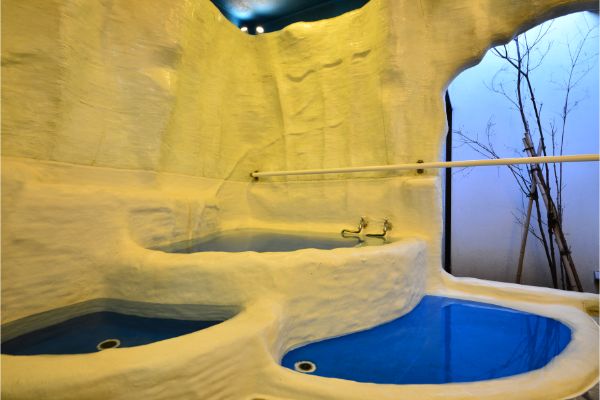 |
| The bath is 100% natutal free-flowing hot spring water. At times it may feel hot, but this is proof that the spring water is poured into the bathtub as it naturally gushes out. You can feel the most natural effects of the hot spring. | This bath is based on the motif of the “Hierapolis Pamukkale” World Heritage Site in Turkey. The bath was created by the same craftsmen who worked on Disneyland. It is sure to be one of the most memorable experiences of your stay at this inn. |
| Private Bath “Yawaragi” | Yakushi Nyorai drinking spring water |
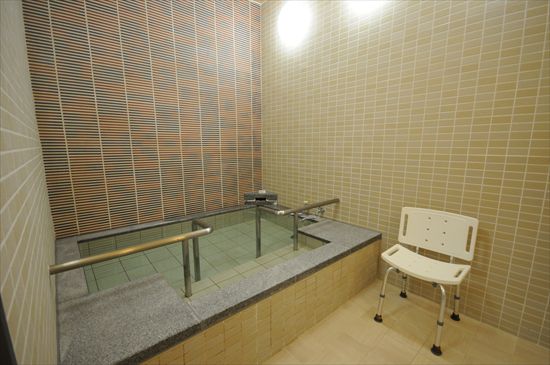 |
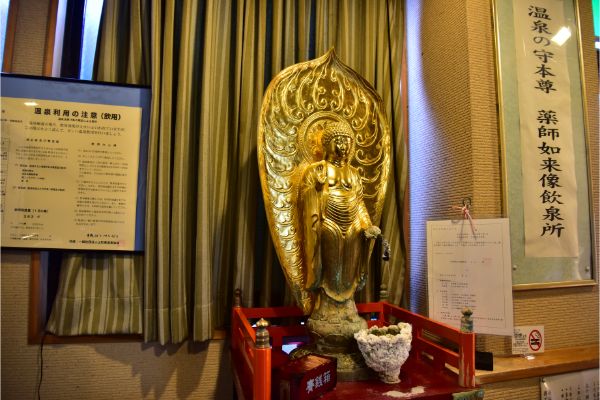 |
| There are three private baths in the inn, of which “Yawaragi” is a bathtub specially built for barrier-free access. The bathtub is fully equipped with handrails on both sides and chairs for bathing. | This hot spring is drinkable under the permission of the public health center. The spring water poured from the pot of the statue of Yakushi Nyorai is not only effective due to its components, but also seems to be beneficial to the statue of Yakushi Nyorai. |
Facility Report
The public bath with free-flowing hot spring bath and bedrock bath are located on the first floor and in the basement, switching between men and women according to the time of the day.
The rooftop open-air bath is a symbol of the inn's popularity and offers a panoramic view of the city of Kaminoyama Onsen and the Zao mountain range.
They are quick to do what makes their customers happy. Such a basic attitude seems to be the motto here.
Not only are the hot springs of high quality, but the baths themselves are rich in variety, including a private bath inspired by the limestone terraces of “Hierapolis Pamukkale” a World Heritage Site in Turkey, the barrier-free private bath “Yawaragi”, and a standing private bath.
The inn's popular rooftop open-air bath changes its appearance to a private open-air bath at night.
Thus, there are five private baths in total.
It is suitable for a celebration or anniversary trip, or just a fun vacation among friends. The inn is full of fun and memorable elements.
In addition, one of the joys of a ryokan is the food. The inn's style is to insist in-room service. Taking the food to each room is time-consuming, but for those who prefer to enjoy their meals in the comfort of their own guest room, this ryokan dares to maintain the "in-room meal" policy.
The atmosphere inside the inn, which is filled with a cheerful ambience in a quiet and remote Tohoku-like atmosphere, is comfortable and allows you to relax without any worries. Considering the room rate, you will be astonished at the cost-performance ratio, and the fact that you can relax so much at a price in the 10,000-yen range is a sign of the inn's conscientiousness. Travel Journal
Rates Data
| 1 night/2 meals fee | From 14,300 yen (tax included) |
|---|---|
| Stay without meals | From 7,700 yen (tax included) |
| Staying alone | From 9,900 yen (tax included) |
| Private bath fee when overnight stay |
Free |
| Day stay | 1,000 yen (tax included, not included bath tax) |
| Private bath for day-stay |
2,200 yen (tax included) / 60 min. |
Facility Data
| Establishment | Established in 1921 |
|---|---|
| Check-In | 3:00 p.m. |
| Check-Out | 10:00 a.m. |
| Location and Environment | Mountain / Town |
| Number of Rooms | All 35 rooms |
| Number of People Accommodated |
120 persons |
| Parking Area | Available for 60 cars |
| Facilities | Banquet hall, Lounge, Cafe, Shop |
| Internet | Wi-Fi available |
| Barrier Free | Supported |
| Toilet with washer | Equipped |
Transportation Access
| By train | JR Yamagata Shinkansen "Kaminoyama Onsen" station, 10 min. walk or 3 min. by car |
|---|---|
| Shuttle bus | Yes【Pick-up service at Kaminoyama Onsen Station by TEL upon arrival (for overnight guests only)】 |
| By car | From Tokyo: 10 min. from Kaminoyama Onsen IC on Tohoku Chuo Expressway From Sendai: About 30 min. from Yamagata Zao IC on Yamagata Expressway |
| Address | Yamagata / Kaminoyama Onsen / Tenboroten-no-Yu ARIMAKAN 6-5 Shinyu, Kaminoyama city, Yamagata 999-3141, JAPAN TEL:+81-(0)23-672-2511 |
- Data
- Jan. 21, 2026